
Mobility Work vs. Strength Training: Why You Need Both, Not One Instead of the Other

Jeffrey Sun, ACE-CPT
July 23, 2026 · 10 min read
ACE-certified personal trainer specializing in functional movement, mobility, and strength training for busy professionals in San Jose and the Bay Area.
Book a free consultation →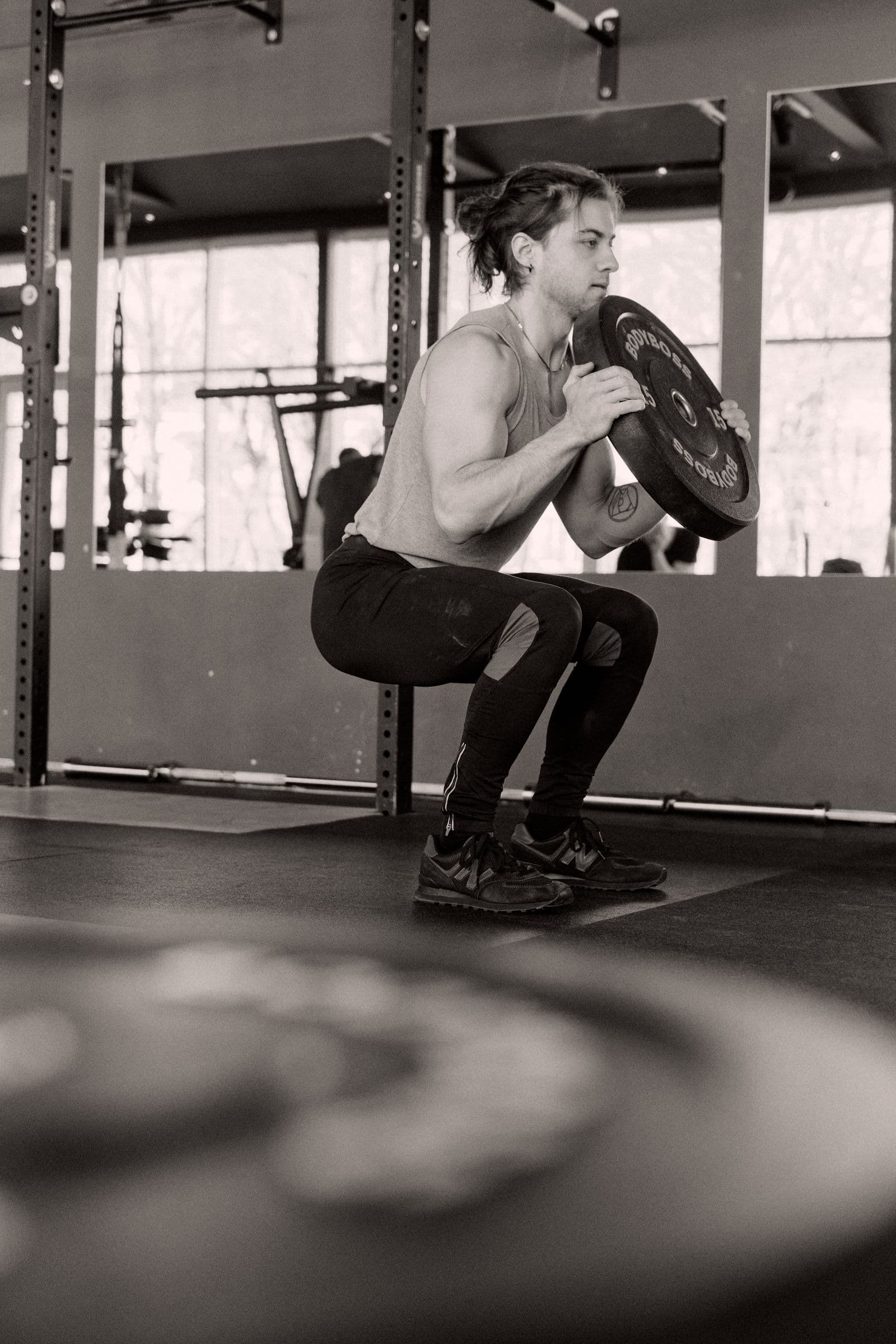
I get some version of this question almost every week. A new client shows up having spent the last year doing one or the other, never both, and they want to know which one they should have been doing the whole time. The mobility person feels loose but weak. The strength person feels strong but stiff. Both are convinced they picked the wrong lane.
There's no wrong lane. Mobility work and strength training build different things, and neither one substitutes for the other. The question isn't which one to do. It's how to run both without turning your training into two separate part-time jobs.
The confusion I hear every week from new clients
The mobility-only client usually comes from years of yoga, stretching apps, or a physical therapist's home exercise sheet after an old injury. They move well. Ask them to carry a heavy suitcase up three flights of stairs and something falls apart, because moving well and moving well under load are different skills.
The strength-only client is the mirror image. They've built real numbers on the big lifts, sometimes impressive ones, but their squat depth is capped by hips that won't open past a certain point, and their overhead press stalls because their thoracic spine won't extend enough to get the bar over their head cleanly. The strength is real. The range it's expressed through is smaller than it should be.
Neither person is training wrong. They're both training half the picture and assuming the other half will show up on its own. It doesn't, because the two adaptations come from different stimuli.
What mobility training actually is (and isn't just stretching)
Mobility gets treated as a synonym for flexibility, and it isn't. Flexibility is how far a joint can passively move, the number you'd get from someone pushing your leg toward your chest. Mobility is how far you can actively control a joint through its range, using your own muscles, under your own control. You can be flexible and immobile at the same time. Plenty of people can be folded into a passive stretch by a partner and still can't hold a deep squat under their own control for more than a few seconds. If that description fits you uncomfortably well, scoring your Beighton is worth four minutes, because the advice changes at the loose end of the range.
Real mobility work trains the nervous system to trust a range of motion, not just the tissue to tolerate it. That's why a static hamstring stretch held for 30 seconds does less for your squat than three sets of a controlled, active hip-hinge pattern through the same range. The static stretch shows the tissue it can lengthen. The active pattern shows your nervous system it can control that length under tension, which is the part that actually shows up when you're lifting something heavy.
This is also why most of the self-check tests I've written about measure active range, not passive flexibility. A hip that scores well on an active mobility test is a hip your body will actually use during a squat. A hip that's merely flexible on a table might not be.
What strength training actually builds that mobility work can't
Mobility work doesn't build tissue capacity to handle load. That's a different adaptation entirely, and it only comes from progressively loading a muscle or joint over time.
Your tendons, ligaments, and the connective tissue around a joint adapt to mechanical stress the same way muscle does, just on a slower timeline. A joint that moves through a beautiful range but has never been asked to control real load in that range is a joint that's one wrong step away from an injury. The range without the strength to control it is often more dangerous than a smaller range that's fully strong, because the joint travels somewhere it has range to reach but no strength to stabilize.
This is the piece mobility-only training misses. Building the capacity to control weight, to decelerate a joint, to produce force from a stretched position, all of that requires progressive loading. A perfect hip hinge pattern with no weight in your hands teaches the pattern. Loading that same pattern with a barbell over months is what builds the tissue that keeps the pattern safe when life asks more of it, whether that's a heavy suitcase, a slip on ice, or picking up a kid who's decided to go completely limp.
Why doing only one creates predictable problems
Run mobility work alone for long enough and you end up with a body that moves well but fatigues fast under any real demand, and that's more fragile under unexpected load than people expect. A joint with excellent passive range but weak surrounding musculature actually has less protection when something goes sideways than a stiffer joint backed by real strength.
Run strength training alone for long enough and your range of motion typically narrows over time, especially if every session lives in the same partial range your mobility already limits you to. Your squat depth caps out where your hip mobility caps out. Your overhead lockout caps out where your shoulder and thoracic mobility cap out. You get strong within a shrinking window, and the window keeps shrinking because nothing is asking it to open back up.
Neither failure mode is really about doing the wrong thing. It's about doing one thing exclusively for years, which is exactly what most fitness content pushes people toward, since a program built entirely around one philosophy is easier to sell than one that asks you to hold two ideas at once.
How the two work together in a single training session
In practice this is simpler than the theory makes it sound. Most of my sessions run mobility work as the warm-up, then strength work as the main event, with the same joints trained both times.
If the day's lifting includes a squat pattern, the warm-up targets hip and ankle mobility specifically, not generic full-body stretching. If overhead pressing is on the schedule, the warm-up hits thoracic extension and shoulder mobility. The mobility work isn't a separate 20-minute block bolted onto the front of the session out of habit. It's chosen to open the exact range the day's lifting is about to load.
A deep goblet squat hold is a good example of a movement that does both jobs at once. Load it lightly and hold the bottom position for a few breaths, and you're training active mobility through the hip and ankle while also asking the muscles around those joints to control real load in that deep position. It's not purely a mobility drill or purely a strength drill. It's both, which is exactly the point.
The reverse works too. A loaded reverse lunge with a rotation through the torso trains hip mobility, thoracic rotation, and single-leg strength in the same rep. You don't need a separate mobility session and a separate strength session if the exercises you pick are already asking the joint to do both jobs.
A sample week that blends both without adding extra time

Here's a three-day version I run with a lot of desk-worker clients who don't have time for a dedicated mobility day on top of their lifting.
Monday
5 minutes of hip and ankle mobility work targeted at the squat pattern, then a full-body strength session built around a squat variation, a push, a pull, and a carry.
Wednesday
5 minutes of thoracic spine and shoulder mobility work, then a session built around a hinge pattern, an overhead press, a row, and core work.
Friday
5 minutes of whatever tested lowest on that week's movement, then a full-body session that revisits everything at lighter loads with more range-of-motion emphasis, like a deep split squat instead of a standard squat.
Fifteen extra minutes a week of targeted mobility work, not an hour of separate stretching sessions. The resistance band routine I've written about elsewhere works well as this kind of pre-lift warm-up if you're training at home without much equipment.
When you need dedicated mobility work vs. when lifting through full range is enough
For a lot of people, lifting through a genuinely full range of motion, deep squats, full hip hinges, presses that actually lock out overhead, provides enough mobility stimulus on its own. If your joints move well already, adding dedicated mobility work on top of full-range strength training has a lower payoff. The strength training is already doing the job.
Dedicated mobility work earns its place when a specific joint is limiting the lift itself. If your ankle mobility caps your squat depth before your legs are actually challenged, more squatting won't fix the ankle. You need to address the ankle directly, the way I've written about in the ankle mobility test, before the squat can load the range you actually want it to load.
The same logic applies to old injuries. A joint with a history of injury, a previous ankle sprain, a shoulder that's been through impingement, often needs dedicated mobility work indefinitely, not just until it "catches up." Some joints carry restrictions that loaded training alone won't resolve.
How to figure out which one you're missing right now
The honest answer is that most people already know, they just haven't framed it this way before. If your workouts feel limited by a joint that won't open up rather than by strength itself, mobility is your bottleneck. If your joints move fine but you fatigue or feel unstable the moment real load gets involved, strength is what's missing.
If you're not sure, that's exactly what the movement screen is built to answer. It's the same six-joint assessment I run with every new client before we touch a barbell, and it's built specifically to separate a mobility limitation from a strength limitation instead of lumping everything into generic "flexibility" advice. Twelve questions, five minutes, no email required.
Where to go from here
The people who make the most progress aren't the ones who found the one right method. They're the ones who stopped treating mobility and strength as competing philosophies and started treating them as two parts of the same job.
If you want a starting structure that already builds this in, the strength training for longevity guide runs mobility and strength together from week one rather than treating them as separate phases. And if you want someone building a program around your specific joints and your specific lifting history instead of a generic template, that's what one-on-one training is for. I've run this exact conversation with hundreds of clients around San Jose and the Bay Area, and it's rarely the case that someone needs more of just one thing.
Ready to train smarter?
Get a personalized program built around your goals, your body, and your schedule.
Book Your Free ConsultationRelated Articles

Strength training for hip osteoarthritis: three at-home tests and what the newest trials say
Strength training for hip osteoarthritis does less for pain than most exercise lists suggest and more for what you can still do. Three at-home tests show which problem your hip actually has. A San Jose trainer's read on the 2024 to 2026 research.
Cold Plunge, Sauna, and Massage Guns: What Actually Helps Recovery After 40
A cold plunge right after lifting can work against the muscle you just trained for. What the research says about cold water immersion, saunas, and massage guns, and how to time them so they help instead. From a San Jose trainer.

When Work Stress Should Change How You Train: A Busy Professional's Guide
A San Jose trainer's framework for knowing when life stress should change your workout — five honest signs, a green/yellow/red week decision system, and how to come back without losing the strength you built.