
Cold Plunge, Sauna, and Massage Guns: What Actually Helps Recovery After 40

Jeffrey Sun, ACE-CPT
August 10, 2026 · 11 min read
ACE-certified personal trainer specializing in functional movement, mobility, and strength training for busy professionals in San Jose and the Bay Area.
Book a free consultation →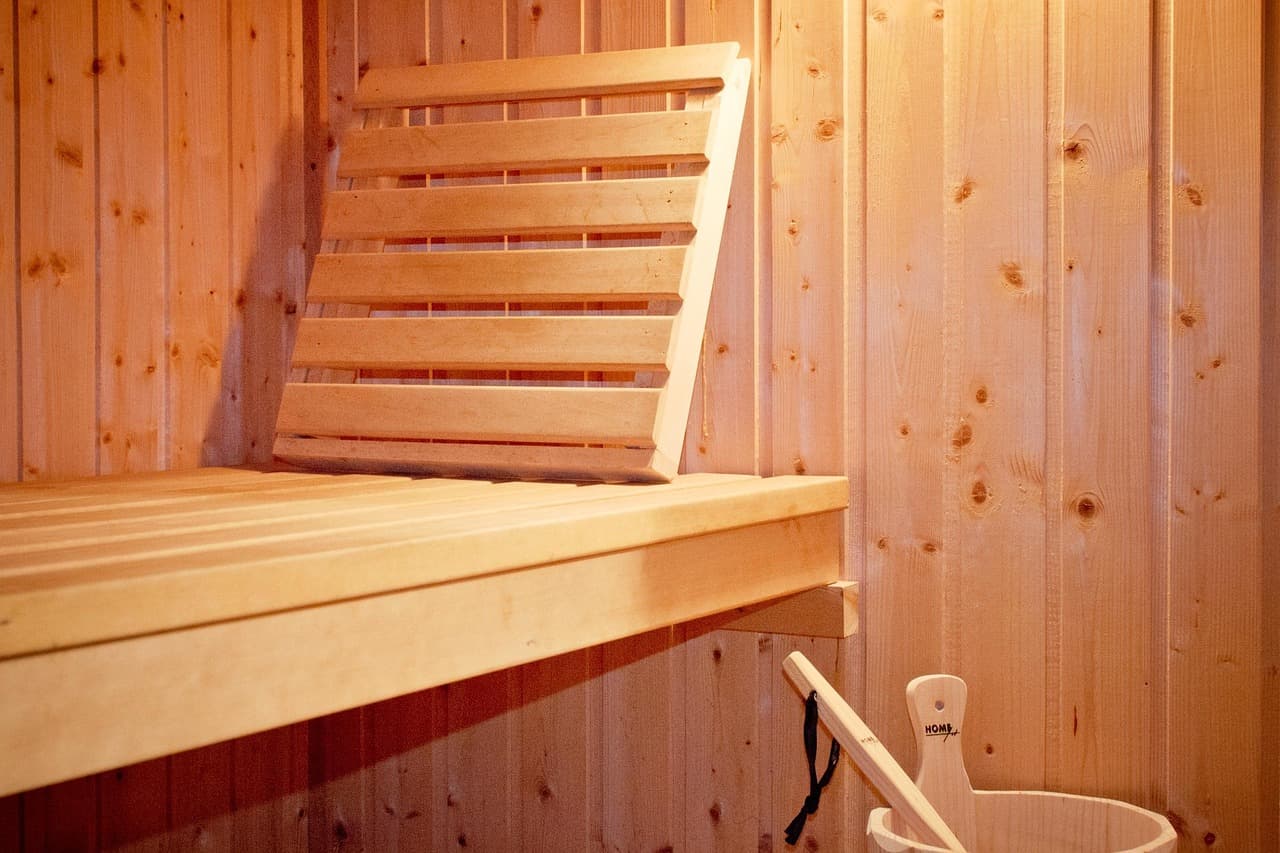
A client showed me his recovery studio membership last winter. Two hundred a month, unlimited plunges and sauna, ten minutes from his office in Sunnyvale. He was going Tuesday and Thursday, straight from the gym, into the cold tub within about twenty minutes of racking his last set.
He'd been lifting hard for eight months and was frustrated that his arms and shoulders hadn't changed much. We looked at his sleep, his protein, his program. All defensible. Then I asked what time he was getting in the tub.
I want to be careful not to oversell this. I can't tell you the plunge was the reason, and one person's arms aren't evidence of anything. What I can tell you is that he was paying two hundred dollars a month for something he was scheduling in the exact window where the research says it works against the thing he was training for.
What the recovery industry sells, and what recovery actually is
Search any of these tools and the first page is mostly people who sell them. Cold plunge manufacturers explaining the benefits of cold plunges. Sauna retailers reviewing saunas. Affiliate roundups of the eight best recovery devices, ranked by commission.
That's not a conspiracy, it's just how the category monetizes. But it means a straight answer is weirdly hard to find, and the straight answer is more useful than the sales pitch anyway.
Recovery isn't one thing. It's at least two, and they come apart more often than people expect. There's how you feel, which is soreness and stiffness and how beat up you are walking to your car. And there's what your body is actually doing, which is repairing tissue and building the adaptations you trained for.
Almost every tool in this category works on the first one. The interesting question is what it does to the second.
The question that sorts every recovery tool
Ask one thing of any recovery tool. Does it change how you feel, does it change what you adapt, or both?
A tool that makes you feel better and does nothing to adaptation is free upside. Use it if you like it. A tool that does both would be better still, but nothing in this category has strong enough evidence to sit in that box, so it stays mostly empty.
The one that matters here is a tool that makes you feel better at a cost to adaptation. That isn't bad, exactly. It's a trade, right in some situations and wrong in others, and knowing which situation you're in is most of the skill.
Only one of the three below lands there. It's the one people are most excited about.
Cold plunge after a workout: the timing problem
The core finding is from a 2015 paper in the Journal of Physiology. Twenty-one physically active men strength trained twice a week for 12 weeks. After every session, half did 10 minutes of cold water immersion at 10°C and half did active recovery. At the end, strength and muscle mass had increased more in the active recovery group. The researchers also found blunted satellite cell activity and reduced signaling through the kinases that regulate muscle growth, which is a plausible mechanism rather than just a correlation.
A 2019 study in the Journal of Applied Physiology ran a similar design with 16 untrained men over seven weeks and found the same blunting of muscle fiber growth. Maximal strength, though, held up fine in that one.
That split matters and most coverage flattens it. The clearest, most replicated effect is on muscle size. The effect on strength is murkier, and at least one decent trial found none. If you're lifting mainly to be strong rather than to be bigger, the case against post-workout cold is weaker than the headlines suggest.
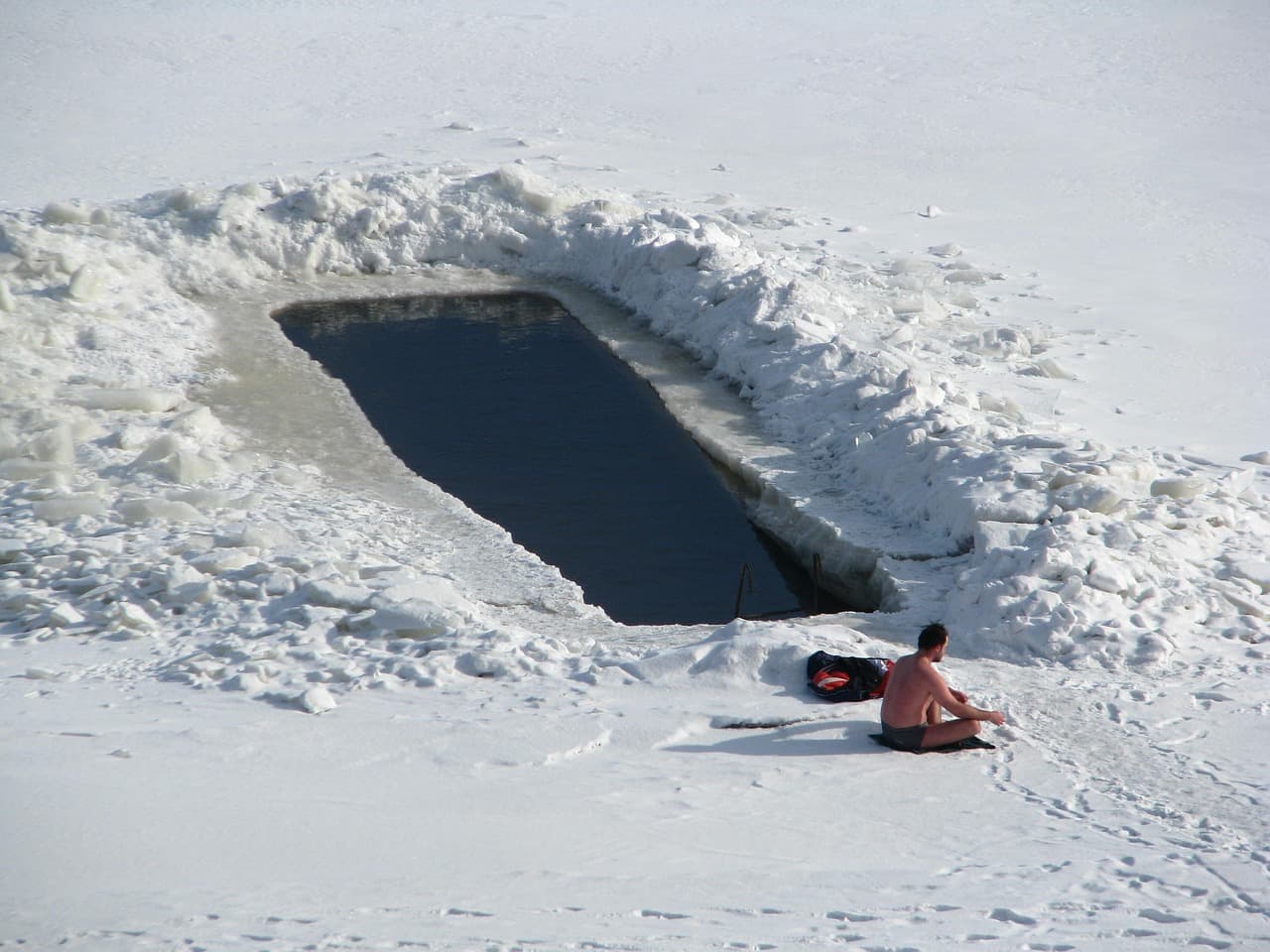
The mechanism explains the fix. Cold constricts blood flow and damps the inflammatory signaling that follows hard training, and that signaling is part of how the muscle knows to rebuild. Damping it during the window when it's doing its job is the problem. Damping it eighteen hours later, when that window has mostly closed, is not the same thing.
So the practical version is boring. Put the plunge on a day you didn't lift, or several hours after the session rather than on the drive home. Four to six hours is the gap people generally recommend, and honestly, a different day is easier to remember than a stopwatch.
And there are real situations where plunging right after is the right call. A tournament weekend where you have to perform again tomorrow. The back half of a training block that piled on unaccustomed volume and left you genuinely wrecked. A pickleball trip where the goal is playing four days straight, not building tissue. In all of those, giving up a slice of long-term adaptation to be functional tomorrow is the sensible call.
What I'd push back on is the default. Plunging immediately after every lifting session, every week, indefinitely, is the one pattern where you're consistently paying the cost and rarely collecting the benefit.
A question I get every time this comes up: what about cold showers? Different animal, mostly. A cold shower doesn't drop your core and muscle temperature anywhere near what sitting in 10°C water for ten minutes does, and the blunting effect in these studies tracks with how much cold actually got into the tissue. If a cold shower after training is your thing, I wouldn't lose sleep over it. Contrast showers, alternating hot and cold, are in the same low-stakes bucket. The concern is specific to real immersion.
Sauna: no adaptation cost, thinner evidence than the marketing
Heat is the easier one to place, mostly because nothing suggests it works against you.
A systematic review with a Bayesian meta-analysis on post-resistance-training heat found a small advantage favoring heat therapy for muscle growth, with about an 89.7 percent posterior probability that the effect was greater than zero. For strength, there was little sign of any difference. A 2023 trial with 16 male basketball players found that 20 minutes of infrared sauna after a demanding resistance session produced better neuromuscular recovery and less soreness measured 14 hours later.
Then a 2025 systematic review in Sports Medicine Open looked across the post-exercise heat literature and landed on equivocal and contradictory, which is the fair summary. Protocols vary enormously, outcome measures vary, and the studies are small.
So my read is unglamorous. Sauna probably doesn't hurt your training, might help a little, and the evidence is too thin to promise anything. Which is a perfectly good reason to use it if you enjoy it, and no reason at all to force yourself into one if you don't.
One practical note that gets skipped. Don't walk into a hot room dehydrated straight off a hard session. Drink first, then sit. This is the one part of sauna use where people actually get into trouble.
Worth separating something here too. The cardiovascular research on regular sauna bathing, the Finnish cohort work people cite, is a different question from whether sauna speeds recovery from a lifting session. Those studies are about long-term health outcomes in populations that sauna habitually. Interesting, but not the same claim, and they get borrowed to sell recovery benefits they weren't measuring.
Massage guns and foam rollers: real for stiffness, not for repair
Percussive devices have better evidence than skeptics assume and much narrower evidence than the marketing implies.
What holds up: acute range of motion improves, with one study reporting an 11.4 percent increase in hamstring range. Soreness perception drops modestly. A review covering 39 studies concluded percussion devices improve flexibility and reduce delayed onset muscle soreness while not meaningfully changing muscle activation or force production.
What doesn't hold up is anything about speeding tissue repair, flushing lactic acid, or breaking up adhesions. Those claims come from marketing copy, not from the trials.
The range of motion effect is also short. Minutes to hours, not days. That's genuinely useful if you use it as a warm-up tool, which is where I think these things earn their keep. Two minutes on the quads and calves before squatting is a reasonable use. Twenty minutes on the couch expecting it to accelerate healing is not.
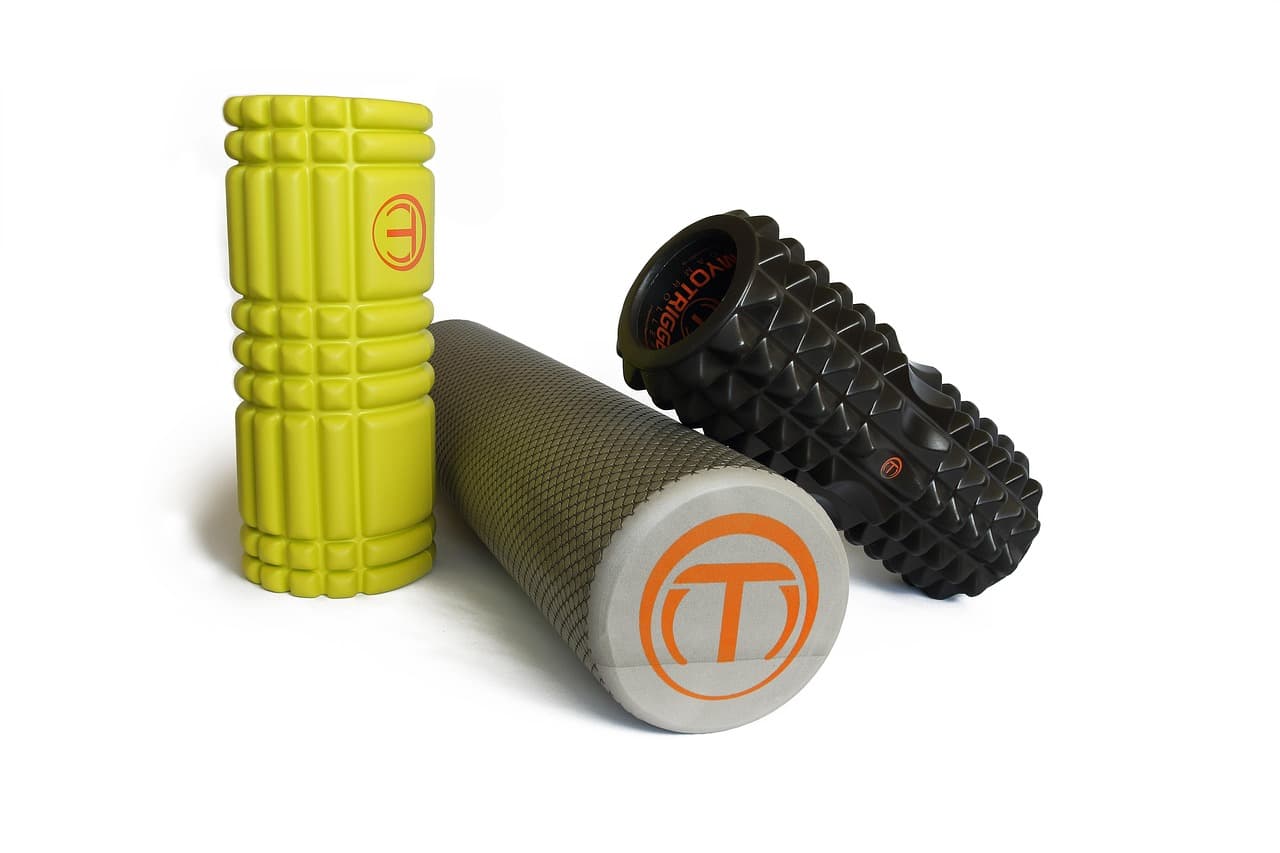
A foam roller gets you most of the same effects for about a tenth of the price. If you already own the massage gun and like it, keep using it. If you're deciding whether to buy one, know that you're buying convenience and a nicer experience rather than a different outcome.
What actually moves recovery
None of this is the main event, and I'd rather say that plainly than let three sections about gadgets imply otherwise.
Sleep does more than everything else here combined, and it's the one people are most willing to trade away. There's a whole post on what sleep does for lifters over 30 and how to fix the four things that most often break it for tech professionals, and I'd point almost anyone at that before I'd point them at a tub.
Protein and total calories come next. You can't repair tissue you don't have material for.
Then there's the least popular answer: training you can actually recover from. A lot of what people try to fix with recovery tools is a programming problem wearing a recovery costume. If you're perpetually sore and flat, the useful move is usually a deload week, not a colder tub.
None of that is sellable, which is roughly why the recovery industry doesn't sell it.
How to fit the tools in if you enjoy them
Enjoyment is a real reason to do something. I don't think everything in your week has to be optimized, and a sauna you look forward to on a Saturday morning is doing something for you that doesn't show up in a hypertrophy trial.
So here's how I'd fit each one around training rather than talk you out of it.
Cold plunge: non-lifting days, or four to six hours after you lift. If your training is mostly strength rather than size, you have more latitude here. If you're in a competition or a heavy travel block, plunge whenever it helps you show up tomorrow.
Sauna: whenever you like, including right after lifting. Rehydrate first. If you want it to serve recovery specifically, the basketball trial that showed a benefit used about 20 minutes.
Massage gun or foam roller: before training as part of the warm-up, where the short-lived range of motion bump is actually worth something, or in the evening if it helps you feel better. Both are fine.
The one arrangement worth changing is the default my Sunnyvale client had landed on: heaviest lifting sessions followed immediately by the coldest water available, every week, on the theory that more recovery input equals more recovery. That's the one where the input and the goal pull against each other.
He kept the membership. He moved the plunges to Wednesday and Saturday, neither of which is a lifting day for him, and started using the sauna on the way out of the gym instead. That was five months ago and his arms have changed. I'd be overstating it to credit the schedule change, since he also added a set to most of his upper body work around the same time and his sleep got better when his kid started sleeping through the night. Three variables moved. But he's no longer paying for something that was working against him, which was the part I could actually be sure about.
Where to go from here
If you're spending real money on recovery, the honest first question is whether your training and sleep are in a state where recovery is the bottleneck. Often it's the program, and no amount of cold water fixes a program.
If you want a read on where your body is actually limited, the free movement screen scores six areas including your hips, ankles, and core in about five minutes. No email required. It's the same assessment I run with new clients, and it tends to surface the thing that's genuinely holding training back, which in my experience is rarely recovery hardware.
And if you're training hard, sleeping reasonably, eating enough, and still feel flat month after month, that's usually a programming conversation rather than a purchasing one. That's what one-on-one training is for. I've logged more than 12,000 sessions with adults around San Jose and the Bay Area, and I've never once had someone's progress turn around because they bought a better tub.
Ready to train smarter?
Get a personalized program built around your goals, your body, and your schedule.
Book Your Free ConsultationRelated Articles

Alcohol and muscle recovery after 40: what two drinks actually cost you
The research everyone cites for "alcohol kills your gains" used twelve drinks. Here's what the dose-response data says about two, and a three-week check to find your own answer. From a San Jose trainer with 12,000 sessions logged.

When Work Stress Should Change How You Train: A Busy Professional's Guide
A San Jose trainer's framework for knowing when life stress should change your workout — five honest signs, a green/yellow/red week decision system, and how to come back without losing the strength you built.
Hydration and Electrolytes for Strength Training After 40: What Changes and What to Actually Drink
A San Jose trainer's practical guide to hydration and electrolytes for lifters over 40 — what shifts in your body, what to drink before, during, and after a session, and when cramps are a hydration issue versus a programming one.