
Hydration and Electrolytes for Strength Training After 40: What Changes and What to Actually Drink

Jeffrey Sun, ACE-CPT
June 2, 2026 · 11 min read
ACE-certified personal trainer specializing in functional movement, mobility, and strength training for busy professionals in San Jose and the Bay Area.
Book a free consultation →
A client of mine in his early fifties, a longtime engineer in Mountain View, started getting calf cramps mid-set on heavy deadlifts. Always the same set, always the second working set, always the right calf. He'd been training for years and had never had this problem. Naturally, the first thing he did was buy a fancy electrolyte powder. It didn't help. The cramps kept coming.
We pulled apart what was actually going on. Three nights of broken sleep that week. Two business trips in the last month. He'd been training the same volume as always while his recovery had quietly collapsed. The cramp wasn't a hydration problem. It was a recovery problem wearing a hydration costume.
That's a story I see a lot with the over-40 lifters I work with. Hydration and electrolytes genuinely matter more as you get older, and the body does change in ways that make this stuff non-trivial. But it's also the easiest thing to blame when something feels off, which means people sometimes solve the wrong problem with a thirty-dollar bag of mineral powder.
Why hydration changes when you cross 40
A few things shift quietly as you age, and most of them work against staying well hydrated.
Total body water drops. A younger adult body is roughly sixty percent water. By your fifties and sixties, that number creeps downward, partly because you carry a little more body fat (which holds less water) and a little less muscle (which holds a lot). It's not a cliff, but the buffer you used to have is smaller.
Your thirst response also blunts. This is one of the better-documented findings in aging research. By the time you actually feel thirsty in your forties or fifties, you're often already a little dehydrated. In your twenties, thirst was a reasonably honest early warning. After forty, it's a lagging indicator at best.
Kidney function changes too. Older kidneys are slightly less efficient at conserving water when you're dry, so the body holds onto less of what you do drink. The combined effect is that the same hydration habits that worked fine in your thirties leave you running a small daily deficit a decade later, especially if you're training hard.
The practical upshot: you can't rely on "I'll drink when I'm thirsty" anymore. The signal is too quiet and too late.
What electrolytes actually do during a heavy lift
Electrolytes are minerals that carry an electrical charge in fluid. Your muscles and nerves run on those electrical signals, which is why low levels feel terrible. There are four worth knowing about.
Sodium is the one you lose the most of through sweat, and it's the one most directly tied to exercise performance. Sodium pulls water into your blood and muscles, and it's the main electrolyte your nervous system uses to fire muscle contractions. If you're a heavy sweater or training in heat, this is the one to think about first.
Potassium works with sodium to manage muscle contraction. You get plenty of it from normal food — bananas, potatoes, leafy greens, beans, salmon — so true deficiency from training is rare for most people eating an adult diet. Sodium runs out faster than potassium during a workout.
Magnesium is involved in muscle relaxation (the opposite of contraction) and plays a role in sleep quality. A lot of adults run low on magnesium because the modern diet isn't great for it, and a small supplemental dose at night has become one of the more popular interventions for both recovery and sleep. It's not magic, but it's worth knowing about.
Calcium matters for muscle contraction too. Most people get enough from food (dairy, leafy greens, fortified non-dairy milks) and don't need to think about it during training.
For a session at moderate intensity in a temperature-controlled studio, plain water is usually fine. Where electrolytes start mattering is hot rooms, long sessions, heavy sweaters, and people who already cramp.
The pre-lift window: what to drink in the 2 hours before you train
A simple rule that works for most people I coach: aim for sixteen to twenty ounces of water in the two hours before you train. Not all at once. Sipped across the window so you actually absorb it.
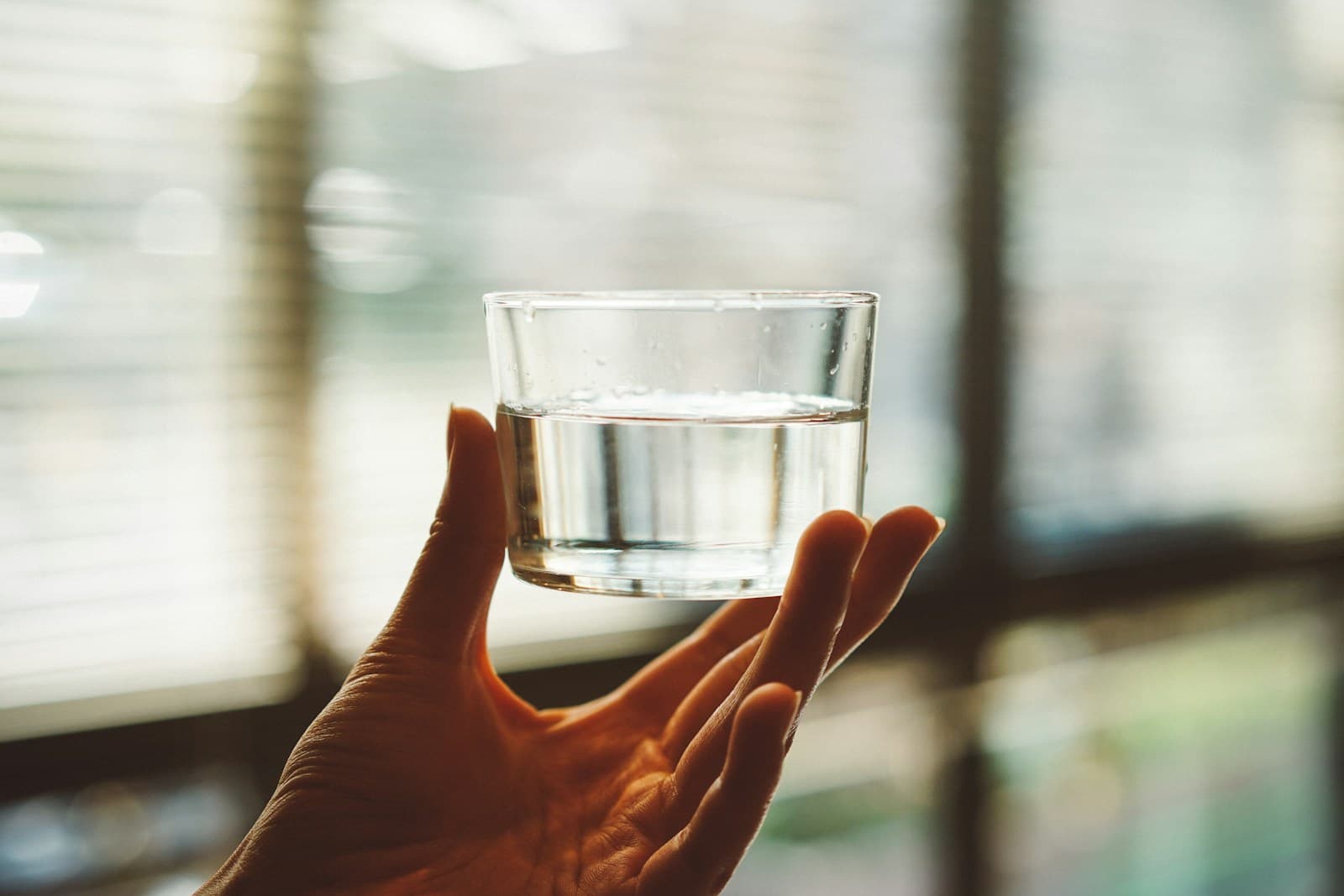
Coffee in this window is fine. Yes, caffeine is a mild diuretic, but research on regular coffee drinkers is clear that the net hydration effect is basically neutral. If you've been drinking coffee for years, your usual morning cup isn't dehydrating you. What it does do is signal the bladder a little more aggressively, which is why I'd avoid chugging a giant mug right before you lift unless you want to take a bathroom break mid-session.
If you're training within an hour of waking up, sip rather than chug. You won't absorb a quart of water in twenty minutes. You'll just feel sloshy. Better to drink steady amounts the night before and through the early morning than to try to make up for low overnight hydration in the last fifteen minutes.
The right time for a small dose of sodium pre-workout depends on you. If you're a heavy sweater, you live somewhere hot, or you've been cramping, a pinch of salt in your pre-workout water or a small electrolyte drink helps. If you're training in an air-conditioned studio at moderate intensity, you can skip it without missing much. Make sure your form is right before lifting too. Our warm-up routine for lifters is what I have my clients run before heavy days, and it does more for cramping than most hydration tweaks.
During the session: when plain water is fine and when it isn't
For most strength sessions under sixty to seventy-five minutes, in a normal-temperature space, plain water is enough. Have a twenty-four ounce bottle next to you, sip between sets, finish it by the end of the session. That's the default.
Where I'd add electrolytes mid-session is when at least one of these is true. You're training in a hot room or outdoors in heat. You sweat heavily enough to soak a shirt. The session is going over ninety minutes. Or you've consistently struggled with mid-set cramps even with adequate water.
If any of those fit you, a low-sugar electrolyte drink mixed in your bottle is the simple move. There are reasonable products on the market, and there's also a cheap version: a pinch of table salt and a splash of orange juice in water gets you sodium and a small amount of potassium for almost nothing. Both work. The fancy powder is mostly buying convenience and taste, not better physiology.
What I'd avoid is the high-sugar sports drinks designed for endurance athletes running for two hours. The sugar load is more than a strength session calls for, and it sits in your stomach in a way you don't want during heavy lifts.
Post-lift rehydration that supports recovery, not just thirst
After a hard session, your body is in a slight deficit no matter how well you drank during. The goal in the hour after training is to refill what you lost.
A rough rule that works: for every pound you're lighter after the session than before, drink sixteen to twenty ounces of fluid in the next hour. Most people don't weigh in and out, but a rough sense of your sweat loss is fine for a starting estimate. A summer session in a warm studio for an hour often costs a pound or two of water. A cool-weather forty-minute session might cost almost nothing.
Sodium with the rehydration matters more here than people realize. Plain water alone, in large amounts, can actually be less effective because it dilutes blood sodium and gets peed out faster. Some salt with the fluid (from food, an electrolyte drink, or even a salty snack) helps you retain more of what you drink. This is one place where post-workout protein shakes do double duty — most of them have enough sodium and potassium baked in to help with rehydration alongside the protein.
If you trained early and have a full day ahead, the rehydration matters even more than it would for an evening session you can sleep off. Walking around all day in a fluid deficit shows up as the late afternoon energy crash that a lot of my clients describe.
Cramps mid-set: hydration, electrolyte, or programming problem?
This is where I see the most confusion. Cramps get attributed to hydration almost reflexively, and sometimes that's right. Often it isn't.

A rough decision tree from what I've seen in the studio.
Multi-muscle cramps in heat or after heavy sweat. Likely sodium and fluid. Address with both. This is the classic textbook cramp.
One specific muscle that always cramps on the same exercise. Usually a programming or movement issue. The muscle is being asked to do more than it's ready for, or compensating for a weak link upstream or downstream. Adding salt won't fix this.
Cramps that show up after a stretch of poor sleep, high work stress, or back-to-back hard weeks. Recovery debt. Your body has been borrowing from a depleting bank for weeks. The cramp is a symptom; the fix is rest, not powder. Worth knowing when to take a deload week because this is exactly when one is overdue.
Cramps in someone who trained on coffee and three sips of water. Just hydration. The fix is drinking more, earlier.
The pattern I keep coming back to with my over-40 clients: if the same muscle cramps on the same lift week after week, it's almost never a hydration issue, no matter how many electrolytes you throw at it. That's also where our movement screen can be useful, because if a specific joint is restricted or asymmetrical, the muscle compensating for it is going to be the one that gives out under load. Spotting the actual weak link is usually more useful than a stronger drink.
A simple daily hydration template for a Bay Area desk worker who lifts three times a week
This is roughly what I have most of my clients aim for. Adjust if you're a particularly heavy sweater, you train in heat, or you've been told otherwise by a doctor.
A reasonable daily floor is half your body weight in ounces of total fluid. So a 170-pound person, around 85 ounces. That's water plus tea plus coffee plus the water in your food. It's not a strict target; it's a sanity check.
Morning, with breakfast. Sixteen ounces of water alongside coffee. If you're a salt-craver or a heavy sweater, a pinch of salt in the water doesn't hurt.
Mid-morning, with a snack or another coffee. Another twelve to sixteen ounces. By lunch you should already be most of the way to a third of your daily fluid.
Pre-workout, in the two hours before training. Sixteen to twenty ounces, sipped, not chugged.
During the workout. Sips between sets from a twenty-four ounce bottle, ideally finishing it by the end of the session.
Post-workout, in the next hour. Twenty-four to thirty-two ounces, with electrolytes mixed in if you sweated heavily or trained over an hour. A protein shake here often does double duty.
Evening. Whatever's left to hit your daily floor, finished an hour or two before bed so you're not up at 3 a.m.
The most important habit, more than any single window, is just drinking steadily through the day instead of remembering at 4 p.m. that you've had two cups of coffee and nothing else. Set a glass on your desk and refill it without thinking about it. Most of the hydration problems I see with desk workers come from forgetting, not from a flawed protocol.
Where to go from here
If your cramps stay constant even with good hydration habits, that's usually a sign the issue isn't actually in the bottle. A five-minute movement screen is the cheapest way to find out whether a restricted joint or compensation pattern is the real reason a specific muscle keeps giving out under load. It won't tell you anything about your sodium. It will tell you which joints are doing more work than they should be.
And if you'd rather have someone build the whole picture around your body, your training, and your actual week, that's what one-on-one training is for. I've been working with busy professionals in San Jose and the South Bay for over twelve thousand sessions, and a meaningful share of them have come in convinced they had a hydration problem when what they actually had was a programming problem, or a sleep problem, or both. Sorting that out is most of the value of having a coach. The first conversation is free, and we can map out where your energy and your performance are actually being lost.
Ready to train smarter?
Get a personalized program built around your goals, your body, and your schedule.
Book Your Free ConsultationRelated Articles

Meal Prep for Busy Professionals Who Work Out
How Bay Area clients meal prep without losing their weekends. Practical system from an ACE-certified trainer in San Jose with 12,000+ sessions.

How to breathe during heavy lifts: a desk worker's guide to bracing
Bracing falls apart for most desk workers because they've been chest-breathing for years. A San Jose trainer's guide to diaphragmatic breathing, the Valsalva maneuver, and how to breathe under real load.

How Often Should You Strength Train After 30?
The honest answer for busy professionals: two or three days a week usually fits best, while higher frequencies work great when your schedule and recovery can support them. A San Jose trainer breaks down the trade-offs.