
Alcohol and muscle recovery after 40: what two drinks actually cost you

Jeffrey Sun, ACE-CPT
September 7, 2026 · 12 min read
ACE-certified personal trainer specializing in functional movement, mobility, and strength training for busy professionals in San Jose and the Bay Area.
Book a free consultation →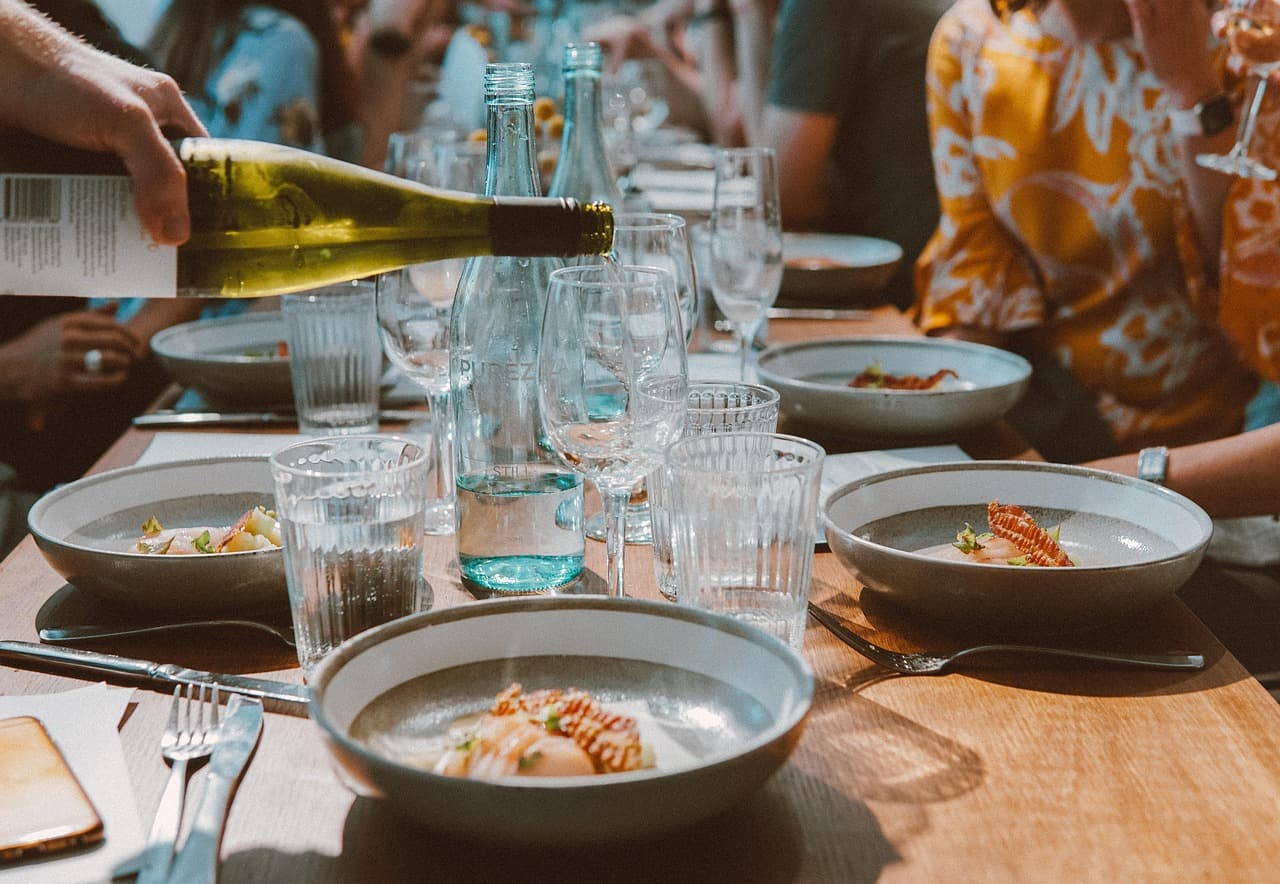
A client in Los Gatos asked me this one sideways, the way most people do. We were three sets into a squat session and he said, half to himself, that he'd had a couple of glasses of wine at a work dinner Thursday and wasn't sure if that was why the bar felt heavy. He wasn't really asking for permission. He was asking whether the thing he'd read was true, the one that says alcohol cuts muscle protein synthesis by a quarter and undoes your week.
I get a version of this constantly, and almost always in that apologetic tone. So I went and read what that claim is actually built on, because the answer turned out to be more interesting than either "it's fine" or "it's ruining your gains."
The study behind that number used about twelve drinks. The research on two drinks says something different, and it isn't about your muscle at all.
The 24 percent number, and the twelve drinks that produced it
Search this topic and you'll land on the same finding over and over. Alcohol reduces muscle protein synthesis by 24 percent even when you drink protein alongside it, and by 37 percent when you don't. That comes from Evelyn Parr and colleagues, published in PLOS One in 2014, and it's a well-run study.
Here's what almost nobody quoting it mentions. Eight physically active men, in a crossover design, did resistance work and then cycling intervals. Afterward they drank 1.5 grams of ethanol per kilogram of body weight. The paper describes that as 12 plus or minus 2 standard drinks. For an 80 kilogram adult that's 120 grams of ethanol, somewhere around eight or nine US standard drinks, since a US standard drink is 14 grams and the Australian one the paper counts in is 10.
That's not a glass of wine with dinner. That's a night out you'd remember.
I'm not saying the study is wrong. It measured what it set out to measure, and it measured it carefully. I'm saying that when a page takes a result produced by eight or nine drinks and puts it under a headline about whether you should have a beer after your Saturday session, the number stops describing anything real about your Saturday.
The reason this matters is that the dose question has actually been tested directly, and the answer is not what the headline implies.
Same lab, two doses, two different answers
Matthew Barnes and colleagues at Massey University ran a pair of studies that sit next to each other almost perfectly.
In the first, published in the European Journal of Applied Physiology in 2010, ten healthy men did 300 maximal eccentric contractions of the quadriceps on one leg. Eccentric work is the deliberately damaging kind, the lowering half of a rep done hard. Afterward they drank either vodka and orange juice at 1 gram of ethanol per kilogram of body weight, or plain orange juice. At least two weeks later they repeated the whole thing on the other leg with the other drink.
At 36 hours, the orange juice trial had lost about 29 percent of isometric torque. The alcohol trial had lost about 41 percent. Similar gaps showed up for concentric and eccentric torque. The non-exercised leg didn't change under either condition, which is the detail I find most convincing: whatever alcohol was doing, it was doing it to damaged muscle specifically rather than to the whole body.
One gram per kilogram is roughly six US drinks for an 80 kilogram adult. Still a real night.
So the same group ran it again in 2011 with half the dose. Same protocol, same 300 eccentric contractions, ten men, this time 0.5 g/kg against an isocaloric non-alcoholic drink. Both conditions lost force over time, as you'd expect after that much eccentric work. But there was no difference between them at any timepoint measured.
Half the alcohol, and the effect the first study found disappeared.
For an 80 kilogram adult, 0.5 g/kg lands around three US standard drinks. That's not a small amount, and I want to be careful not to swing the pendulum too far in the other direction. Ten men in a controlled lab is a small sample, "no statistically significant difference" isn't proof of no effect, and neither study followed anyone for months to see what accumulates. But if you're trying to reason about two or three drinks, this is the closest evidence there is, and it doesn't support the idea that your muscle is paying a meaningful bill.
Which leaves the question of where the bill actually lands, because most people at 45 can tell you from experience that two glasses of wine on a weeknight shows up somewhere.
Sleep is where two drinks show up
The most useful recent read on this is a systematic review and meta-analysis by Gardiner and colleagues in Sleep Medicine Reviews, published in 2025, pooling 27 studies on alcohol and subsequent sleep in healthy adults. What makes it worth reading over the older work is that it specifically hunted for the dose relationship.
The headline finding runs the opposite direction from the muscle research. Disruption to REM sleep appeared at low doses, which the authors put at 0.5 g/kg or under and gloss as roughly two standard drinks, and got progressively worse as the dose climbed. The onset of the first REM period gets pushed later and total REM duration drops.
So at around three drinks, your quadriceps can't tell the difference. Your REM sleep can.

The older review by Ebrahim and colleagues from 2013 fills in the shape of the night. Alcohol shortens the time it takes you to fall asleep and consolidates the first half of the night at essentially any dose. Then the second half falls apart. You wake more, you sleep more lightly, and if you've ever been wide awake at 4 AM after a perfectly pleasant dinner, that's the mechanism, not a coincidence.
This is why the "it helps me sleep" belief is so durable. The part of the night you're conscious for, the falling-asleep part, really does get easier. The part that degrades happens while you're not in a position to notice it.
That review also comes with a real caveat worth stating: it's a qualitative synthesis and it drew published criticism on its methods. And the 2025 meta-analysis was honest about its own limits, reporting large uncertainty on total sleep time, sleep efficiency, and time awake after falling asleep. The REM finding is the solid one. The rest is fuzzier than most articles admit.
Still, REM is not a throwaway. I've written before about what sleep actually does for muscle recovery, and the practical version is that the training you did doesn't fully become adaptation until you sleep on it. If two drinks reliably cost you a chunk of that, the cost is real. It just isn't the cost the internet is selling you.
Why the same two glasses land harder at 45
Nothing about the drinks changed. Two things about you did.
The first is plumbing. Alcohol distributes through body water, and total body water declines with age as the ratio of lean tissue to fat shifts. The same two glasses spread through a smaller volume, so peak blood alcohol runs higher than it did at 25 for an identical pour. Most people notice this well before they can explain it, usually somewhere in their late thirties.
The second is that you had more margin at 25. A 25-year-old with a fragmented second half of the night still shows up Saturday and lifts fine, because there was slack in the system. At 45, with a job and kids and a training program that's already working close to what you can recover from, the same disruption comes out of a thinner reserve.
I want to be clear that this is a description of a trade-off, not an argument. The Thursday work dinner is worth something. So is the glass of wine on the deck on a Friday in July. Different people are running different lives and are correctly willing to pay different prices for different things. What helps is knowing what it costs you specifically, so you're choosing rather than guessing.
Before or after, and which session actually suffers
Two practical patterns come out of the research above.
Drinking after a hard session is the one with the clearest downside, and only at higher doses. The Barnes work found the effect specifically in the leg that had done the damaging work, so a night of real drinking after a session with a lot of novel or eccentric loading is the worst combination on offer. If you did your first heavy lower-body day in six weeks and then had five drinks at a wedding, expect Monday to be rough in a way that's more than the wedding.
Drinking on a rest day mostly costs you the following morning's session by way of sleep, not the muscle repair itself. Which means the common instinct, that a rest day is the safe day to drink, is only half right. It's safer for the tissue and no safer for the session that comes after.
There's a scheduling implication people miss. If you drink Friday and train Saturday morning, the session you're paying for is Saturday's. If your Saturday is the day you do your heaviest work of the week, you've quietly built a program where your most demanding session always runs on your worst sleep. I've seen this exact pattern in more training logs than I can count, and moving the heavy day to Sunday fixes more than any change to the drinking does.
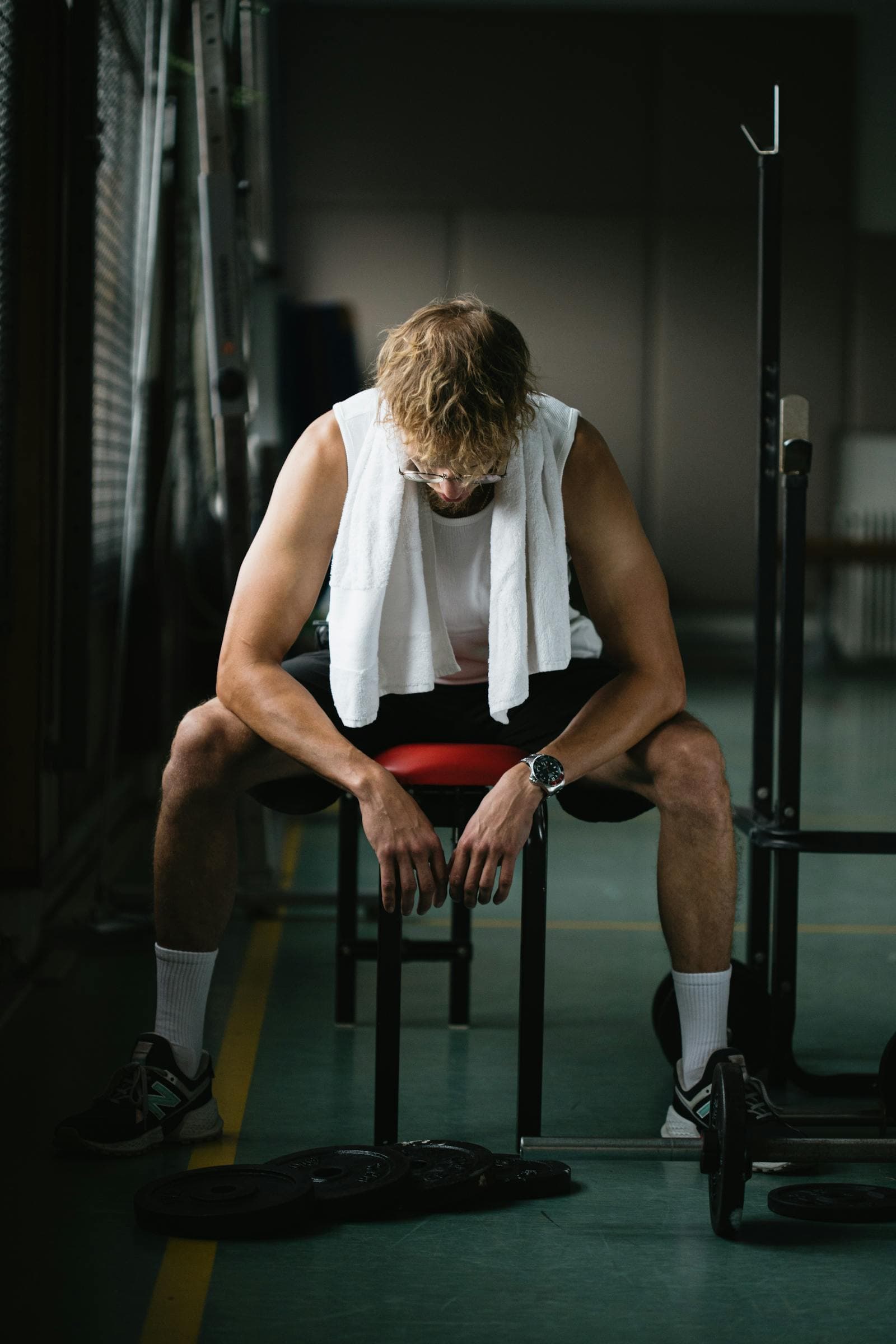
A three-week check you can run on yourself
Population averages don't tell you your own number. Alcohol tolerance and how much a bad night costs your lifting both vary enough between people that the only honest answer is one you generate yourself.
This is the version I give clients.
Pick two lifts and freeze them. One upper, one lower. Same rep range, same rest intervals, for three weeks. These are your measuring instrument and they only work if you leave them alone.
Log three things per session. The top set, weight and reps. A one-to-ten rating of how hard the warm-up sets felt, taken before you know how the session goes. And the number of drinks the night before, honestly, written down at the time rather than reconstructed later.
Change nothing else. Not the program, not your bedtime. If you start this the same week you add a fourth training day, you've learned nothing.
At three weeks, sort the sessions into two piles. Ones that followed a night with drinks, and ones that didn't. Compare within each lift.
What you're looking for is a consistent gap, not a single bad day. Every training log has bad days. If your warm-up sets rate a point or two harder after drinking nights and your top set gives up a rep, that's a real signal and you now know its size. If the two piles look the same, you also know something, and you can stop wondering.
Two honest caveats. Three weeks is short, so a borderline result is exactly that, and worth another three. And this only works if your training is consistent enough to have a baseline. If you lift twice one week and once the next, there's nothing to compare against.
Most people who run this land somewhere in the middle, and the number they come back with is more specific than what they went in with. One or two drinks with dinner, no detectable difference. Four or more, an obvious one. That's a workable rule you built from your own data rather than from a headline about a study on eight men.
When drinking isn't the variable
Someone comes in convinced that their weekend drinking is why they've plateaued. We look at the log, and the program hasn't changed in seven months. Same weights, same sets, week after week. There's nothing for the drinking to be blunting, because nothing was being asked of the body in the first place.
Alcohol is a plausible-sounding explanation, which is exactly what makes it a comfortable one. It gives you a reason for the plateau that lives outside the gym. Meanwhile the actual constraint is sitting right there in the training log, and if you're not sure how to read yours, the effort self-check walks through what a program that's genuinely progressing looks like against one that's just repeating.
That doesn't mean the drinking is free. Your REM sleep is paying for it and the meta-analysis is fairly clear on that. It means the order of operations matters. Fix the program that isn't progressing before you troubleshoot the two glasses of wine, or you'll give up something you enjoy and get nothing back for it.
The Los Gatos client, incidentally, ran the three-week check. His two glasses at a work dinner turned out to be worth about nothing. Five drinks at his brother's birthday cost him a visibly worse Sunday. He kept the work dinners and started scheduling his heavy day away from the birthdays, which is a better outcome than either guilt or permission would have gotten him.
If you want a clearer read on where your training is actually limited before you go changing anything, the free movement screen takes about five minutes, asks for no email, and scores six areas I check on every new client. It tends to turn up bottlenecks that no adjustment to your Friday night would touch.
And if the honest problem is that your program stopped progressing and you're not sure what to change, that's a coaching conversation rather than a lifestyle one. That's what one-on-one training is for. I've logged more than 12,000 sessions with adults around San Jose and the South Bay, and the ones who broke through a long plateau almost always did it by changing what happened in the gym.
Ready to train smarter?
Get a personalized program built around your goals, your body, and your schedule.
Book Your Free ConsultationRelated Articles
Sleep and muscle recovery for strength training after 30: a coach's playbook
Sleep matters more than your workout for over-30 lifters. A San Jose trainer's guide to how poor sleep wrecks recovery, when to change your training, and what actually fixes the pattern for busy professionals.
Cold Plunge, Sauna, and Massage Guns: What Actually Helps Recovery After 40
A cold plunge right after lifting can work against the muscle you just trained for. What the research says about cold water immersion, saunas, and massage guns, and how to time them so they help instead. From a San Jose trainer.
Hydration and Electrolytes for Strength Training After 40: What Changes and What to Actually Drink
A San Jose trainer's practical guide to hydration and electrolytes for lifters over 40 — what shifts in your body, what to drink before, during, and after a session, and when cramps are a hydration issue versus a programming one.