
Strength Training for Longevity After 30

Jeffrey Sun, ACE-CPT
April 12, 2026 · 12 min read
ACE-certified personal trainer specializing in functional movement, mobility, and strength training for busy professionals in San Jose and the Bay Area.
Book a free consultation →
A software engineer in his late thirties came to me a couple months ago after his annual physical. His doctor had told him his grip strength was in the bottom twentieth percentile for his age and his bone density was trending the wrong way. He didn't look unhealthy. He ran a few times a week and ate reasonably well. But his body was quietly losing the one thing the research keeps flagging as the strongest predictor of how well you age. Muscle.
He's not an outlier. Something like a third of the clients walking into my gym in San Jose are in roughly the same spot. Smart, health-conscious people who exercise but have never done serious strength work. They start noticing things that weren't happening at twenty-five. Recovery is slower. Something tweaks in their back during yard work that used to shrug off worse. Their energy cliffs out by mid-afternoon.
The research has been pointing at the same conclusion for years: if you care about aging well, strength training is the foundation. Cardio and flexibility matter, but they aren't the thing that determines whether you're still moving well at seventy.
What happens to your body after 30
Starting around age thirty, most people lose 3 to 8 percent of their muscle mass per decade. The technical term is sarcopenia. It accelerates with age, steepens in your fifties, and by your seventies it becomes the difference between being independent and a single fall rewriting your life.
But the damage isn't decades out. In your thirties and forties, muscle loss shows up in ways that already affect your day-to-day.
Your resting metabolism drops, so you burn fewer calories doing nothing. That's a huge part of why people put on weight in their thirties even when their habits haven't really changed. Joints start taking hits they weren't built to absorb solo, because weaker muscles mean your knees, shoulders, and lower back are doing extra work. Bone density slides too. Bones only get stronger when muscles pull on them under load, and less muscle means less stimulus. That's where osteoporosis quietly starts. Bone is also pickier about the kind of load than most people expect, which is why walking and light weights don't do much for your hip and spine even in large amounts. Insulin sensitivity gets worse for the same underlying reason. Skeletal muscle is the primary site for glucose disposal, so when you lose muscle, blood sugar management gets harder, which feeds straight into metabolic disease risk.
All of it is reversible with strength training, at any age. But the earlier you start, the larger the account you're drawing down from later.
What the research actually says
This isn't hand-wavy wellness advice. The data on this is unusually specific.
A 2022 meta-analysis in the British Journal of Sports Medicine pulled together data from over two million participants and found that muscle-strengthening activity was associated with a 10 to 17 percent lower risk of all-cause mortality, including cardiovascular disease, cancer, and diabetes.
The part I find most useful to tell clients: the maximum risk reduction came from just 30 to 60 minutes of strength training a week. That's two or three sessions of twenty or thirty minutes each. After about 130 minutes a week, the extra benefit more or less flattened.
The message I take from that, and the one I give every busy professional I work with in the Bay Area, is that you don't have to live in the gym. You have to be consistent with a modest dose of the right kind of training.
Grip strength on its own has shown up as one of the strongest predictors of all-cause mortality in multiple large studies. A stronger grip tracks with a stronger body overall, and it turns out to be a pretty good proxy for how physically resilient you are generally. If you want to know where yours stands, you can test your grip strength at home with nothing but a bar and a timer. Balance holds up the same way. A simple single-leg balance test has been tied to survival odds in adults over 50, and it takes about as long to run as reading this sentence. The one that pulls strength, range, and balance into a single score is the sitting-rising test, where you sit down on the floor and stand back up using as little support as you can.

The five movements that matter most
After more than 12,000 training sessions, most of them with Bay Area professionals who have limited time, I've landed on five foundational movement patterns that cover everything your body needs for long-term strength and function. These aren't fancy. They're effective.
1. Squat
Why it matters for longevity: getting up from a chair, climbing stairs, picking things up from low shelves. These are squat patterns. Lose your squat strength and daily life gets harder in ways you don't notice until it's too late.
Start with: goblet squats, 3 sets of 8 to 10 reps. Hold a dumbbell or kettlebell at your chest. Squat to the depth your mobility allows, chest up, weight in your heels. If full depth is tough, squat to a bench and stand back up.
2. Hinge
Why it matters for longevity: your posterior chain (glutes, hamstrings, lower back) is the engine of your body. Every time you bend to pick something up, carry groceries, or play with your kids, you're hinging. A weak hinge pattern is where most back injuries start.
Start with: Romanian deadlifts, 3 sets of 8 to 10. Hold dumbbells in front of your thighs, push your hips back, lower the weights along your legs with a flat back. Feel the stretch in your hamstrings, then squeeze your glutes to stand. Once the dumbbell version feels solid, the deadlift setup guide covers how to progress to barbell variations including conventional, trap bar, and sumo.
3. Push
Why it matters for longevity: pushing strength protects your shoulders, chest, and arms. It's also directly tied to upper body bone density. People who can't push themselves off the floor have a significantly higher fall risk as they age.
Start with: dumbbell bench press or push-ups, 3 sets of 8 to 12. If push-ups from the floor are too challenging, elevate your hands on a bench. Work toward the floor over time. There's no shame in scaling. I'd rather you do elevated push-ups with perfect form than floor push-ups that wreck your shoulders.
4. Pull
Why it matters for longevity: pulling counterbalances all the forward-hunched posture from desk work. It strengthens your back, shoulders, and biceps while improving posture. A strong pull pattern also protects your shoulder joints, which are among the most injury-prone areas as you age.
Start with: dumbbell rows, 3 sets of 8 to 10 each side. One hand and knee on a bench, pull a dumbbell from arm's length to your hip. Squeeze your shoulder blade at the top. Lower slowly. If you can do a pull-up, even better, but most beginners aren't there yet.
5. Carry
Why it matters for longevity: loaded carries build grip strength, core stability, and postural endurance all at once. Remember that grip strength data I mentioned? Carries are the most direct way to build it. They also train your body to stay tall and stable under load, which is exactly what you need for real-world strength.
Start with: farmer's carries, 3 sets of 30 to 40 yards (or 30-second walks). Pick up the heaviest dumbbells or kettlebells you can hold with good posture. Walk tall. Shoulders down, core braced, chin level.
A sample week for someone who's never done this before
The first month at my gym looks like this for most new clients. It's the conservative version on purpose. Starting too aggressively is the top reason people either quit within a month or hurt themselves.
Weeks 1 through 2: two sessions per week, 25 to 30 minutes each
Each session hits all five patterns at light weight. The focus is learning the movements, not pushing intensity. I'd rather you use a weight that feels easy and nail the technique than go heavy with bad form.
Session A: goblet squat, push-up (elevated if needed), farmer's carry. Three sets each.
Session B: Romanian deadlift, dumbbell row, farmer's carry. Three sets each.
Weeks 3 through 4: two to three sessions per week, 30 to 35 minutes each
Add a small amount of weight. Start combining movements within a session.
Session A: goblet squat, dumbbell bench press, dumbbell row, farmer's carry.
Session B: Romanian deadlift, push-up, dumbbell row, farmer's carry.
Session C (optional): goblet squat, Romanian deadlift, overhead press, farmer's carry.
That's it. Thirty to sixty minutes a week. Right in the sweet spot that the research says delivers maximum benefit. If you want a longer read on why two to three sessions is the sweet spot, when adding a fourth makes sense, and what each frequency actually looks like in a week, the training frequency post covers the whole spectrum.
Mistakes I see with beginners over 30
Starting with a bodybuilding split. Chest day, back day, leg day. That programming was built for twenty-two-year-olds trying to get huge. At thirty-five, with a full-time job and a family, full-body sessions built around compound movements are much more effective per hour spent.
Ignoring mobility. Your joints have been held in a compressed position for years. Jumping straight into heavy squats without working on hip and ankle mobility first is how people end up sidelined. Five minutes of mobility before every session isn't optional past thirty. If you aren't sure where your own mobility is at today, the movement screen will give you a baseline in about five minutes.
Going by feel instead of tracking. Progressive overload, meaning gradually nudging up the weight or reps over time, is the entire mechanism that makes strength training work. If you're grabbing whatever dumbbells happen to be free and picking random exercises, you're exercising. You're not training. Write it down, track the weight and reps, and add a little each week. If you want a more concrete picture of how long it takes to see results from this kind of training, the timeline I see most often is honest about the inflection point at week 8 to 12, which is when most people quit just before the change actually shows up.
Treating soreness as the measure of a good workout. Some soreness is normal when you're starting. But if you're consistently sore enough that it's affecting your work or sleep, you're doing too much. The goal is to train consistently for thirty years, not crush yourself every session and end up needing a week off.
Skipping it when life gets busy. This is the big one. One twenty-minute session beats zero sessions every time. When a client tells me they missed a week because work blew up, my answer's always the same: even a single set of squats and a loaded carry is enough to maintain the signal. Don't let perfect get in the way of consistent.
Why a trainer matters more at this stage
I'm biased here, obviously. But with data from over 12,000 sessions, I can say pretty confidently that clients who work with a trainer in their first three to six months of strength training progress faster and hurt themselves less. They're also a lot more likely to still be training a year later.
The reason isn't magic. When you're twenty-two, your body forgives a lot. Bad form is less likely to injure you. You recover fast and your joints bounce back. At thirty-five or forty, the margin is narrower. A squat with your knees caving in or a deadlift with a rounded back might not hurt the first time or the tenth, but eventually it catches up.
A good trainer catches those things in real time and corrects them before they become the reason you're sitting out for six weeks. They also build a program around the specific restrictions you're carrying. Tight hips from years of sitting, an old shoulder injury, limited ankle mobility. A template from the internet can't see any of that.
Start now, not later
Every year you wait, the hole gets deeper. Muscle loss doesn't pause while you think it over. The good news is that your body keeps responding to strength training at any age. People in their sixties and seventies can build real muscle and strength with a decent program. The sooner you start, the more you're working with.
If you're a professional in San Jose, Sunnyvale, or the broader South Bay and you've been thinking about starting strength training but don't know where to begin, that's what I do. I've spent years helping people in your position build the kind of strength that doesn't just look good in the gym but actually carries over into the life they want to be living at sixty. Twelve thousand sessions in, and counting.
Spring is a good time to start. Daylight is stretching out, energy tends to be up. There's a whole year ahead to build a foundation. Don't sit around waiting for the perfect plan. Pick the basics and be consistent. The compounding takes care of itself.
Ready to train smarter?
Get a personalized program built around your goals, your body, and your schedule.
Book Your Free ConsultationRelated Articles
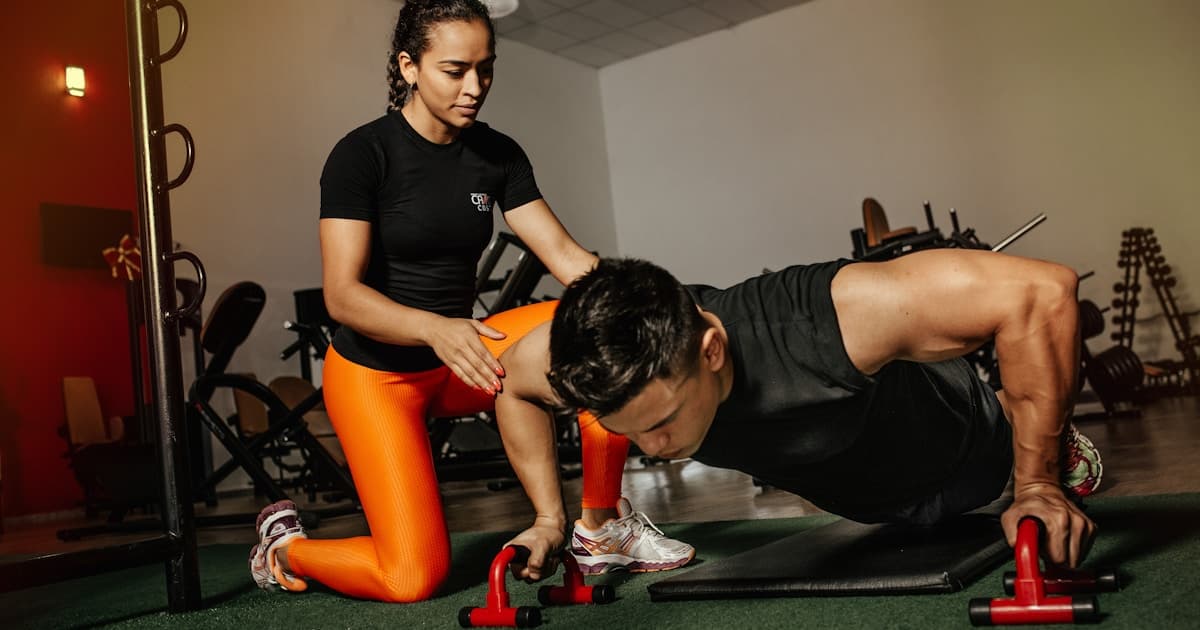
Functional Movement Exercises for Desk Workers
Fix your posture, loosen your hips, and build real-world strength. A San Jose trainer's go-to exercises for undoing 8 hours of sitting.
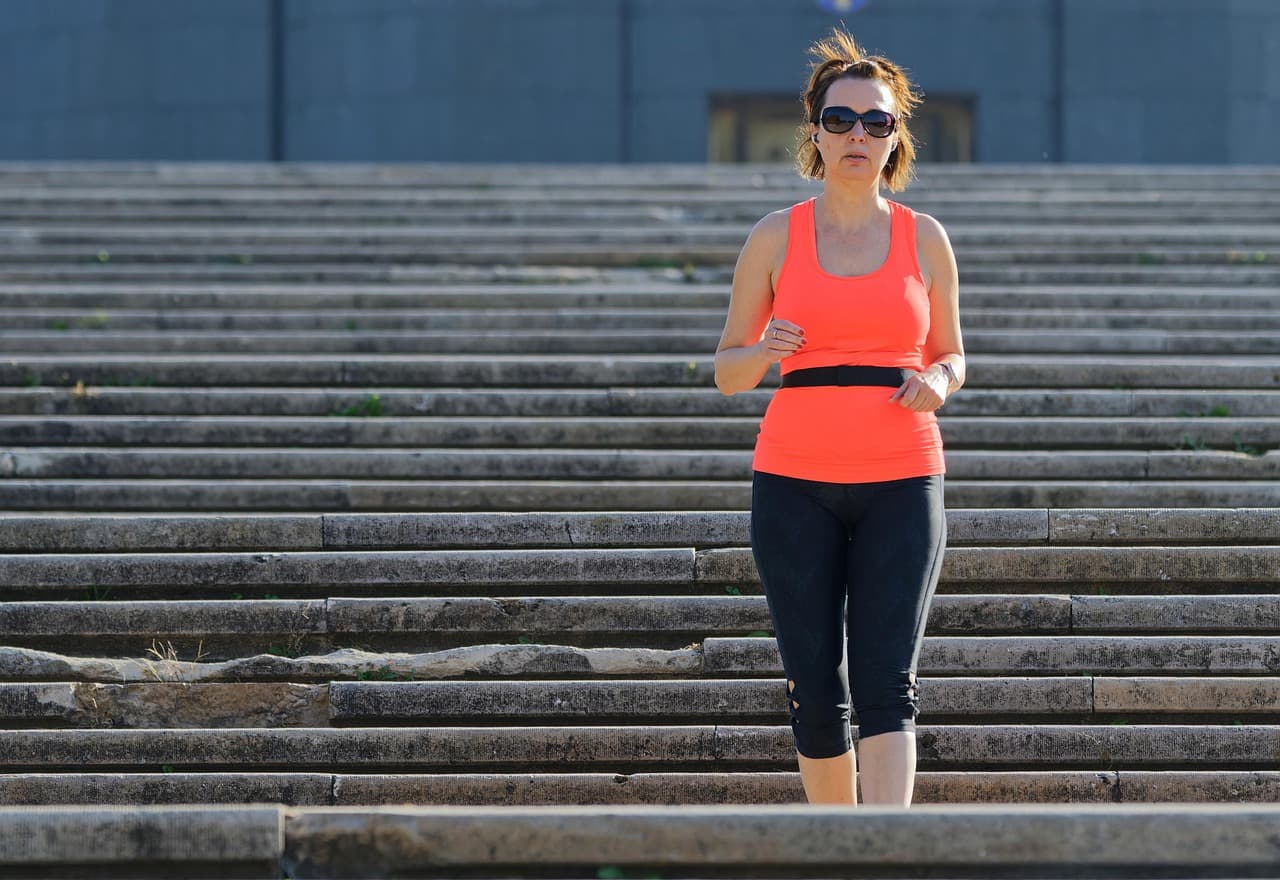
Test your muscle power at home after 40: three leg power tests you can score, and why power fades before strength
Muscle power drops years before strength does, and no gym number catches it. A San Jose trainer walks through a sit-to-stand power test, a stair power test, and a vertical jump with pass, borderline, and fail lines, then sorts a low score into the four things that cause it.
Grip Strength Test at Home: How to Measure It and Build It After 40
A San Jose trainer's guide to testing your grip strength at home with a dead hang, what counts as a decent score after 40, and the moves that actually build it.