
Exercises for Bone Density After 40: What Actually Loads Bone (and What Doesn't)

Jeffrey Sun, ACE-CPT
August 25, 2026 · 12 min read
ACE-certified personal trainer specializing in functional movement, mobility, and strength training for busy professionals in San Jose and the Bay Area.
Book a free consultation →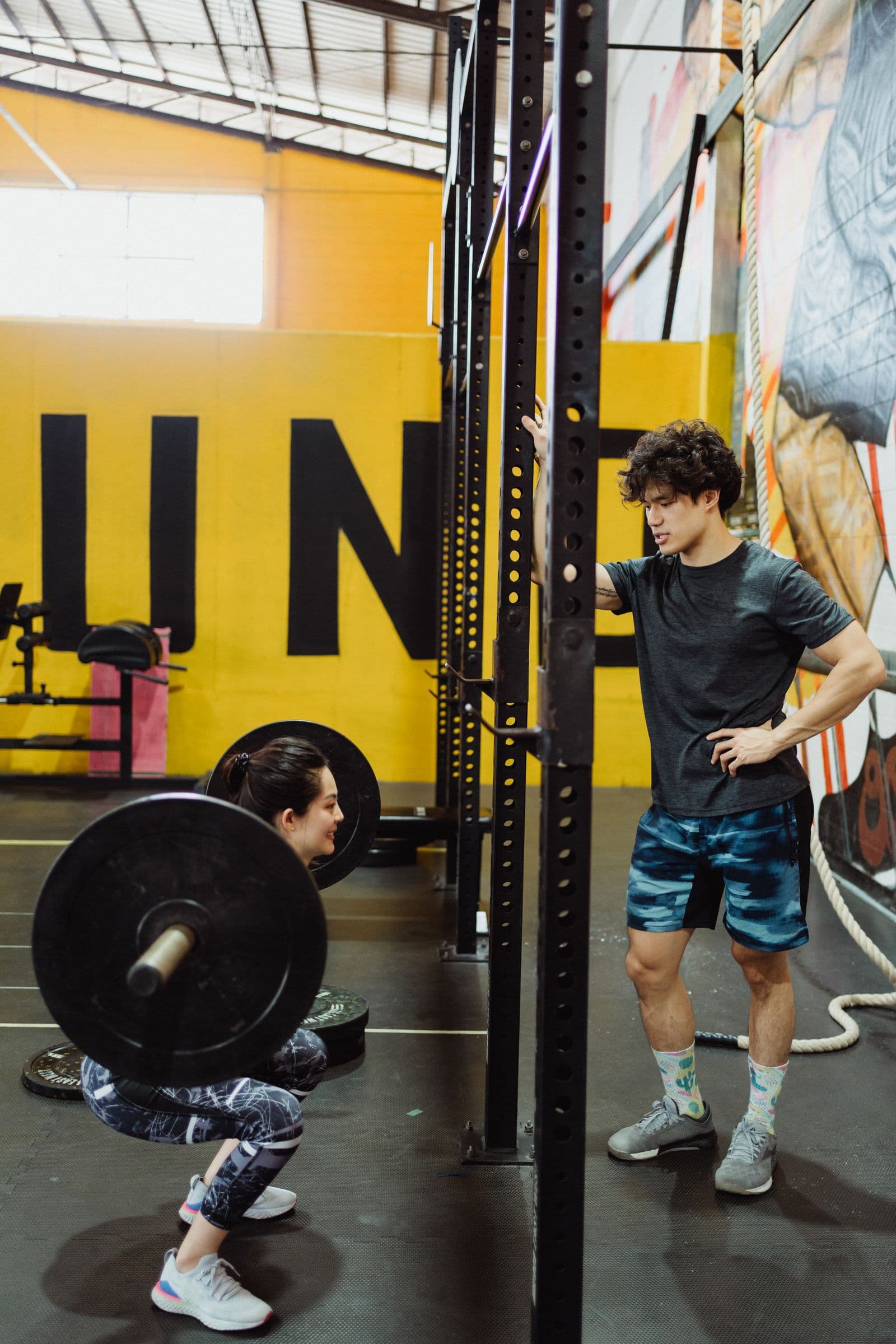
A client came to me last spring with a DEXA result she didn't know what to do with. Forty-four years old, T-score of -1.4 at the lumbar spine, which put her in the osteopenia range. Her doctor had told her to take calcium and vitamin D, walk more, and come back in two years.
She'd been walking about 12,000 steps a day for six years already.
That's the part that stuck with me. She wasn't sedentary, wasn't uninformed, and wasn't ignoring advice. She was doing the thing she'd been told to do, at a volume most people never reach, and the recommendation was to keep doing more of it.
Bone doesn't really work that way.
The advice most people get doesn't reach bone
Search for bone density exercises and you get a familiar list. Walking. Yoga. Light dumbbells. Resistance bands. Stair climbing. Sometimes dancing.
Every one of those is a reasonable thing to do with your time, and I'd rather someone did any of them than nothing. But most of that list is built around a mistaken picture of how the skeleton decides to build itself.
Muscle responds pretty well to volume. Do enough sets in a reasonable range of effort and you'll get some adaptation, and you can accumulate that adaptation over a long session.
Bone reads a different signal. It responds to how much force goes through it, how fast that force arrives, and whether the direction is one it isn't used to. Bone is a metabolically expensive tissue, so your body is conservative about adding more of it. It adds where the loading is genuinely out of the ordinary and it quietly withdraws where the loading has become routine.
Walking, for a person who already walks, is the definition of routine. So is a set of 15 with a weight you could have done 25 times.
Force and speed, not minutes
There's a piece of bone physiology that almost none of the popular articles mention, and it explains most of the confusion.
Bone cells stop paying attention very quickly. The signal saturates within a handful of loading cycles. The first few reps of something genuinely demanding carry nearly all of the message, and rep number 40 of the same thing carries close to none. Rest lets the cells resensitize, which is why the research protocols tend to look like short sets with real rest between them rather than long grinding sets.
So the two things that matter are how big the load is and how fast it arrives. A heavy set of five does it. So does a landing.
Which reorders the advice quite a bit. Ten minutes of the right stimulus does more for your hip than an hour of the wrong one. The hour isn't wasted, it's just being spent on cardiovascular fitness, or on your legs, or on your mood, rather than on your skeleton.
I want to be careful here, because "heavier is better" turns into bad advice fast. The point isn't that everyone should be training near a one-rep max. It's that if bone density is specifically what you're after, the programs that have actually produced bone density changes look nothing like the programs most people are handed.
What the research actually did, and who it studied
The trial that sits underneath most of the internet's bone advice is LIFTMOR, published in the Journal of Bone and Mineral Research in 2018.
Here's what it actually involved. 101 postmenopausal women, average age 65, all with T-scores below -1.0. Twice a week, 30 minutes a session, for eight months. Deadlift, back squat, and overhead press at 5 sets of 5 reps above 85 percent of a one-rep maximum, plus jumping chin-ups with drop landings. The comparison group did a low-intensity home program.
Lumbar spine BMD went up 2.9 percent in the training group and down 1.2 percent in the control group. Femoral neck BMD went up 0.3 percent against a 1.9 percent decline. There were no injuries, in a population that gets told constantly that heavy lifting will break them.
That's a real result and it deserves the attention it gets. It also deserves the caveats it never gets.
101 women is a modest sample. They were 65 on average, and postmenopausal, which means the hormonal context driving their bone loss is not the context a 44-year-old woman or a 48-year-old man is in. Every session was supervised by people who knew what they were doing. And eight months of twice-weekly heavy lifting produced a change of about 3 percent at one site and well under 1 percent at another, which is meaningful but not dramatic.
So when an article tells you that lifting heavy will rebuild your bones, what it's extrapolating from is a supervised trial in older postmenopausal women showing modest gains at the spine. That may well generalize to you. It's an assumption, though, not a finding, and I'd rather say so than sell it harder than the data supports.
The second study I find more elegant is a hopping trial published in Bone in 2013. Fifty men aged 65 to 80 did a year of high-impact hopping on one randomly assigned leg, up to 50 multidirectional hops a day, seven days a week. The other leg did nothing.
Each man was his own control group, which removes most of the confounding you'd normally argue about. Femoral neck BMD, bone mineral content, and hip geometry all improved on the hopping leg relative to the resting leg. Same diet, same hormones, same supplements, same everything. The only variable was load.
Fifty hops takes about two minutes.
The lifts that load the hip and the spine
Fractures that change people's lives happen mostly at the hip and the spine. So those are the two sites worth aiming at, and the movements that load them are the ones that put a vertical load through a standing skeleton.
Squat pattern. Loads the spine directly through the trunk and the hip through the joint. A goblet squat is where nearly everyone I work with starts, because holding the weight in front makes it very hard to round forward and gives you honest feedback about depth.
Hip hinge. The deadlift is the single best hip loader available, and it's also the movement where technique matters most for people worried about their spine. A trap bar keeps the load closer to your center of mass and takes some of the demand off the lower back, which makes it my default for anyone over 40 who's new to the pattern.
If you're building this from scratch, I wrote a longer breakdown of how to set up a deadlift after 30 that covers the bracing and bar position in more detail than I can here.
Overhead press. Loads the upper spine and the shoulder girdle, and it's the movement that most clearly separates people who have the thoracic mobility for it from people who compensate by arching their lower back.
Two sessions a week is enough. Three works if you already train that often. The thing I'd push back on is the instinct to add more sets. Bone gets its message from the first few hard reps, so once you're doing quality work in the 3-to-6 rep range with real rest, adding a fourth and fifth set is buying you muscular fatigue rather than more skeletal signal.
And nobody starts at 85 percent. The women in LIFTMOR spent weeks learning the movements before the load got anywhere near what the headline describes. Give yourself two to three months of building the pattern at a moderate weight before you start chasing numbers. That timeline frustrates people, and it's also why the trial reported zero injuries.
Impact is the half that gets left out
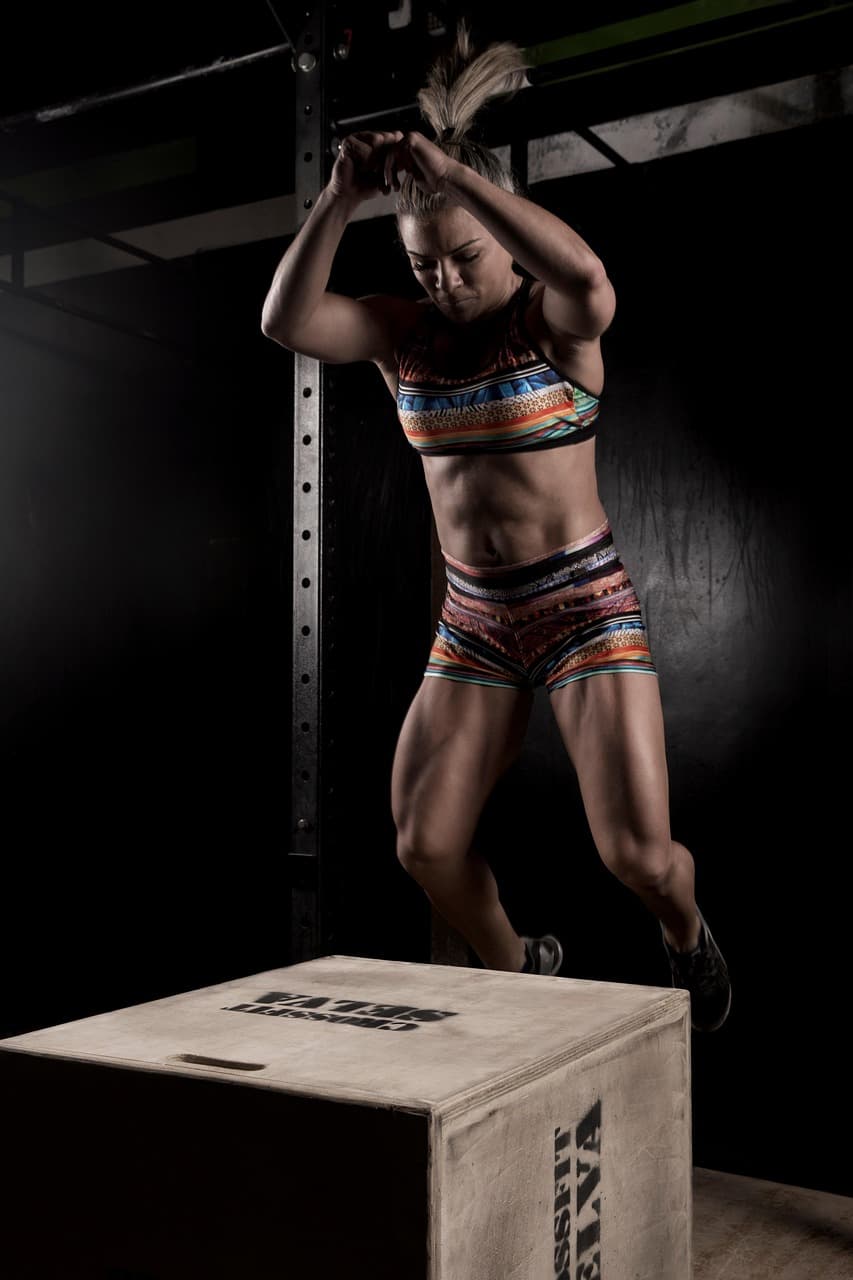
Almost every bone article stops at resistance training. But look back at both studies: LIFTMOR included jumping chin-ups with drop landings, and the hopping trial was only impact. The impact half is doing real work, and it's the half that's cheap and takes no equipment.
The gentlest useful version is a heel drop. Rise onto your toes, pause, then let your heels fall and land firmly. The drop is the whole point, so don't lower yourself gracefully.
That lands something in the neighborhood of three to four times bodyweight through the leg, which is far more than walking generates and takes about a second per rep.
From there it scales. Heel drops, then small two-footed hops, then single-leg hops in a few directions, then genuine jumping and landing if your joints and your history support it. The hopping trial's dose was 50 hops a day, done as five sets of ten with about 15 seconds between sets. Every-other-day works fine for most people and gives tendons more room.
Impact is where individual context matters most. If you have a knee that swells, a history of stress fractures, an ankle that's never been the same, or diagnosed osteoporosis, the version of this that fits you is different from the version that fits a healthy 45-year-old, and it might be heel drops and nothing beyond them. That's not a lesser program. Heel drops were doing meaningful loading in the research too.
If your scan came back osteopenia or osteoporosis
First, the numbers. A T-score compares your bone density to a healthy young adult. Above -1.0 is normal. Between -1.0 and -2.5 is osteopenia. At or below -2.5 is osteoporosis. Osteopenia is a statistical band, not a disease, and plenty of people sit in it for decades without ever fracturing.
Two things change once you have a diagnosis, and neither is "train lighter."
The first is that supervision becomes worth paying for. LIFTMOR's safety record came from women being coached on every rep. If you're loading a spine with reduced density, the value of someone watching your position is much higher than it would otherwise be.
The second is spinal flexion under load. There's an old and uncomfortable finding from Sinaki's work at Mayo, following postmenopausal women with spinal osteoporosis assigned to different back exercise programs. New vertebral fractures occurred in 16 percent of the extension group and 89 percent of the flexion group. It's a small, dated study and the numbers are startling enough that they deserve some skepticism. But the mechanism is plausible, and it's been enough to shift clinical practice: loaded, repeated rounding of the spine is the thing to be thoughtful about, not lifting in general.
In practice that means sit-ups, weighted crunches, and toe touches under load are worth trading for planks, dead bugs, and back extension work. It does not mean you can never bend forward. You have to bend forward to live.
If you have a diagnosis of osteoporosis or any history of vertebral fracture, this is a conversation for your doctor and a coach together. I'm giving you the shape of the evidence, not clearance.
Getting into position before you add load
Here's the practical bottleneck I run into more than any other, and it has nothing to do with strength.
A squat that loads the spine well requires enough ankle dorsiflexion to keep your heels down and enough hip rotation to reach depth without your pelvis tucking under at the bottom. That tuck is spinal flexion, arriving under a loaded bar. A hinge requires enough hamstring length to reach the floor with a neutral spine, or you round to get there. An overhead press requires enough thoracic extension and shoulder flexion to get your arms over your head, or you arch your lower back to fake the range.
In each case the mobility restriction doesn't stop you from lifting. It reroutes the load somewhere you didn't intend. For desk workers in particular, the tight ankles and stiff mid-back from years of sitting are exactly the restrictions that turn a good bone-loading movement into an awkward one.
So check the positions before you load them. The free movement screen runs through six areas including ankles, hips, and thoracic spine in about five minutes, no email required, and it flags which of them would get in the way of the lifts above. It's the same assessment I run with every new client, and I run it before anyone touches a barbell.
Where to start this week
If you're starting from nothing, the smallest honest version is two 30-minute sessions a week built on a squat, a hinge, and a press, plus heel drops on the days between. That's it. Not five exercises for stronger bones. Three patterns and some impact, done at an effort that's genuinely hard by the last rep.
Then give it time. Strength will improve within weeks, and that's worth having on its own, since muscle keeps turning up as the best predictor of how well the rest of aging goes. The scan is a slower story. LIFTMOR needed eight months, the hopping study needed twelve, and DEXA scans are usually repeated on a one-to-two-year cycle anyway.
My client from last spring is fifteen months in now. She still walks her 12,000 steps, because she likes it and it's hers. She also trap-bar deadlifts a bit over 150 pounds, which she found more surprising than anyone else did. Her next scan is in the fall, and honestly I don't know what it'll say. She can't control that number directly, and neither can I. All she could do was give her skeleton a reason to hold onto what it had, which she's been doing twice a week for over a year now.
If you want help building this around a body that's already carrying some history, that's what one-on-one training is for. I've logged more than 12,000 sessions with adults across San Jose and the South Bay, and a fair number of them started with a lab result somebody handed over without much of a plan attached.
Ready to train smarter?
Get a personalized program built around your goals, your body, and your schedule.
Book Your Free ConsultationRelated Articles
Lifting with knee osteoarthritis: what 217 trials say about loading a worn joint
Strength training with knee osteoarthritis won't wear your cartilage down, and it also isn't the pain treatment it gets sold as. A San Jose trainer's read on what the research actually supports for training after 50.
Score your joint hypermobility at home, then change how you lift
The Beighton score takes four minutes and nine points. If you come back hypermobile, the usual mobility advice is aimed at someone else's problem. A San Jose trainer on what the score changes about your training.

Buttock pain when sitting? At-home tests to tell a hamstring tendon from a trapped nerve
Buttock pain when sitting usually comes from one of two places: the hamstring tendon at the sit bone, or the sciatic nerve deep in the buttock. Three at-home tests to tell them apart, and a plan for each, from a San Jose trainer.