
Buttock pain when sitting? At-home tests to tell a hamstring tendon from a trapped nerve

Jeffrey Sun, ACE-CPT
October 12, 2026 · 17 min read
ACE-certified personal trainer specializing in functional movement, mobility, and strength training for busy professionals in San Jose and the Bay Area.
Book a free consultation →
A software engineer in Santa Clara told me he'd stopped sitting through meetings. Forty minutes in, a deep ache would build under his right sit bone, and he'd started standing at the back of the room. He assumed it was a tight hamstring, so he stretched it every morning and did pigeon pose most evenings. Three months later it hurt sooner, not later.
He wasn't being careless. "Buttock pain when sitting" pulls up a page of piriformis stretches, and most of the pages that rank for it hand you a single test and a single answer. The trouble is that two common problems hurt in nearly the same place, both get worse with sitting, and they respond to different things. The stretch that helps one can irritate the other.
The three tests below take about ten minutes and sort out which one you've most likely got. After that there's a plan for each. None of it replaces an assessment, and there's a section on what should go straight to a doctor.
Two problems that hurt in the same chair
Feel for the bony point you sit on. That's the ischial tuberosity, the sit bone. Your hamstrings start there, attached by a thick tendon. When you sit, your body weight presses that tendon against the bone, and when you lean forward in the chair (toward a monitor, say) the hip bends further and the tendon wraps tighter around it. An irritated tendon tolerates being squeezed against bone poorly. That's proximal hamstring tendinopathy.
A few centimetres away, the sciatic nerve runs out of the pelvis and down through the buttock, passing beneath the piriformis and the other small rotator muscles of the hip. If it gets compressed or tethered there, you get pain deep in the middle of the buttock, sometimes with an ache or tingling down the back of the thigh. That used to be called piriformis syndrome. It's now more often called deep gluteal syndrome, because the anatomy review by Hernando and colleagues in Skeletal Radiology in 2015 showed the piriformis is only one of several structures that can trap the nerve.
The location difference is small but it's the most useful clue you have. Tendon pain is usually right on the sit bone, and you can often put one fingertip on it. Nerve pain is a bit higher and more central in the buttock, harder to pin down, and more likely to wander.
The JOSPT clinical commentary by Goom and colleagues in 2016, still the most-cited guide to the tendon problem, describes it as deep buttock pain at the sit bone that's provoked by sitting and by loading the hamstring with the hip bent. For the nerve, a 2018 systematic review by Hopayian and Danielyan found four features that kept recurring across the literature: buttock pain, pain made worse by sitting, tenderness near the notch in the pelvis where the nerve exits, and pain with any manoeuvre that tightens the piriformis.
Both lists include "worse with sitting." That's why the sitting itself won't tell you which one you've got. The tests are what separate them.
Before you test: rule out the back
Some of what feels like buttock pain is referred from the lower back. Two quick checks before you start.
Stand up and bend forward five times, slowly, then lean back five times with your hands on your hips. If either direction clearly changes the buttock pain, making it spread, sharpen, or ease, the back is a real suspect and the tests below will be harder to read.
Then think about the leg. Pain that goes below the knee, numbness or pins and needles in the foot, or weakness when you walk on your heels or toes points more toward a nerve root in the spine than toward anything in the buttock.
Stop here and see a doctor promptly if you have any of these: new trouble controlling your bladder or bowels, numbness in the groin or between the legs, weakness that's getting worse, pain that started with a fall, or buttock pain with fever, unexplained weight loss, or a history of cancer.
Test 1: sit-bone tendon checks
Three checks here. Score each by whether it reproduces your familiar pain right at the sit bone. A stretch down the back of the thigh doesn't count; that's just a hamstring doing what hamstrings do.
1a. Standing heel-up lean. Put the heel of your sore leg on a surface about knee to hip height, like a chair seat, a step, or a low table. Keep the knee straight and your back long, then hinge forward slowly from the hips. This is a home version of the Puranen-Orava test.
1b. Knee-to-chest straighten. Lie on your back, pull the sore-side knee toward your chest with both hands behind the thigh, then slowly straighten the knee as far as it will go without forcing it. This is the bent-knee stretch test. Clinicians also run a modified version where they straighten the leg quickly; don't do that at home.
1c. Heel-dig bridge. Lie on your back with the sore-side heel on the floor, knee slightly bent, and the other foot lifted. Push through the heel to lift your hips and hold for five seconds.
Pass: None of the three reproduces sit-bone pain.
Borderline: One of them produces a mild version of it.
Fail: Two or three reproduce your familiar sit-bone pain.
The first two checks come from a 2012 study by Cacchio and colleagues in the British Journal of Sports Medicine. They examined 92 athletes, half with confirmed proximal hamstring tendinopathy and half without, using three examiners who didn't know who was who. Agreement between examiners was high (correlation 0.82 to 0.88), and all three tests showed moderate-to-high validity, with the fast modified version doing best. Two honest limits: the participants were athletes rather than desk workers, and the tests were run by trained clinicians. The authors also recommended confirming with imaging rather than relying on the tests alone. Your self-scored version is noisier, so treat a fail as a strong lean rather than a diagnosis.
Test 2: deep buttock nerve checks
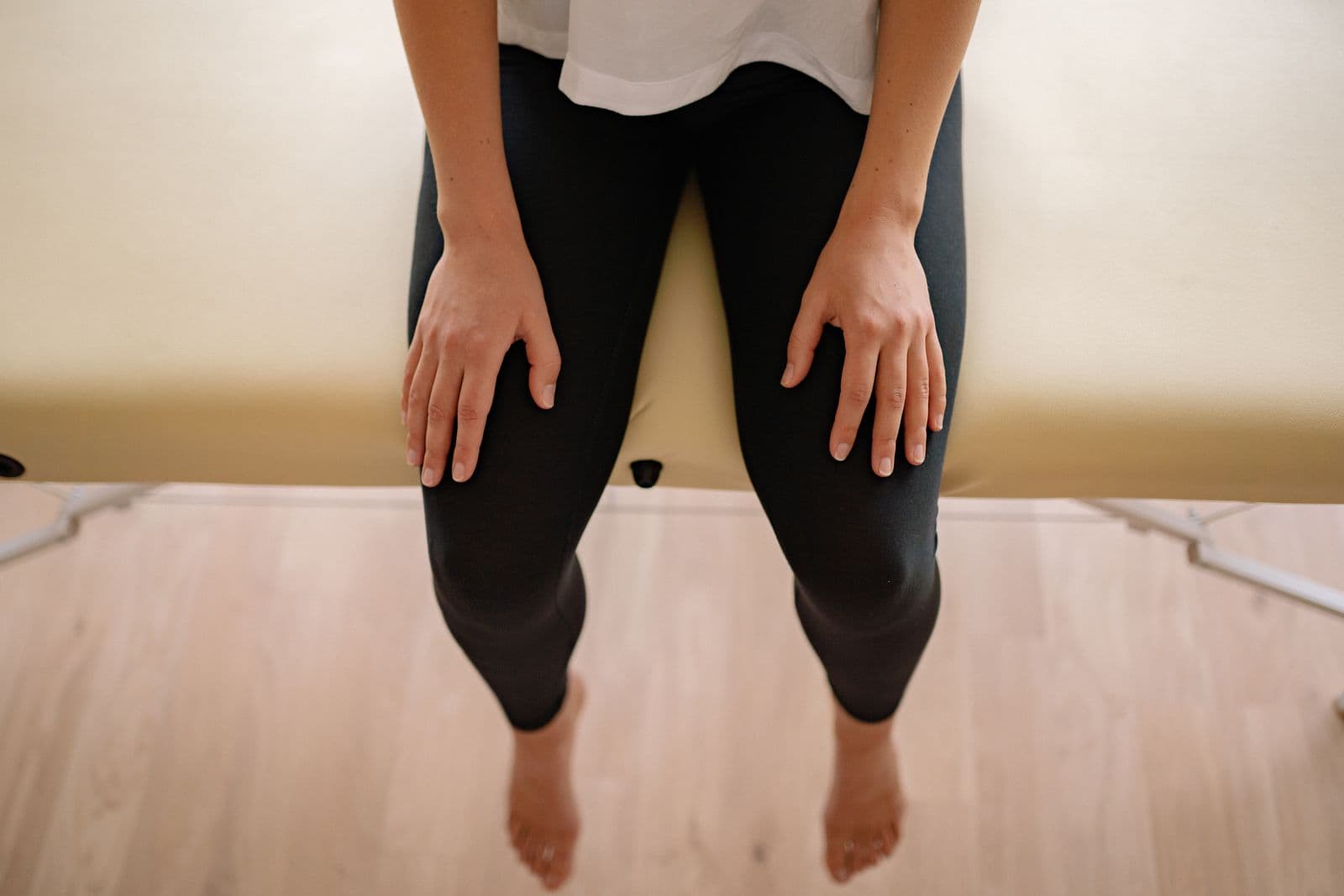
These two load the deep hip rotators and the space the sciatic nerve runs through. Score both by whether they bring on your familiar deep buttock pain, with or without symptoms down the back of the thigh.
2a. Seated rotation check. Sit on the edge of a firm bed or table, tall, with your feet off the floor if you can. Straighten the sore-side knee so the leg sticks out in front of you. Put your opposite hand on the outside of that knee and draw it gently across toward the other side, letting the thigh roll inward so your foot drifts outward. Hold for ten seconds. This is a self-version of the seated piriformis stretch test.
2b. Side-lying knee lift against your hand. Lie on your good side, hips and knees bent, heels together. Press the top heel down into the bottom heel, then try to lift the top knee toward the ceiling while your top hand pushes down on it hard enough to stop it moving. Hold for five seconds. This mirrors the active piriformis test, where a clinician provides the resistance.
Pass: Neither test brings on deep buttock pain.
Borderline: One of the two does.
Fail: Both do.
These two come from Martin and colleagues, Knee Surgery, Sports Traumatology, Arthroscopy, 2014. They looked back at 33 people (25 women, average age 43) evaluated for sciatic nerve entrapment in the buttock, 23 of whom had it confirmed by endoscopy. The active test picked up 78 percent of the confirmed cases. The seated stretch test caught only 52 percent but was rarely positive in people without entrapment. Used together, the pair caught 91 percent, and a clean result on both made entrapment considerably less likely.
The same study had a finding worth knowing if you've already done the straight leg raise in the hamstring flexibility test. The straight leg raise was positive in only 15 percent of the confirmed entrapment cases. A normal straight leg raise doesn't clear the nerve in the buttock. It's mostly testing for trouble higher up.
The study was small, retrospective, and only had ten people in its comparison group, and the Hopayian review concluded that the accuracy of every piriformis test remains uncertain. These are the best-supported options available, but the support is still thin.
Test 3: a two-day sitting log
The tests above are provocations. This one is what your chair is already telling you. Over two ordinary workdays, write down:
- Where it hurts. Can you put one fingertip on the spot, and is that spot the sit bone or the middle of the buttock?
- Hard versus soft. Is it worse on a hard chair, a car seat, or a soft couch?
- Minutes to onset. How long you sit before it starts.
- Leaning forward. Whether leaning toward your screen makes it worse than sitting back.
- Standing up. Whether it eases within a minute or two of standing, or lingers.
- Anything travelling. Ache, burning, or tingling down the back of the thigh.
The tendon pattern: one-fingertip pain on the sit bone, worst on hard seats and when leaning forward, easing fairly quickly once you stand. Often it's fine during a walk and sore that evening.
The nerve pattern: a vaguer ache in the middle of the buttock, sometimes travelling, often worse with a wallet or phone in the back pocket, and less dependent on how hard the chair is.
There's a reason sitting is so specific to the tendon. In a 2024 study in the Orthopaedic Journal of Sports Medicine, Jokela and colleagues scanned 38 patients with chronic sit-bone pain twice: once in the standard lying position, and once lying on their side with the hip bent to 90 degrees, roughly the position you're in at a desk. In 71 percent of patients, the bent-hip scan showed a more severe injury than the standard one. The tendon looks worse when it's in the position that hurts.
Reading your results
Tendon-dominant. Test 1 fails, Test 2 passes, and the sitting log points to the sit bone. This is the most common combination I see in people who sit for a living and also run, lift, or do a lot of forward-folding yoga. Go to the tendon plan.
Nerve-dominant. Test 2 fails, Test 1 passes, and the log describes the middle of the buttock, maybe with something travelling down the thigh. Go to the nerve plan.
Both light up. This happens more than you'd expect. The sciatic nerve runs close to the hamstring origin, and an irritated tendon can sensitise the area around it. Start with the sitting changes in the tendon plan, since they take pressure off both, and add the nerve glides from the nerve plan. If neither score has improved by week four, get it assessed in person.
Neither lights up. If the pain sits higher, near the dimple at the back of the pelvis, the SI joint tests are the better next step. If the forward-and-back bending check at the start changed your symptoms, the lower back deserves a proper look.
The tendon plan: 12 weeks
There are no good randomised trials of exercise for this problem. The Goom commentary said so plainly in 2016, and not much has changed since. What follows is built on the principles that hold up across other tendon problems: cut the compression first, load the tendon without squeezing it, then gradually work back into the bent-hip positions it doesn't like. The pain rule throughout: 3 out of 10 or lower during the exercise, and back to baseline by the next morning.
Weeks 1 to 3: change how you sit, start isometric holds.
The sitting changes do the early work.
- Put a folded towel or firm cushion under each thigh, just in front of the sit bones, so the bones themselves take less weight. Cut-out cushions do the same thing.
- Sit back in the chair rather than perched forward toward the screen. Raise the monitor if that's what's pulling you forward.
- Stand up every 20 to 30 minutes, even if only for a minute.
- Pause the deep hamstring stretches, toe touches, and forward folds. They bend the hip and press the tendon into the bone.
Then add one exercise daily: a heel-dig bridge hold. Both heels on the floor, knees only slightly bent, lift the hips and hold 30 to 45 seconds. Five rounds with a minute's rest. Once both legs are easy, do it single-leg. The hip stays close to straight, so the hamstring works hard without the tendon wrapping around the bone.
Weeks 4 to 8: move it, still with the hip fairly straight. Two to three sessions a week.
- Bridge walkouts: lift into a bridge, walk the heels out a few inches at a time, walk them back. 3 sets of 6.
- Banded or machine hamstring curls, slow on the way down. 3 sets of 10.
- Single-leg bridges on the floor, then with the heel on a low step. 3 sets of 8.
- Keep the daily isometric on non-training days.
Weeks 9 to 12: bring the hip back into flexion under load.
- Romanian deadlift, starting with a short range (bar to just above the knee) and lowering further only as next-morning pain allows. 3 sets of 8.
- Single-leg Romanian deadlift with a light kettlebell, 3 sets of 8 per side.
- Step-ups onto a knee-height box, 3 sets of 8 per side.
- If you run, sprint, or play a court sport, faster work like kettlebell swings comes after this block, not during it.
Sitting usually eases well before the deeper positions stop bothering you, often within the first few weeks. Don't read the easier chair as permission to jump straight to heavy deadlifts.
About shockwave therapy. In a 2011 trial in the American Journal of Sports Medicine, Cacchio and colleagues randomised 40 professional athletes with chronic sit-bone pain to shockwave therapy or conventional care (anti-inflammatories, physio, and a hamstring exercise program). At three months, 17 of 20 in the shockwave group had at least halved their pain, against 2 of 20 with conventional care. That's a big effect from a small trial in elite athletes, and the comparison arm wasn't a modern progressive loading program. If you've got time and a fairly patient schedule, loading alone is the cheaper place to start. If you've got a season or a race on the calendar, or loading has stalled, it's a reasonable thing to raise with a sports physician.
The nerve plan: 6 weeks, then retest
The evidence here is thinner still. A 2023 systematic review by Hopayian and colleagues pooled 13 studies and 508 patients and found the overall quality of evidence was low, with no conservative treatment clearly better than another. Their recommendation was to follow the general guidance for sciatica, which starts with physiotherapy and exercise. So this plan aims to calm the nerve and build hip strength, and it treats the six-week retest as a decision point.
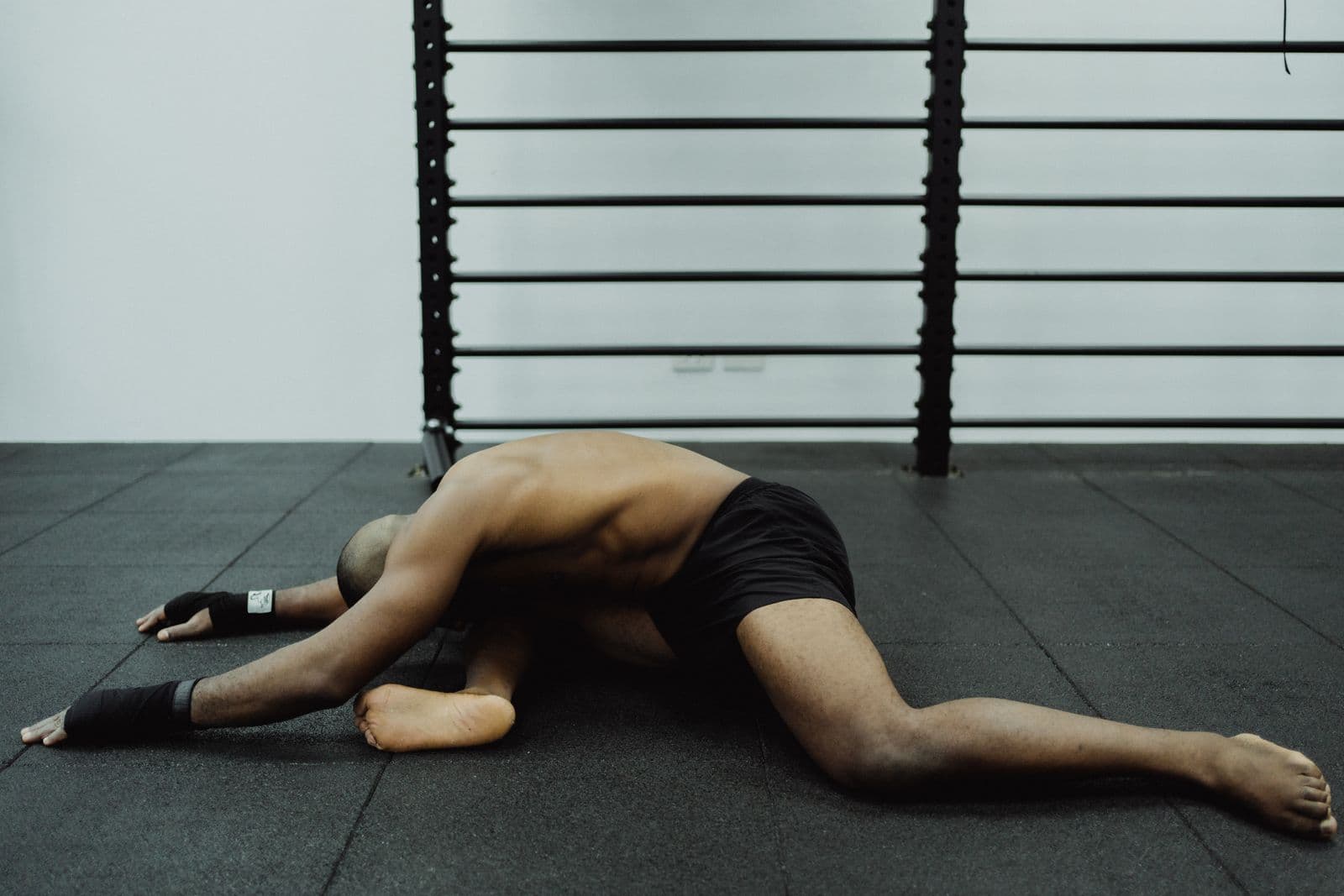
Take the pressure off first.
- Empty your back pockets. A wallet or phone under one buttock for eight hours is a direct press on the area in question.
- Don't cross your legs, and stand up every 20 to 30 minutes.
- Ease off hard pigeon-pose and figure-four holds and aggressive foam rolling in the middle of the buttock for now. Deep, sustained rotation stretches tension the same space the nerve runs through. Many people find a gentle version fine. If yours sets off travelling symptoms, back off.
Daily: nerve sliders. Lie on your back, hold the sore-side thigh with the hip bent to about 90 degrees, then straighten the knee while you tip your head back, and bend the knee as you bring your chin down. The two ends move in opposite directions so the nerve slides rather than stretches. 10 slow reps, two or three times a day. It should feel like a mild pull, never sharp or electric.
Two to three times a week: hip strength.
- Side-lying clam holds, the same position as Test 2b but at about half effort, 5 holds of 20 seconds.
- Glute bridges, 3 sets of 10.
- Step-ups or split squats, 3 sets of 8 per side.
- Lateral band walks, 3 sets of 10 steps each way.
At six weeks, retest. Run Test 2 and redo a day of the sitting log. A clear change on either is the signal to keep going and keep building load. No change at all is a good reason to see a sports physician or physiotherapist, who can look for structures other than the piriformis and discuss options like guided injections that sit outside a trainer's lane.
When to get it looked at
Any of these, at any point:
- Bladder or bowel changes, or numbness in the groin. Same day.
- Weakness in the foot or ankle, or weakness that's spreading.
- Pain that started with a specific moment, like a slip, a sprint, or a waterskiing fall, especially with bruising on the back of the thigh. A hamstring can tear off the bone, and that has a time-sensitive surgical window.
- Night pain that doesn't change with position, fever, or unexplained weight loss.
- Twelve weeks on the tendon plan or six on the nerve plan with no movement on the retest.
Where to start
Run the three tests this week, and keep the sitting log over two ordinary workdays rather than a weekend. Most people end up with a clear answer from those alone.
Sit-bone and buttock pain rarely shows up alone. The hips, the hamstrings, and how well the trunk holds steady all change how much load lands on that one spot. If you want a broader picture, the free movement screen checks six areas in about five minutes, with no email required. It's the same assessment I start new clients with.
If you'd rather have someone build the loading program around your tendon and adjust it week to week, that's what one-on-one training is for. I've logged more than 12,000 sessions with adults around San Jose and the South Bay, and a surprising number of them started with "I can't sit through a meeting anymore."
The Santa Clara engineer turned out to be tendon-dominant. He dropped the morning hamstring stretch and the evening pigeon, put a folded towel under each thigh at his desk, and did his bridge holds before work. By week five he sat through a 90-minute planning meeting and only noticed afterward. The deadlifts took another two months, and he's still deliberately keeping them shy of the floor.
Ready to train smarter?
Get a personalized program built around your goals, your body, and your schedule.
Book Your Free ConsultationRelated Articles

Outer hip pain when you lie on your side? Three at-home tests for gluteal tendinopathy
Hip pain when lying on your side is usually a tendon problem, not bursitis, and some of the usual advice makes it worse. Three at-home tests for gluteal tendinopathy and an 8-week plan from a San Jose trainer.

Do your glutes actually fire? A three-part dead butt syndrome test you can score at home
Dead butt syndrome has a real mechanism and a real test. A San Jose trainer walks through three glute activation checks with pass, borderline, and fail lines, what each result means for your back and knees, and a four-week plan to wake the muscles back up.

Core Stability Test at Home: 3 Checks for Desk Workers
Three at-home core stability tests with pass/fail thresholds and five drills to build the deep core function that prevents low back pain. A San Jose trainer's guide.