
Exercise snacks for desk workers: what two-minute movement breaks actually do, and a plan for your workday

Jeffrey Sun, ACE-CPT
October 27, 2026 · 11 min read
ACE-certified personal trainer specializing in functional movement, mobility, and strength training for busy professionals in San Jose and the Bay Area.
Book a free consultation →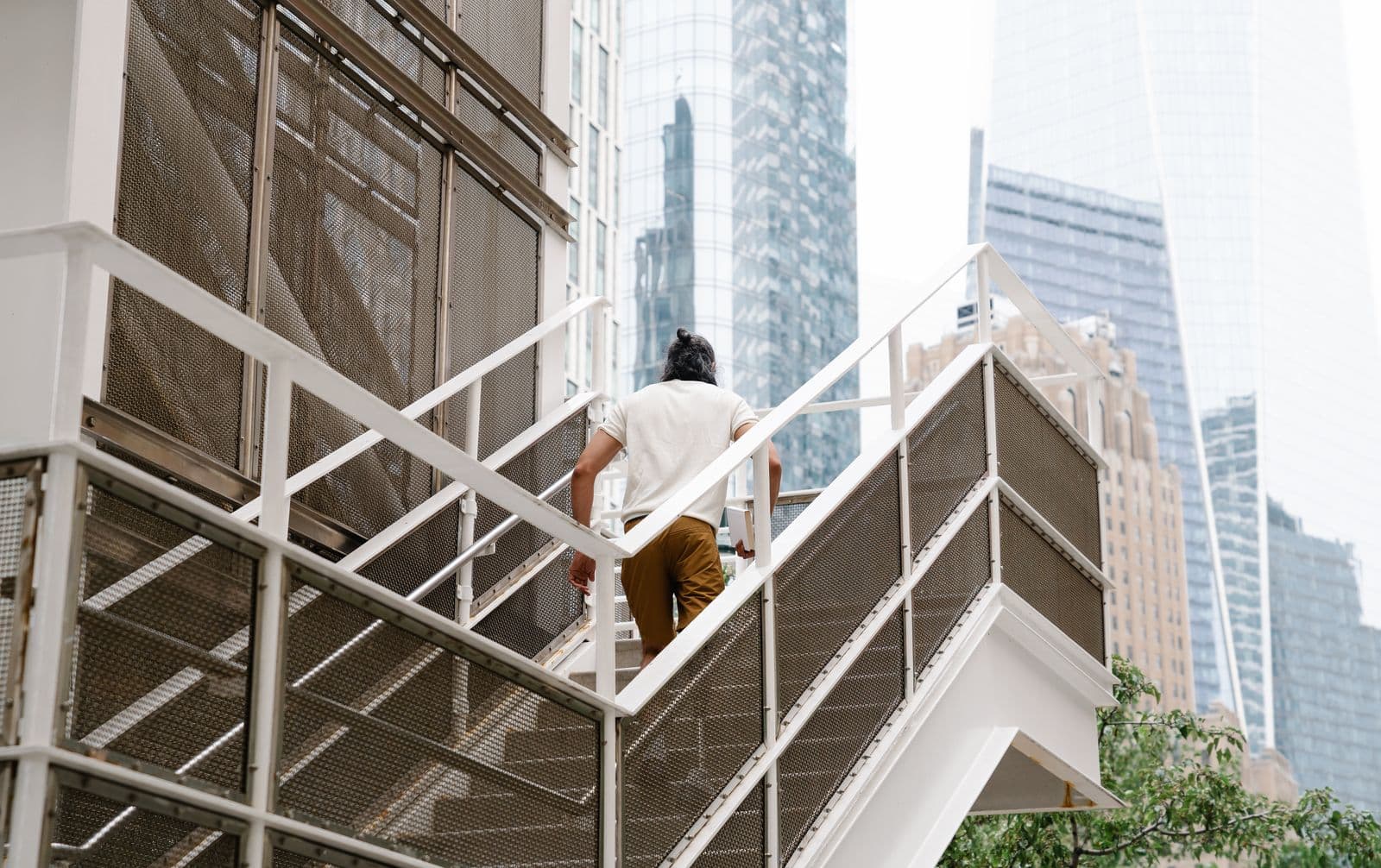
A product manager in San Jose showed me her calendar on our first session. Back-to-back video calls from 9 to 5, a 15-minute gap at 12:30, and a note at the bottom that said "gym???" in red. She trained twice a week and felt fine in the gym. It was the other 50 hours that bothered her. By 3 PM her hips felt like cement, and she was falling asleep in her 2 PM call most days.
She didn't need a third gym session. She needed something to do in the eight hours she was sitting, small enough to fit between calls.
That's what exercise snacks are: one- to five-minute bursts of movement spread through the day. The research behind them has grown fast over the last few years, and some of the headline numbers are striking. Some of them also get stretched a long way in the retelling. Below is what the studies actually found, a quick audit of your own sitting, and a menu to build your day around.
What counts as an exercise snack
The term covers two quite different things, and it helps to keep them apart.
Movement breaks are light: getting up and walking for two to five minutes, every 20 to 30 minutes of sitting. They're about interrupting the sitting more than about effort.
Vigorous snacks are short and hard: climbing a few flights of stairs fast enough to breathe hard, a brisk uphill walk, carrying something heavy quickly. Researchers call the everyday version VILPA, for vigorous intermittent lifestyle physical activity. A minute or so at a time, a few times a day.
Neither is a workout. You don't change clothes, you don't warm up, and you don't need a gym. That's the whole appeal for someone whose day is a stack of meetings.
What the research actually shows
The studies that made exercise snacks famous come from the UK Biobank, where tens of thousands of adults wore wrist accelerometers for a week and were then followed for years.
In the first, published by Stamatakis and colleagues in Nature Medicine in 2022, the researchers looked at 25,241 adults with an average age of 62 who said they did no leisure-time exercise. Over about seven years, those who did around three short bursts of vigorous everyday activity a day, each lasting one or two minutes, had a 38 to 40 percent lower risk of dying from any cause or from cancer than those who did none. Their risk of dying from heart disease was 48 to 49 percent lower.
A follow-up in JAMA Oncology in 2023 found that about 4.5 minutes a day of these bursts was associated with a 20 percent lower risk of developing cancer, and 31 percent lower for cancers known to be linked to physical activity. And a 2025 analysis in the British Journal of Sports Medicine found that among women who didn't exercise, a median of 3.4 minutes a day was associated with 45 percent fewer major cardiovascular events. In men, the pattern was much less clear.
Those are big numbers, and I want to be straight about what they are. These are observational studies. People who take the stairs quickly a few times a day may differ in other ways from people who don't, and a week of accelerometer data is a snapshot. The researchers adjusted for a lot, but an association isn't proof that the stairs did it.
What I take from them is narrower and still useful: small amounts of hard effort, scattered through an ordinary day, are consistently linked to better outcomes in people who don't otherwise exercise. That's encouraging for anyone who's been telling themselves that 20 minutes isn't worth starting.
There's also a hint that a little longer helps. A 2023 study in The Lancet Public Health, again in 25,241 non-exercisers, found that bouts of one to three minutes were associated with lower mortality than bouts under a minute, and bouts of five to ten minutes lower still. Very short bouts were only linked to lower cardiovascular risk when at least some of the bout was vigorous.
Fitness changes have been tested directly, in small trials. In a 2019 study from McMaster University, Jenkins and colleagues had sedentary young adults climb three flights of stairs (60 steps) as fast as they could, three times a day, three days a week, for six weeks. Compared with 12 people who didn't, the 12 climbers improved their aerobic fitness. The authors were clear that the gain was modest. Still, it was a measurable change from about a minute of effort at a time.
Breaking up sitting and blood sugar
The second body of research is about the light breaks, and it comes from controlled trials rather than observation, so it's on firmer ground.
In a 2012 trial in Diabetes Care, Dunstan and colleagues had 19 overweight adults aged 45 to 65 spend a day in the lab three ways: sitting straight through, or getting up every 20 minutes for a two-minute walk at either an easy or a moderate pace. After a sugary drink, both walking conditions cut the rise in blood glucose by about a quarter compared with sitting, and insulin dropped too. The easy walk worked about as well as the moderate one.
A 2023 trial in Medicine & Science in Sports & Exercise tested how often and how long. Duran and colleagues had 11 middle-aged and older adults try four schedules over an eight-hour day: one or five minutes of walking, every 30 or 60 minutes. Only five minutes every 30 minutes significantly lowered blood glucose. But every schedule lowered blood pressure, and one minute every hour lowered systolic pressure by about 5 mmHg.
Standing isn't quite the same. A 2022 meta-analysis of seven trials by Buffey and colleagues found that standing breaks slightly lowered glucose after meals, while light walking breaks lowered both glucose and insulin by more. A standing desk is a reasonable tool. Walking a few steps away from it does more, and if standing at one has started to make your back ache, the standing desk back pain self-check explains why and what to change.
Stair snacks have been tested this way too, with a twist. In a 2021 trial by Rafiei and colleagues, climbing stairs for 15 to 30 seconds once an hour during a nine-hour sitting day lowered insulin in adults with overweight. In healthy-weight young men, it made no significant difference, and glucose didn't change in either group. The benefit seems to show up most in the people who need it most.
A two-minute sitting audit
Before you plan anything, take an honest look at one ordinary workday. Pick a day that's typical, not your best one, and note three things.
1. Your longest unbroken sitting stretch. The longest you sat without getting up at all, even to refill water.
- Pass: 30 minutes or less.
- Borderline: 31 to 60 minutes.
- Fail: Over an hour.
2. How many times you got up and moved for at least a minute between 9 and 5.
- Pass: 8 or more.
- Borderline: 4 to 7.
- Fail: 3 or fewer.
3. How many times you got out of breath for about a minute. Stairs, a fast walk, a sprint for a train.
- Pass: 3 or more.
- Borderline: 1 or 2.
- Fail: None.
These bands are my working lines, built from the trial schedules above rather than from published cutoffs. Use them to choose where to start:
- Mostly fails on questions 1 and 2: start with movement breaks. They're the easiest win and have the strongest trial evidence.
- Passing 1 and 2 but failing 3: your day has movement but no effort. Add vigorous snacks.
- Passing all three: you're already doing this. The gains now come from strength training, below.
If stairs leave you far more out of breath than you'd expect, the cardio fitness test is worth doing before you build vigorous snacks into your day.
The desk worker's snack menu
Pick from each list based on your audit. None of these needs equipment or a change of clothes.
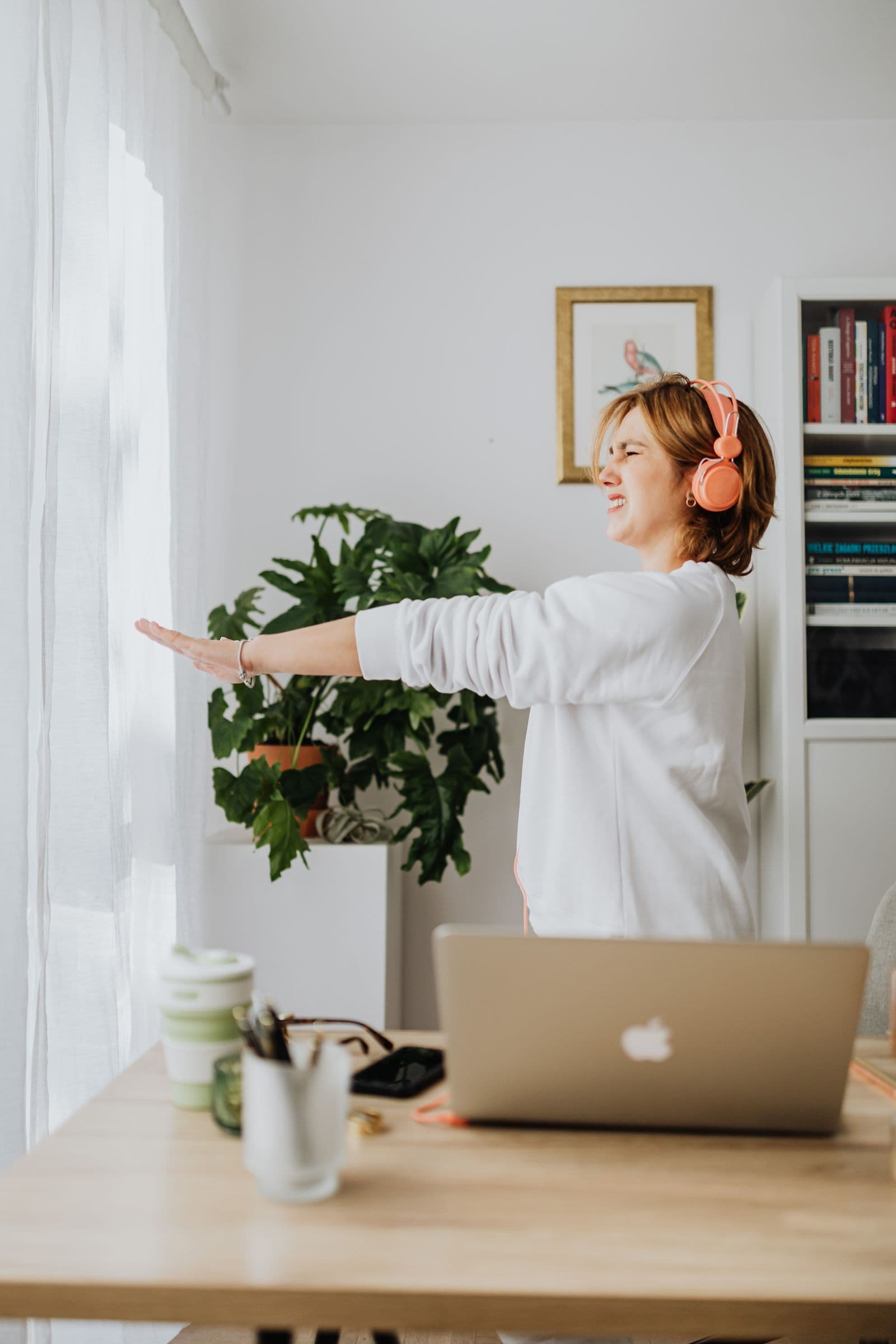
Movement breaks, every 30 minutes, two to five minutes:
- Walk to refill your water from the furthest tap.
- Take one call a day standing and walking, if it doesn't need a screen.
- Walk a lap of the floor, the building, or the block between meetings.
Vigorous snacks, three a day, about a minute each:
- Climb two or three flights of stairs at a pace where talking would be hard. Walk back down.
- A fast uphill walk, or carry groceries or a laundry basket briskly up the stairs.
- Twenty seconds of fast step-ups on the bottom stair, repeated three times.
Strength snacks, two or three a day:
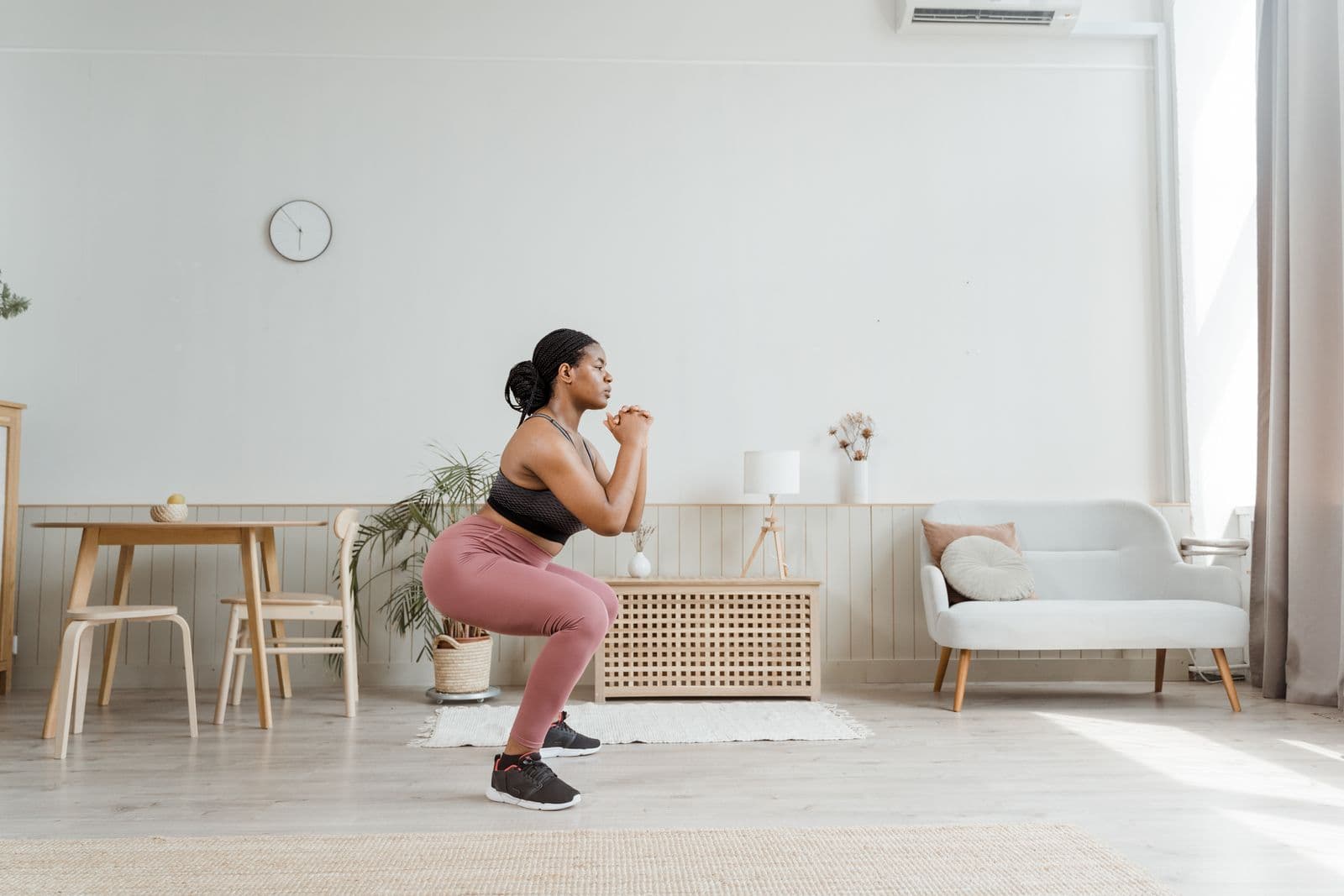
- Ten sit-to-stands from your desk chair, standing all the way up each time. Slow on the way down.
- Ten push-ups against the edge of a sturdy desk or kitchen counter.
- Thirty seconds of split squat on each side, holding the desk for balance.
Mobility snacks, once or twice a day, for the stiff parts:
- Half-kneeling hip flexor stretch, 30 seconds each side.
- Open-book rotation lying on your side, five each side, for the upper back.
- Standing calf stretch against the wall, 30 seconds each side.
This short routine from the American Physical Therapy Association's consumer site shows a few desk-friendly movement breaks:
If you're not sure which parts of you are stiffest, the screen linked at the end of this post will point you to them.
Making it stick
Knowing what to do is the easy part. Remembering at 2:47 PM on a Tuesday is the hard part. What's worked best with my clients:
Tie snacks to things that already happen. End every call five minutes early and walk. Take the stairs every time you get coffee. Do ten sit-to-stands before you open a new document. Habits stick better when they ride on top of existing ones.
Use a timer for the first two weeks. A 30-minute repeating reminder on your watch or laptop. Most people drop it after a few weeks because getting up has become automatic, or because they've noticed how bad they feel when they skip it.
Start with three. Three vigorous snacks a day is the median from the Biobank studies, and three movement breaks is better than none. Add from there.
Make it visible. The product manager put a sticky note on her monitor with the snack menu on it. Low-tech, but she looked at it 40 times a day.
What snacks can't replace
Exercise snacks do a specific job well. They break up sitting and add a little hard effort, and both are linked to better blood sugar and lower long-term risk. What they don't do is build much strength or muscle. Ten sit-to-stands a few times a day keeps your legs used to working. It won't stop the slow loss of muscle that starts in your 30s and speeds up after 50.
For that, you still need strength training. Two or three sessions a week is the range that fits most working adults, and the breakdown of how often to strength train walks through how to choose between them.
The two fit together well. Snacks handle the 50 hours a week you spend sitting. Two or three proper sessions handle strength. People who only do the gym sessions still spend most of their week sitting still, and people who only do snacks miss the strength. You don't have to pick one.
If you want to know where to aim your mobility snacks, the free movement screen checks six areas in about five minutes, with no email required. It's the same assessment I start new clients with.
If you'd like a program that fits around a meeting-heavy calendar, with the snacks built in, that's what one-on-one training is for. I've logged more than 13,000 sessions with adults around San Jose and the South Bay, and most of them have a calendar that looks a lot like the one at the top of this post.
The product manager's audit came back as a fail on all three. She started with a 30-minute timer and a walk to the far water cooler, then added the stairs to the third floor every time she got coffee. Three weeks in she stopped needing the timer. She says the 2 PM call is still the worst meeting of her week, but she's stopped falling asleep in it.
Ready to train smarter?
Get a personalized program built around your goals, your body, and your schedule.
Book Your Free ConsultationRelated Articles
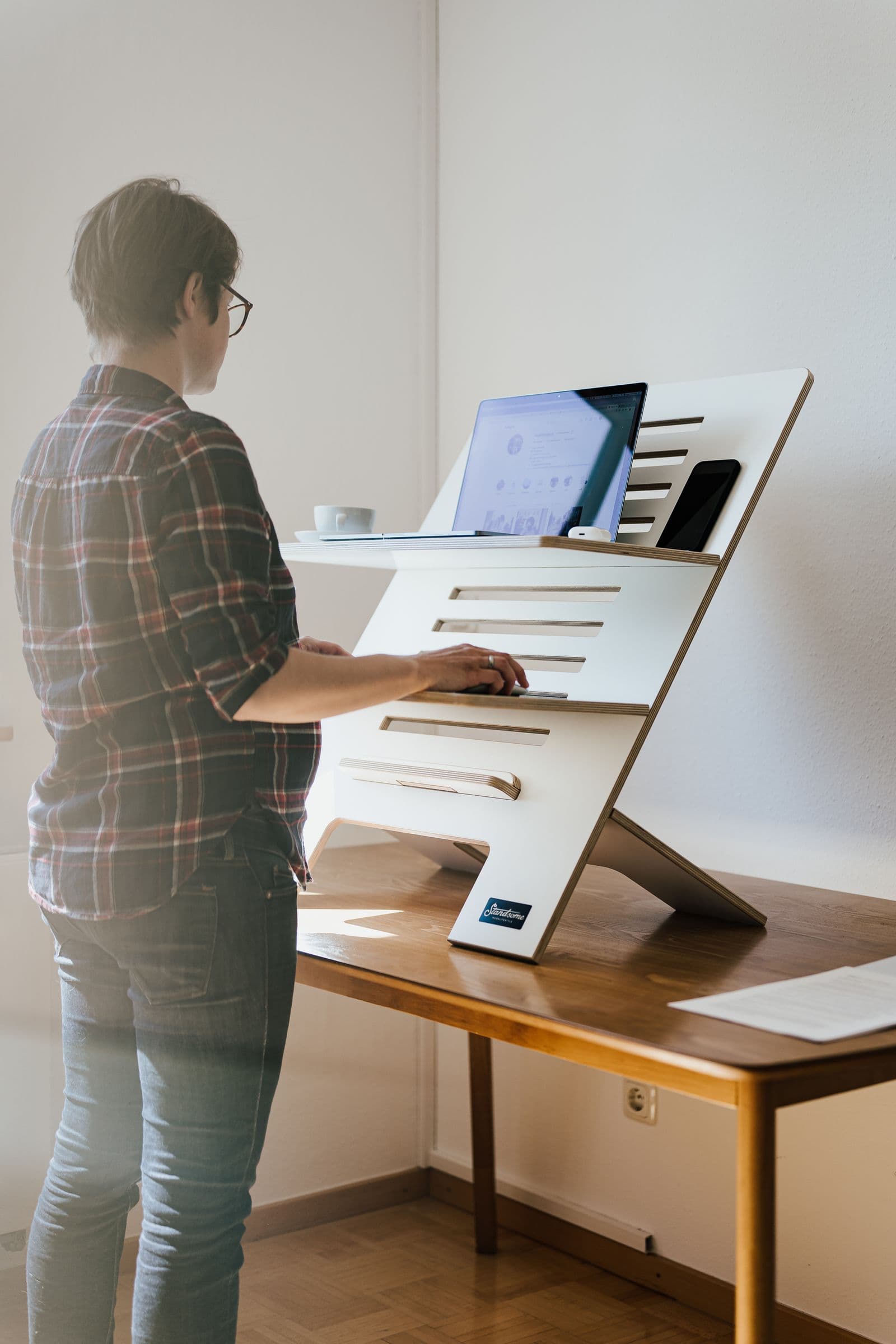
Standing desk back pain? A two-minute self-check and a sit-stand-walk routine that helps
If your lower back aches after standing at your desk, you're far from alone, and the research points to a trainable cause. Two self-checks, how long to stand, and a four-week plan for hip and trunk endurance from a San Jose trainer.
Achilles pain in the morning? At-home tests to find out why, and a 12-week loading plan
Achilles pain in the morning that eases as you warm up is the classic sign of Achilles tendinopathy. Four at-home tests to tell midportion from insertional, score how irritated it is, and pick the right loading plan, from a San Jose trainer.
Lifting with knee osteoarthritis: what 217 trials say about loading a worn joint
Strength training with knee osteoarthritis won't wear your cartilage down, and it also isn't the pain treatment it gets sold as. A San Jose trainer's read on what the research actually supports for training after 50.