
Tennis Elbow or Golfer's Elbow? A 5-Minute Self-Test for Desk Workers Who Lift

Jeffrey Sun, ACE-CPT
September 3, 2026 · 12 min read
ACE-certified personal trainer specializing in functional movement, mobility, and strength training for busy professionals in San Jose and the Bay Area.
Book a free consultation →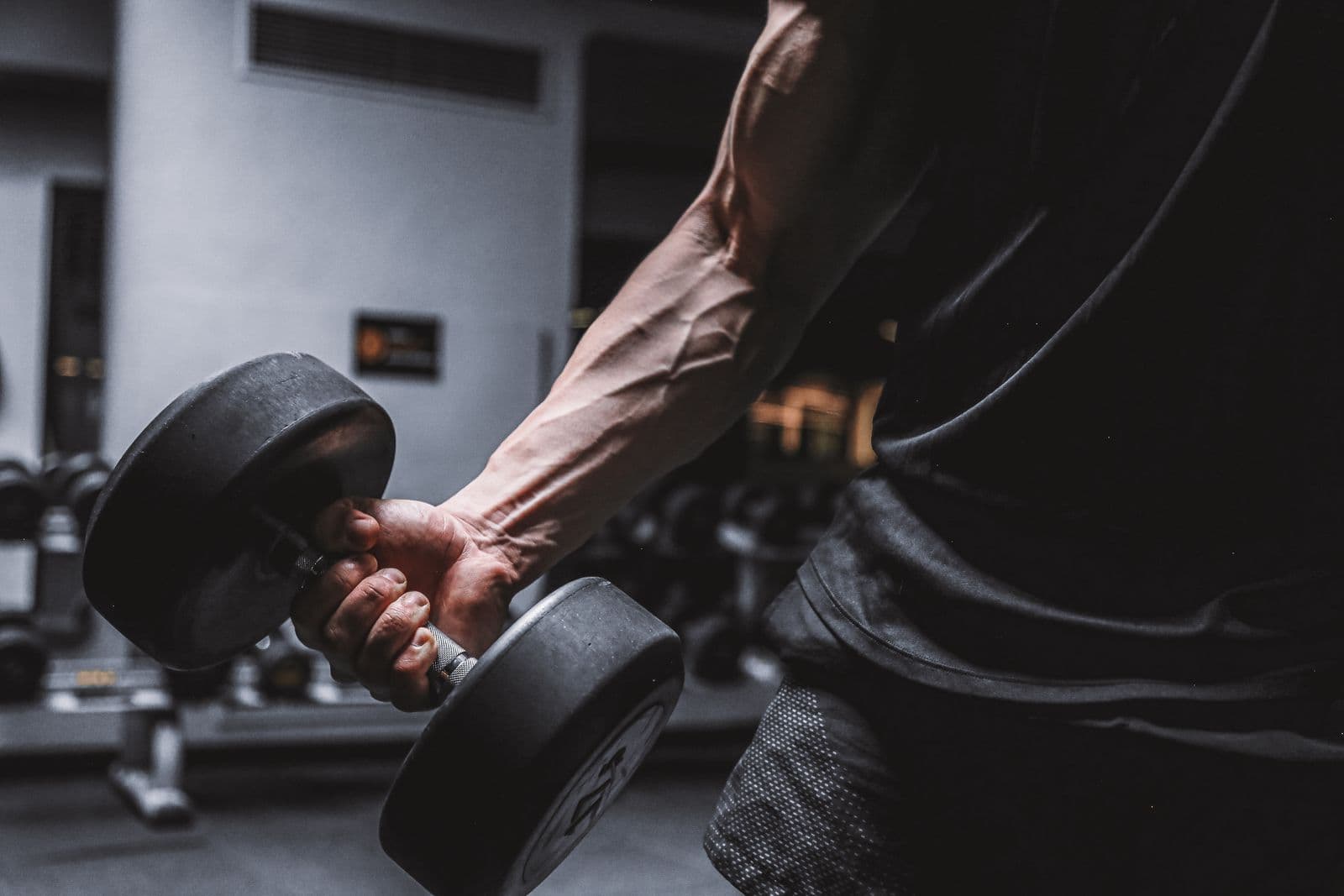
A software engineer I work with in San Jose came in last spring with an elbow that had been aching for four months. He'd stopped doing pull-ups, switched to machines, and given it two full weeks off, twice. It felt better every time he rested and came straight back within a week of training again.
He was sure it was tennis elbow, because that's what the internet says when your elbow hurts and you lift. His was on the inside.
He'd spent four months doing the stretches for the wrong side of his arm.
Search for a tennis elbow test and you get Cozen's, Mill's, the chair lift test, and a note to see a specialist if it persists. Read them closely and half describe someone else doing the test to you: the therapist palpates the lateral epicondyle, the examiner resists wrist extension. You're at your kitchen table with one working arm.
The other half stop at yes or no. Which isn't the useful question. Something is feeding this thing, and knowing which something is what tells you what to change on Monday.
The four checks, start to finish
Do these on both arms. The comparison between them is most of the information.
Check 1: find the spot. Run your thumb over the bony bump on the outside of your elbow, then the one on the inside. Press firmly on each for a few seconds. Note which is tender and how far it spreads down the forearm.
Check 2: resisted extension. Straighten your arm in front of you, palm down, loose fist. Push the back of that hand up against your other hand, which resists. Hold five seconds. Pain at the outside bump is the lateral test.
Check 3: resisted flexion. Same position, but curl your palm up against resistance. Pain at the inside bump is the medial test.
Check 4: the grip differential. Its own section below, and the one worth doing carefully.
Outside means lateral, what people call tennis elbow: the wrist extensors running from that outer bump down the top of your forearm. It gets angry from lifting things palm-down, mousing, gripping with the wrist cocked back, reverse curls, pronated rows.
Inside means medial, golfer's elbow: the flexors and pronators underneath. Hard gripping, heavy carries, deadlift holds, pull-ups, anything where you're crushing a bar.
Dead centre at the back of the joint, or deep in the crease, is neither. Read the last section.

The two get discussed as a matched pair, which makes them sound interchangeable and equally common. They aren't either. Shiri and colleagues surveyed 4,783 Finnish adults aged 30 to 64 and found definite lateral epicondylitis in 1.3 percent against 0.4 percent medial, both peaking between 45 and 54, no real difference between men and women. Repetitive plus forceful arm work carried an odds ratio of 5.6. Smoking carried about 3.4, which surprises people.
It's cross-sectional, so it describes who has it rather than what causes it, exposure was self-reported, and it's a Finnish cohort surveyed around 2000, before most of us spent nine hours a day on a laptop. What survives the caveats is that the tennis association is mostly a naming accident. Racquet players are a small slice of who gets this.
The grip test that separates tendon pain from everything else
This is the check that gives you a number instead of an impression.
Dorf and colleagues, Journal of Hand Surgery, 2007, measured grip in 81 patients with the elbow bent and again straight. In the affected arm, grip with the elbow extended averaged 50 percent of the healthy side. Flexed, 69 percent. A drop of 8 percent or more going from flexed to extended ran about 80 percent sensitive and 85 percent specific for lateral epicondylitis.
The mechanism is easy to see once you know it. Straightening the elbow puts the extensor tendon on stretch, so it tolerates less. Bending it takes the tension off.
You need something that measures squeeze. A hand dynamometer runs about twenty dollars and gives you a real number, worth it if you plan to retest. Otherwise squeeze a bathroom scale between both palms, or fill a bag with books until you can just barely hold it. Both are crude, so treat the improvised version as a rough comparison between arms rather than a measurement.
Test each arm twice, elbow at 90 degrees and then fully straight. Best of two.
A meaningful drop between bent and straight on the sore arm points at the tendon. Similar numbers in both positions but weak overall points somewhere else: a nerve, the shoulder, or simply not being very strong yet. If both arms are low in both positions, the dead hang and grip strength test is a better place to start than anything on this page.
Two limits on those numbers, and they matter. Dorf was a single-centre retrospective review of people already diagnosed, so it tells you how the test performs in people who have the condition, not how often it flags someone who doesn't. And it looked only at the lateral side. Nothing equivalent has been validated for medial pain, so for inside-elbow pain the grip comparison is context rather than a diagnostic.
Your result, decomposed
You have a side and a grip pattern. Now the part page one skips.
Something is feeding this, and it's usually one of four things doing most of the work. Capacity: the tendon can't tolerate what you're asking, common after a fast volume increase or a return from layoff at your old numbers. Accumulated desk load: you spend the tendon's daily budget before you reach the gym. Upstream: the shoulder or thoracic spine isn't contributing and the elbow covers. Technique: specific grips, specific bars, done specifically the way you do them.
Most people have two. The sorting question is which one you'd have to change to notice a difference in a fortnight.
The first two run together. Capacity shows up as a clean dose relationship, where pain scales with how much you did, settles after a couple of easy days, and returns on schedule when you go hard again. If you can draw a line between training volume and symptoms, that's it.
Desk load is harder to see, because it doesn't feel like load at all. Mousing holds the wrist in slight extension for hours with the extensors quietly on. Typing does something similar. A long phone call is a static grip. None of it is heavy, and heavy isn't the variable that matters here. Duration is.
Which is why two people can run the same program and only one shows up to it with anything left. Move the mouse closer so your elbow isn't drifting away from your body, drop the keyboard so your wrists sit flat rather than cocked back, use a headset for calls. If the desk is genuinely your driver, three or four days of that shows up in your morning stiffness before you've changed anything about training.
What your shoulder is making your elbow do
This is the one that explains why an elbow settles and then comes back.
Pull something toward you. If your shoulder blade doesn't move well, the arm still has to finish the movement, so the elbow and forearm take a larger share. Press overhead with a stiff thoracic spine and the same thing happens in reverse: the arm can't get where it needs to go, so the wrist and elbow find a compensating position and hold it under load.
The tell is asymmetry that goes past the elbow. Test your overhead shoulder mobility on both sides. If the painful arm is also the stiffer arm, the elbow is more likely a symptom than an origin, and loading the forearm alone gets you a partial result.
The lifts that keep it angry, and how to change them
The instinct is to stop, and most people do: two weeks off, feels better, restart, back within one. That was my engineer's loop, twice through.
Tendons remodel in response to load. Rest lowers the symptom without changing what the tissue can tolerate, which is why the relief doesn't survive contact with your old program. Reducing the specific provocations while keeping the arm working tends to go better.
Thin handles and very thick ones both make you grip harder, so a standard bar with chalk beats a dumbbell handle you have to strangle. Pronated pulling loads the extensors hard, and switching rows and chin-ups to a neutral grip is often enough on its own for the lateral side. Watch your grip pressure on a heavy set too. A lot of people squeeze far past what the weight requires, usually the ones already worried about the elbow, and straps on your heaviest pulling aren't a moral failure. Farmer's carries and long deadlift holds are grip-endurance work, fine in general, poor timing while the flexor tendon is irritated.
Then load the tendon on purpose. For the lateral side, eccentric wrist extension: forearm supported on your thigh, palm down, lower a light dumbbell slowly and use the other hand to lift it back. Three sets of fifteen, once or twice a day. The Tyler twist with a flexible rubber bar does the same job.
For the medial side, the same idea palm-up, or the reverse version of the bar twist.
Start lighter than feels worthwhile. Pain during the set that sits around 3 out of 10 and settles inside 24 hours is the working range. Stiffness the next morning that outlasts your first coffee means you went too heavy.
What the research supports, and where it runs out
Loading beats resting. The margin is smaller than the internet implies. Peterson and colleagues randomised 120 primary-care patients with symptoms over three months to eccentric or concentric home loading, sixty each. The eccentric group did separate, from month two onward, by roughly 10 percent absolute pain reduction with a number needed to treat of 10, and with no difference in function or quality of life. Loading the tendon is the part that works. The eccentric-versus-concentric argument that dominates the search results is a real but modest effect carrying a great deal of writing on its back.
The corticosteroid finding is the one people find hardest to hear. Bisset and colleagues followed 198 adults for 52 weeks in the BMJ across injection, physiotherapy, and waiting. Injection was clearly best at six weeks, then 47 of 65 initial successes relapsed, and that group finished the year behind the people who exercised. Coombes replicated it in JAMA with 165 adults against a placebo control.
I read that as a trade-off rather than a verdict. If you have a wedding in three weeks, or a deadline where the arm has to work now, an injection does what it says and your doctor is the right person to ask. If your horizon is next year, the trials point the other way. Both were single-city samples, and the exercise arms were eight supervised sessions rather than a home program, so the comparison isn't perfectly clean.
For golfer's elbow, be aware how much thinner the ground is. The most cited work on eccentric loading for the medial side is Tyler and colleagues: twenty patients, mean age 49, no control group, 70 percent of them golfers. Reason enough to try the exercise. Not evidence it beats the alternatives.
When this isn't tendinopathy
Numbness, tingling, or pins and needles in the ring and little fingers points at the ulnar nerve rather than the flexor tendon, even though the location overlaps almost exactly with golfer's elbow. Numbness on the thumb side has its own list. Nerves want a different assessment than this one.
Pain that arrived in a single identifiable moment, with a pop or a sudden give, isn't a gradual-onset tendinopathy. Neither is an elbow that's visibly swollen, warm, red, or won't fully straighten.
Night pain that wakes you, six months of sensible effort with no movement at all, or anything alongside unexplained weight loss or fever: see a physician. That's outside what a movement assessment can tell you.
If you're already working with a physical therapist, keep doing that. This complements it rather than replacing it.
Where to start this week
Run the four checks and write the numbers down, grip included, both arms, both positions. In six weeks that's the only way you'll know whether anything moved.
Then change one cause properly instead of four badly. Desk load the obvious driver? Fix the desk and leave training alone. Pronated pulling? Switch grips and change nothing else. One variable at a time feels slower and resolves faster.
If the checks pointed upstream, or your grip was weak on both arms rather than just the sore one, take the movement screen before building a forearm program. It'll tell you whether the shoulder is the thing to work on.
And if you've been going in circles for months, which is where most people are by the time they're searching for elbow tests, that usually means the problem sits in how your training is loaded rather than in which stretch you picked. That's much easier to sort out with someone watching you lift. If you want a hand with it, get in touch.
Ready to train smarter?
Get a personalized program built around your goals, your body, and your schedule.
Book Your Free ConsultationRelated Articles
Strength training for hip osteoarthritis: three at-home tests and what the newest trials say
Strength training for hip osteoarthritis does less for pain than most exercise lists suggest and more for what you can still do. Three at-home tests show which problem your hip actually has. A San Jose trainer's read on the 2024 to 2026 research.
Getting Back Into Pickleball, Tennis, or Golf After 40? Test Your Body First
A San Jose trainer's self-test for pickleball, tennis, and golf injury prevention over 40, plus the 4-week return-to-sport bridge that gets weekend warriors playing without the setback.

Back pain from lifting your toddler: three capacity tests that beat another lecture on technique
Every guide tells parents to bend their knees. The research says technique advice alone doesn't prevent back pain and building capacity does. A San Jose trainer gives you three scored tests and an eight-week plan.