
Getting Back Into Pickleball, Tennis, or Golf After 40? Test Your Body First

Jeffrey Sun, ACE-CPT
July 26, 2026 · 9 min read
ACE-certified personal trainer specializing in functional movement, mobility, and strength training for busy professionals in San Jose and the Bay Area.
Book a free consultation →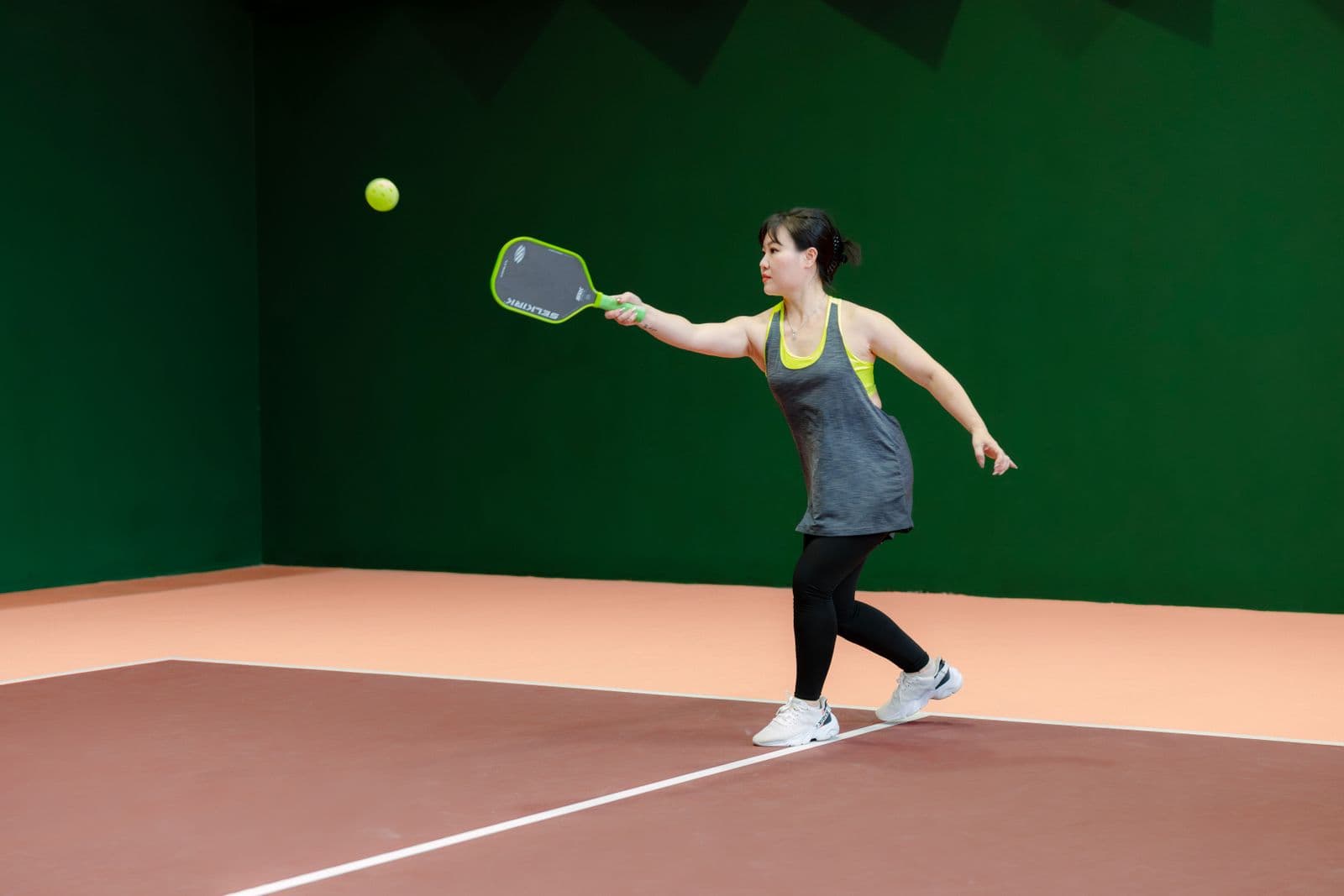
A client of mine picked pickleball back up last spring after almost fifteen years away from anything that involved a racquet. Second week in, lunging for a ball at the net, his calf gave out. Not torn, but tight enough that he was off the court for three weeks and limping around the office in between.
He wasn't out of shape. He'd been coming to the gym twice a week for over a year. He just hadn't done anything that asked his body to plant, rotate, and change direction in a fraction of a second, and nothing about his training had prepared him for that specific demand.
That's the pattern I see constantly right now. Pickleball courts across San Jose and the South Bay are packed with people in their 40s and 50s who spent a decade behind a desk, decided to get back into a sport they used to play, and assumed general fitness would cover it. Sometimes it does. Often it doesn't, because racquet sports and golf ask something specific of your body that treadmill miles and machine weights never touch: fast rotation through a hip and shoulder that haven't rotated much in years.
Why weekend warriors get hurt returning to racquet sports and golf after 40
The injuries showing up in orthopedic clinics tend to follow the same script. Rotator cuff strain from serving or driving with a shoulder that's lost overhead range. Achilles and calf strain from sprinting to the net without the ankle mobility to absorb it. Low back tightness after eighteen holes because the hips aren't rotating, so the lumbar spine takes on rotation it was never built for.
None of this is really about age. A 45-year-old who's kept moving, who squats and hinges and rotates regularly, tends to hold up fine on a court. The risk climbs for someone who's mostly been sitting, whose last real athletic movement was years ago, and who's now asking their body for the same explosiveness it had at 28 without doing anything to earn it back first.
The instinct to just show up and play is a reasonable one. For someone with an active baseline, jumping back in works fine. For someone coming off years at a desk, the trade-offs are different, and a few weeks of specific prep changes the odds considerably.
The four movement gaps that cause most pickleball, tennis, and golf injuries
Across the returning-athlete clients I've trained, four gaps show up again and again.
Hip-shoulder separation. A tennis serve, a pickleball dink-to-drive transition, a golf backswing all depend on the hips and shoulders rotating somewhat independently of each other. Sit at a desk for years and that separation shrinks. Your torso starts moving as one rigid block, so when you need to generate rotational power, your lower back and shoulder end up compensating for a hip that won't turn.
Shoulder overhead range. Serving, overheads, and the top of a golf backswing all need real overhead mobility. Years of typing and phone-scrolling pull the shoulders forward and down. Ask that shoulder to suddenly reach full extension on a serve and it's the rotator cuff that absorbs the shortfall.
Single-leg stability. Every lunge to the net, every weight shift through a golf swing, every split step in tennis happens on one leg for a split second. If your balance and single-leg strength haven't been tested in years, that's the moment an ankle rolls or a knee buckles.
Ankle and calf mobility for quick direction changes. Cutting and stopping on a court loads the ankle and calf in ways that steady-state cardio never does. A stiff ankle pushes that load somewhere else, usually the calf or the Achilles.

Self-test: are you ready to play, or are you compensating?
Here's a short version I run with clients before clearing them to play regularly. Four checks, pass or fail on each, five minutes total.
Test 1: Standing trunk rotation. Stand with your feet hip-width apart, arms crossed over your chest, hips facing forward and locked in place (have someone hold your hips still, or do this in front of a mirror). Rotate your upper body as far as you can to one side without letting your hips turn with you. Repeat on the other side.
Pass: you can rotate your shoulders noticeably past your hips on both sides, and it feels roughly even left to right. Fail: your shoulders and hips seem to move together as one block, or one side rotates a lot less than the other.
Test 2: Single-leg balance, eyes closed, 10 seconds each leg. Stand on one foot, close your eyes, hold for ten seconds. If you want the full breakdown of what this predicts and how to build it back up, the single-leg balance test covers it in more depth than I can here.
Pass: 10 seconds on each side without your raised foot touching down or your standing leg wobbling hard. Fail: you touch down before 10 seconds, or one side is dramatically worse than the other.
Test 3: Overhead reach behind the back. Reach one arm overhead and behind your head, the other up your back from below, and see how close your hands get. This is a rougher version of the shoulder mobility test I use with new clients.
Pass: fingers touch or come within a few inches on both sides. Fail: a wide gap on one or both sides, or a big difference between your dominant and non-dominant arm.
Test 4: Lateral lunge depth. Step out wide to one side, bend that knee, sit your hips back, keep the other leg straight with that foot flat on the floor. Go as low as you comfortably can.
Pass: you get your bent knee to roughly a right angle without your back heel lifting or your ankle collapsing inward. Fail: your back heel comes up immediately, or your ankle caves in before you're anywhere close to a right angle.
What your score means and which injuries you're now most at risk for
Four passes: you're in reasonable shape to ease back into regular play, though a proper warm-up before every session still matters.
Two or three passes: playing occasionally is fine, but give the specific gap some direct attention over the coming weeks rather than hoping it works itself out on the court. A failed rotation test points toward low back strain from compensating through the lumbar spine. A failed shoulder test points toward rotator cuff irritation on serves and overheads. A failed balance test points toward ankle rolls and knee tweaks on lateral movement. A failed lunge test points toward calf and Achilles strain when you have to change direction fast.
Zero or one pass: this is where I'd ask a client to put in a few structured weeks before jumping into regular matches or rounds. You can still play, but the body isn't primed for the specific demands yet, and pushing straight into full intensity is usually how a minor limitation turns into three weeks off the court.
A 4-week return-to-sport strength and mobility bridge
This is the general shape of what I build for clients heading back into a racquet sport or golf after time away. Adjust volume up or down based on how your body responds.
Week 1: Rebuild rotation and balance. Two to three sessions. Standing trunk rotations, single-leg balance holds, band external rotations for the shoulder. Light and controlled, focused entirely on quality of movement.
Week 2: Add loaded single-leg work. Reverse lunges, lateral lunges, single-leg Romanian deadlifts. This is where the balance work from week 1 starts translating into strength you can actually use on a court.
Week 3: Introduce rotational power. Rotational medicine ball throws against a wall, low to moderate intensity. This is the closest gym equivalent to a serve, a swing, or a driving forehand, and it's the piece most returning players skip entirely.
Week 4: Sport-specific volume, lower stakes. Hit with a friend or play a casual, shorter match or a few holes instead of a full 18. Let the nervous system relearn the actual sport movement while the base strength from weeks 1 through 3 is still fresh.
By week 4 or 5, most clients are back to playing at whatever frequency they want. The point of the bridge was never to limit how much you play long-term, just to make sure the first time your body rotates explosively in a decade doesn't happen in the middle of a competitive match.
Warm-up protocol to run before every match or round
Even after the bridge is done, a five to seven minute warm-up before you play matters more than most people give it credit for.
Run through lateral lunges (8 each side), standing trunk rotations (10 each side), a few overhead reaches, and a couple of practice swings or serves at half speed before going full intensity. This takes under ten minutes and it's the single easiest thing to skip when you're excited to just start playing.
When soreness is normal and when it's a sign to back off
Some soreness after your first few sessions back is expected, especially in the shoulders and obliques if rotational power hasn't been part of your training. That kind of soreness tends to ease within a couple of days and gets less severe each week.
Sharp pain during a specific movement, or pain that changes how you walk or reach overhead, is different. That's a signal to scale back and, if it doesn't resolve within a few days, get it looked at rather than playing through it.
Next step: find out exactly where your gaps are
The four-test version above is a reasonable starting point, but it's a simplified version of what I actually run with clients coming back to a sport. If you want the full picture, the movement screen takes about five minutes, needs no email, and flags the specific mobility and stability gaps most likely to cause problems for your sport.
If you'd rather build the bridge program with someone watching your form and adjusting the plan as you go, that's what one-on-one training is for. I've worked with plenty of Bay Area clients getting back into a sport after years away, and having someone catch a compensation pattern before it becomes an injury tends to save a lot more time than it costs.
Ready to train smarter?
Get a personalized program built around your goals, your body, and your schedule.
Book Your Free ConsultationRelated Articles
How to Return to Strength Training After a Break (For Over 30)
A trainer's framework for coming back to the gym smart, not hot. Covers what changed during the break, how to pick a starting load, the 4-week re-entry ramp, and when an injury changes the rules.

Return to Running After 40: 3 Tests to Take Before Your First Run
Your cardiovascular system comes back in weeks. Your tendons take months. Three at-home tests that tell you whether your legs can absorb running load yet, using the numbers physios actually use. A San Jose trainer's guide.
Tennis Elbow or Golfer's Elbow? A 5-Minute Self-Test for Desk Workers Who Lift
Outside elbow or inside elbow, and which of four causes is driving it. Four at-home checks that tell you what your elbow pain is and whether you can keep training. A San Jose trainer's guide for desk workers who lift.