
Foot Arch Test at Home: Flat Feet or High Arches in 3 Minutes

Jeffrey Sun, ACE-CPT
July 20, 2026 · 14 min read
ACE-certified personal trainer specializing in functional movement, mobility, and strength training for busy professionals in San Jose and the Bay Area.
Book a free consultation →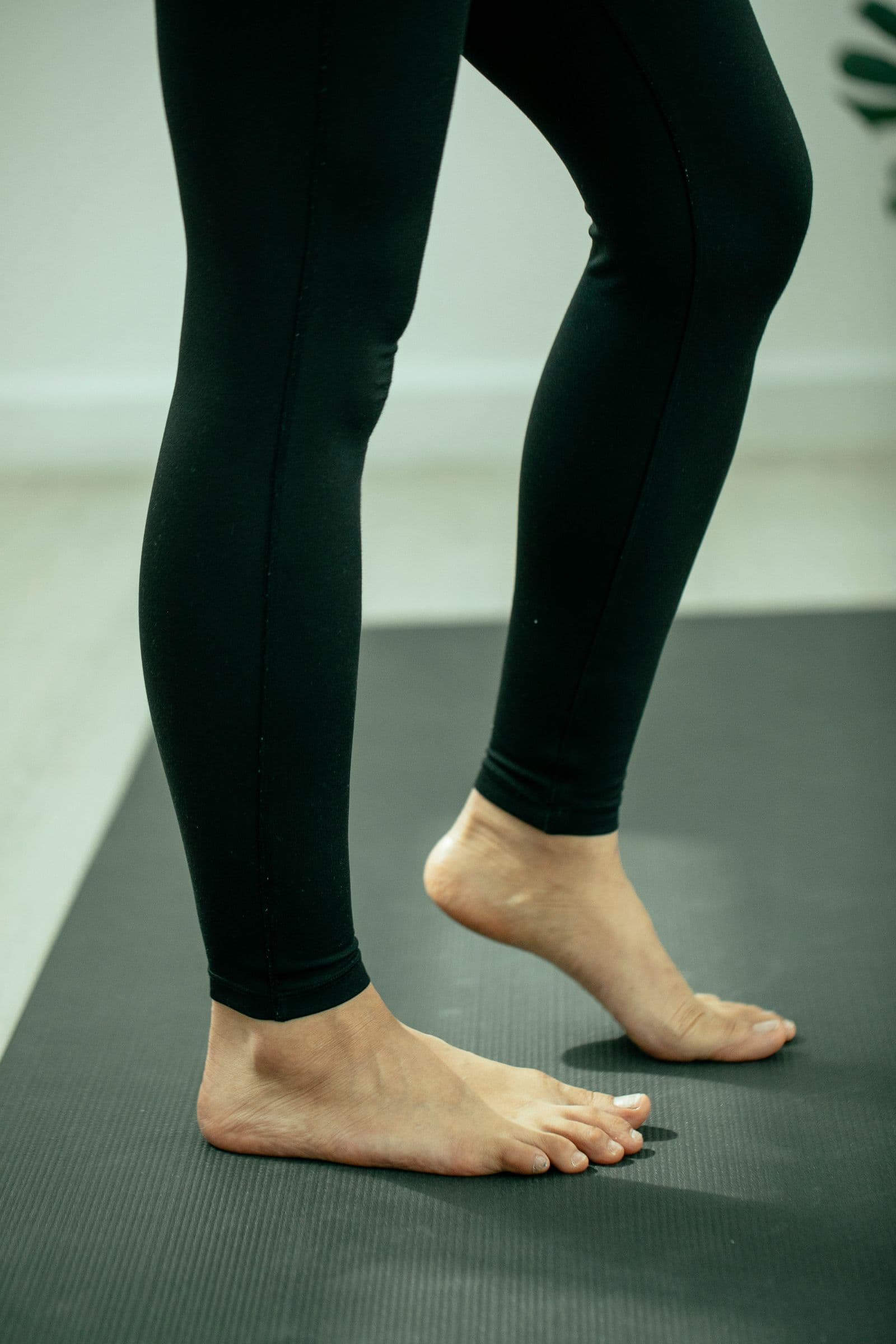
I've tested the feet of a few hundred clients in San Jose over the years, and almost none of them came in asking about their feet. They come in for a bad knee, a hip that clicks on stairs, a lower back that won't loosen up no matter how much they stretch it. The foot is usually the last place anyone looks, and it's often where the actual problem starts.
Your arch is the foundation everything else stands on. When it collapses too much or refuses to move at all, the load doesn't disappear. It travels up your leg and lands somewhere else, usually the knee first, then the hip, then the low back. A three-minute test on your bathroom floor tells you which pattern you're dealing with, and what to do about it.
Why your arches matter more than your shoes do
Podiatry sites will tell you to buy better shoes or drop into an orthotic. Sometimes that's the right call. But shoes and inserts manage a foot's shape from the outside. They don't change what the foot actually does, which is absorb force and then transfer it back out through the leg, hip, and spine on every single step.
A normal arch works like a spring. It flattens slightly when your weight lands on it, storing energy, then springs back to push you into the next step. That's the job. When the arch is too flexible, it flattens too far and stays flat too long, so the spring never really loads. When it's too rigid, it barely flattens at all, so the impact of every step gets passed straight up the leg instead of getting absorbed.
Desk workers end up on either end of this more often than people expect. Years in shoes with built-up arch support let the foot's own stabilizing muscles go quiet, the same way sitting lets the glutes go quiet. Some people end up with arches that collapse under load because the intrinsic muscles never get asked to do their job. Others end up with high, stiff arches that never learned to move at all. Both patterns show up on my table as knee pain, hip pain, or a lower back that flares on long walks, and almost nobody connects it back to the foot.
The 3-minute arch test
You need bare feet, a flat floor, and either a wet paper towel or nothing at all. Do all three checks. The pattern across all three tells you more than any single one.
1. The wet footprint test
Wet the sole of one foot, then step once, firmly, onto a dry paper bag, cardboard, or a dark tile floor where the wet print will show clearly. Step normally, full weight, and lift straight up without smearing it.
Look at the middle third of the footprint, the part between the ball of your foot and the heel.
Pass (normal arch): You see a curved band on the inside edge, roughly a third to half the width of the heel print, connecting the front and back of the foot. Flat (low arch): The middle band is nearly as wide as the heel and forefoot. Almost the entire sole shows. High arch: The middle section shows barely any connection at all, sometimes just a thin sliver or a complete gap between the heel and forefoot prints.
2. The navicular drop test
This one measures how much your arch actually moves under load, not just its shape at rest.
Sit down and find the navicular bone, a bony bump on the inside of your foot, roughly halfway between your ankle bone and your big toe. Mark the height of that bump with a piece of tape on the side of your foot while you're sitting with no weight on it.
Stand up, weight evenly on both feet, and look at where that bump sits now relative to the floor. The honest way to measure it is with a ruler held flat against the floor, checking how far the marked point dropped from sitting to standing.
Pass: 5 to 9 millimeters of drop, roughly a quarter inch or a bit more. This is a healthy amount of give under load. Low mobility: Under 5 millimeters. The arch barely moves between sitting and standing. Excessive drop: Over 10 millimeters. The arch is collapsing more than it should under body weight alone.
3. Single-leg arch check
Stand on one foot, barefoot, on a hard floor. Look down at your standing foot and watch what the arch does over 20 to 30 seconds.
Pass: The arch holds roughly the same shape you saw at rest. Some sway is normal, but the arch itself doesn't visibly cave inward. Fail: The arch flattens noticeably, the ankle rolls inward, or the knee drifts inward to compensate as you balance. If you've already run the single-leg balance test, this is measuring a related but distinct thing, arch control specifically, rather than overall balance.

What flat arches mean for your knees, hips, and lower back
A flat or overpronating arch doesn't stay a foot problem. Every step, the arch collapses inward more than it should, which rotates the shin inward, which pulls the knee inward with it. That inward knee drift under load, what trainers call knee valgus, is one of the more reliable predictors of knee pain I see walking through the door, especially in people who've picked up running or added squat volume without addressing what's happening at the foot.
Higher up the chain, the same inward rotation tugs on the hip. The muscles on the outside of the hip, the ones responsible for keeping your pelvis level when you're on one leg, end up working overtime to correct a rotation that started at the ground. A hip that aches after a long walk or a run usually gets blamed on weak glutes alone. Often it's weak glutes fighting a foot that won't hold its shape.
The lower back picks up whatever's left. When the foot and hip aren't managing the rotational forces of walking or running, the lumbar spine compensates by shifting how it stabilizes step to step. It's a small effect per stride, but multiply it by the thousands of steps in a normal week and it adds up to the kind of low-grade ache that shows up by evening and nobody can pin to one specific movement.
None of this means a flat arch is a problem for everyone who has one. Plenty of people walk around with flexible, collapsing arches their whole lives and never develop pain, especially if the muscles up the chain are strong enough to manage the extra rotation. The arch shape is the setup. Whether it becomes a problem depends on what the rest of your body is doing about it.
What high, rigid arches mean for shock absorption and ankle stability
The other end of the spectrum gets less attention, but I see it just as often in desk workers, particularly people who've worn structured, high-support shoes for years.
A high, stiff arch doesn't flatten much under load, which means it isn't doing its job as a shock absorber. The impact of each step has fewer places to dissipate, so more of it gets passed straight up into the ankle and shin. This is a common thread in people who develop shin splints or stress-related pain in the lower leg after ramping up walking or running volume too quickly.
Rigid arches also tend to travel with tighter ankles. If you've run the ankle mobility test and came back limited, a high arch is often part of that picture, since a foot that won't flatten also tends to resist the forward ankle motion that dorsiflexion requires.
The stability trade-off runs the other direction too. A high arch gives you a smaller, more rigid base of contact with the ground, which can mean less side-to-side stability on uneven surfaces. That's part of why ankle sprains show up more often in people with higher, stiffer arches. Less surface area in contact with the ground means less margin for error when the ground isn't flat.
The short-foot exercise: rebuilding arch control without orthotics
Whether your arch tested flat, rigid, or somewhere in between, the fix runs through the same muscles: the small intrinsic muscles inside the foot that are supposed to actively support the arch, rather than the arch just being a passive shape held up by ligaments and tendon tension alone.
Short foot drill, 10 reps of 5-second holds, each foot
Stand or sit barefoot with your foot flat on the floor. Without curling your toes, try to pull the ball of your foot toward your heel, shortening the foot and lifting the arch slightly off the ground. Your toes should stay flat and long the whole time. This is a small movement, a few millimeters, not a dramatic one.
Most people cheat this by curling their toes instead, which works the wrong muscles entirely. If your toes are gripping, reset and try again with less effort until you find the actual arch-lifting sensation.
Toe splay, 10 reps, each foot
Spread your toes apart as wide as you can, hold for two seconds, relax. Years in narrow shoes leave most people unable to move their toes independently at all. This rebuilds that control, and it pairs well with the short foot drill since both target muscles that shoes have let go quiet.
Towel scrunch, 2 sets of 15
Lay a towel flat on the floor, heel on the tile and toes on the towel. Scrunch the towel toward you using only your toes, then reset and repeat. This is a more dynamic version of the same intrinsic foot work, and it's the one clients usually notice working the fastest, sometimes within a couple of weeks of consistent reps.
Three times a week is enough to start changing how your arch behaves under load. This isn't a stretch you do once and feel loose. It's strength training for a part of the body that's been left out of strength training almost entirely.
How foot mobility connects to the rest of your kinetic chain
I keep coming back to this because it's the piece most self-help foot content misses entirely: the foot doesn't work alone, and neither does the fix.
A collapsing arch usually travels with a locked-up ankle, since the two joints share the job of absorbing impact and one will always try to compensate for the other. If you tested flat here and haven't run the ankle mobility test yet, that's the next logical stop.
Going the other direction, foot instability under single-leg load connects directly to hip control. If your arch caved during the single-leg check above, it's worth checking whether your hip mobility is part of the same pattern, since a hip that can't stabilize the pelvis on one leg will often let the whole leg, foot included, rotate inward to compensate.
None of these tests exist to hand you five separate problems. They exist to help you find where in the chain your particular pattern actually starts, so the time you spend fixing things goes to the right joint instead of the symptom that happens to hurt the most that week.
When a self-test isn't enough
A wet footprint and a ruler will tell you a lot, but they won't catch everything, and they definitely won't tell you how your foot pattern interacts with your hips, your spine, and the specific way you move when nobody's watching a test.
That's what the movement screen is for. It's the same assessment I run with new clients in person, adapted into a five-minute online version. Twelve questions, no email required, and it flags which parts of your chain, feet included, are the actual limiting factor in how you move. You get a one-week program built around whatever comes back lowest.
A simple daily foot routine for desk workers who stand and walk
If you don't want to run the full three-drill routine every day, here's the minimum effective version I give clients who are short on time.
Go barefoot at home whenever it's reasonable. Every hour spent in a shoe with built-in arch support is an hour your foot's own muscles get to skip work. You don't need to go full barefoot-shoe convert, just give your feet time without external support when you're not going to injure yourself walking on hardwood or carpet.
Do the short foot drill for 30 seconds while you're brushing your teeth. It costs you nothing and it's the single highest-value minute you can spend on this.
Once a week, retest the wet footprint or the single-leg check. Real change here takes four to six weeks of consistent work, similar timelines to what I see with ankle mobility or hip mobility work. You're not going to feel a dramatically different arch after three days, but the trend over a month or two is usually visible if you're doing the work.
FAQ
Can flat feet be fixed as an adult, or is the shape permanent?
The bone structure itself is largely set by adulthood, but how much your arch collapses under load and how well it re-stabilizes is a function of muscle strength and control, which absolutely responds to training at any age. I've seen real, measurable change in navicular drop scores in clients in their 50s who stuck with the intrinsic foot work for a couple of months.
Do I need orthotics if I have flat feet?
Sometimes, and that's a conversation for a podiatrist, not a trainer. What I'd say is that orthotics manage the symptom of a collapsing arch without training the muscles that are supposed to control it. For some people, especially those with significant pain or structural issues, that management is exactly what's needed. For others, particularly desk workers whose feet are simply undertrained rather than structurally compromised, building the intrinsic strength addresses more of the actual problem.
Is a high arch always a bad thing?
No. Plenty of people have naturally higher arches and no issues at all, particularly if their ankles and hips are mobile enough to pick up the shock absorption the foot isn't providing. It becomes a bigger factor when it shows up alongside a stiff ankle or a history of shin or stress-related lower leg pain.
How long until I see a difference in my arch test scores?
Most clients see early changes in how the foot feels, less fatigue, less arch ache after long days, within two to three weeks. Measurable shifts in the navicular drop or wet footprint test usually take four to six weeks of consistent work, three times a week minimum.
Where to go from here
Feet are the one joint I see people work around for years instead of working on directly. If your test came back flat, rigid, or asymmetrical between the two sides, that's useful information, not a life sentence. The muscles that control your arch respond to training the same way any other muscle does.
I've run this test and its variations with hundreds of clients around San Jose and the Bay Area, usually after a knee or hip issue led us to look further down the chain than either of us expected. If you want someone watching how your foot actually behaves under real load instead of a static test, that's what one-on-one training is for.
Ready to train smarter?
Get a personalized program built around your goals, your body, and your schedule.
Book Your Free ConsultationRelated Articles
Ankle Mobility Test at Home: Fix Tight Dorsiflexion in 10 Minutes
A simple knee-to-wall test to check your ankle mobility at home, with pass/fail ranges and five drills to fix tight dorsiflexion. A San Jose trainer's guide.
Resistance band routine for desk workers: no gym, no equipment, 15 minutes
A $15 band does more for a desk-worn body than a home gym you'll never build. A San Jose trainer's 15-minute band routine for the person who has no equipment and no floor space.

Strength training for hip osteoarthritis: three at-home tests and what the newest trials say
Strength training for hip osteoarthritis does less for pain than most exercise lists suggest and more for what you can still do. Three at-home tests show which problem your hip actually has. A San Jose trainer's read on the 2024 to 2026 research.