
Creatine after 40: what it actually does, and how to tell if it's working for you

Jeffrey Sun, ACE-CPT
September 3, 2026 · 12 min read
ACE-certified personal trainer specializing in functional movement, mobility, and strength training for busy professionals in San Jose and the Bay Area.
Book a free consultation →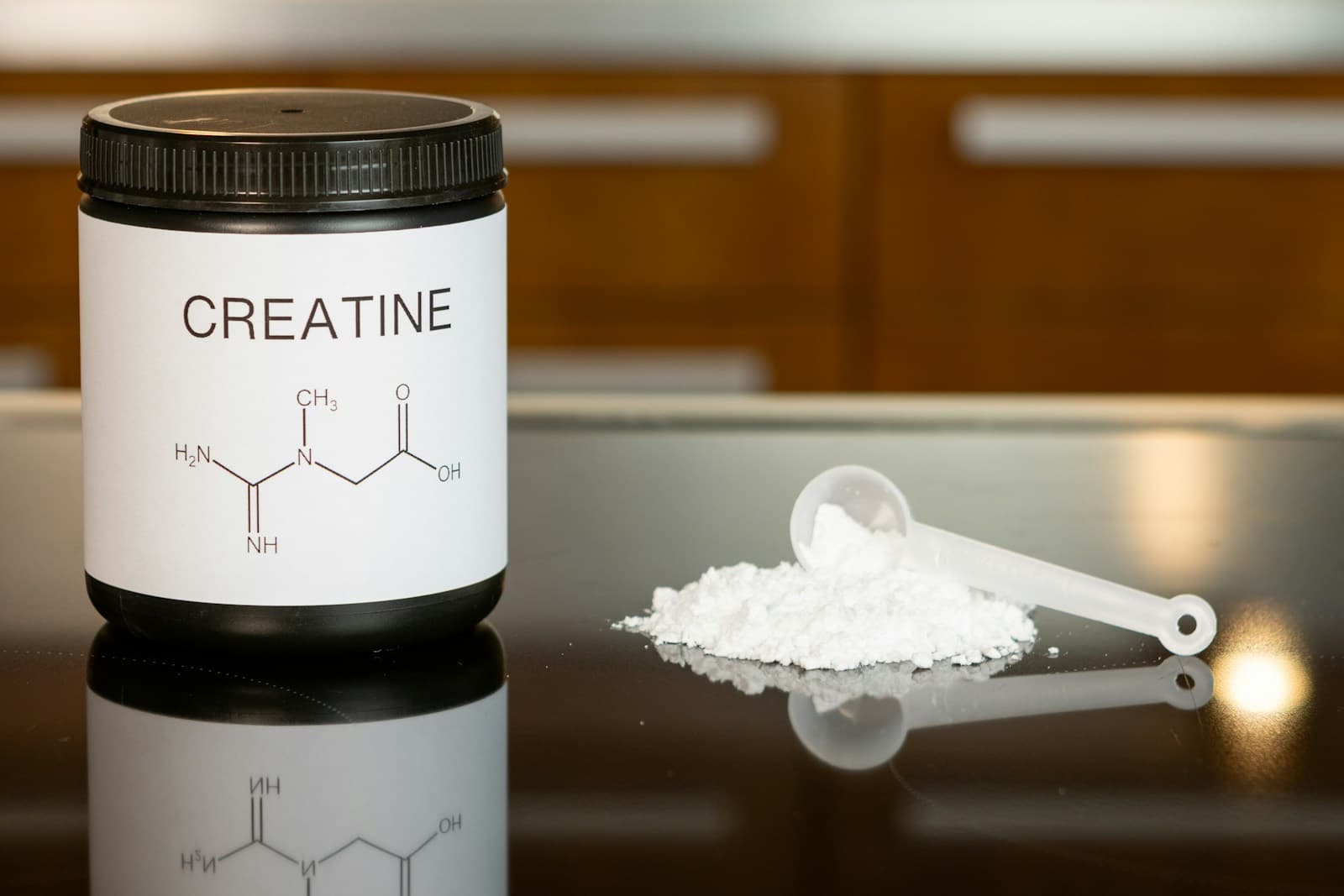
A client in Sunnyvale, 46, showed me a photo of his supplement shelf in January. Creatine, a greens powder, magnesium, two things I had to look up, and a collagen tub he'd bought because a podcast host mentioned it. He wanted to know which ones to keep. Reasonable question. The harder question, which he asked next, was how he was supposed to tell.
That's the part the internet is silent on. Search creatine after 40 and you get page after page listing the same benefits, most of them written by companies that sell the powder. Not one of them tells you how to find out whether it's doing anything in your body specifically. Which is strange, because for creatine that question has a real answer, and somewhere between a fifth and a third of people who take it won't get much.
Creatine is one of the few supplements I think is worth the shelf space for most adults who lift. It's also badly oversold, and the way it's oversold sets people up to misread their own results.
What the "10 percent strength boost" headline actually measured
The number that gets quoted everywhere traces back to a body of research on creatine plus resistance training, and the version most relevant to anyone over 40 is a meta-analysis Chilibeck and colleagues published in the Open Access Journal of Sports Medicine in 2017. Twenty-two randomized controlled trials, 721 participants, mean ages spanning 57 to 70. The creatine groups gained about 1.4 kg more lean tissue mass than the placebo groups and put up more weight on chest press and leg press.
Three pounds of lean mass over the course of a study, on top of what training alone produced. That's a real effect and it's worth having. It is also not what the headline implies when it lands on a supplement retailer's blog.
The designs are worth looking at. Every one of those trials had people lifting. The creatine arm and the placebo arm both trained, and both got stronger. Creatine widened the gap between them. There is no version of that research where someone took the powder and skipped the sessions.
So creatine is a multiplier on training you're already doing. If the training is there, the multiplier has something to act on. If it isn't, you own an expensive tub of white powder.
The first two weeks are water, and your scale is about to lie to you
Creatine works by pulling water into muscle cells along with itself. The water is part of the mechanism rather than a side effect of it, which means you'll gain roughly one to two percent of your body weight in the first week or two, which for most adults is two to four pounds, and none of it is muscle or fat.
I've watched this end more creatine experiments than any other single factor. Someone starts it in the same week they start a fat loss push, the scale jumps three pounds by Friday, and they conclude the supplement is making them gain weight. They stop before they've reached muscle saturation, which is the point where any of the actual effects would have shown up.
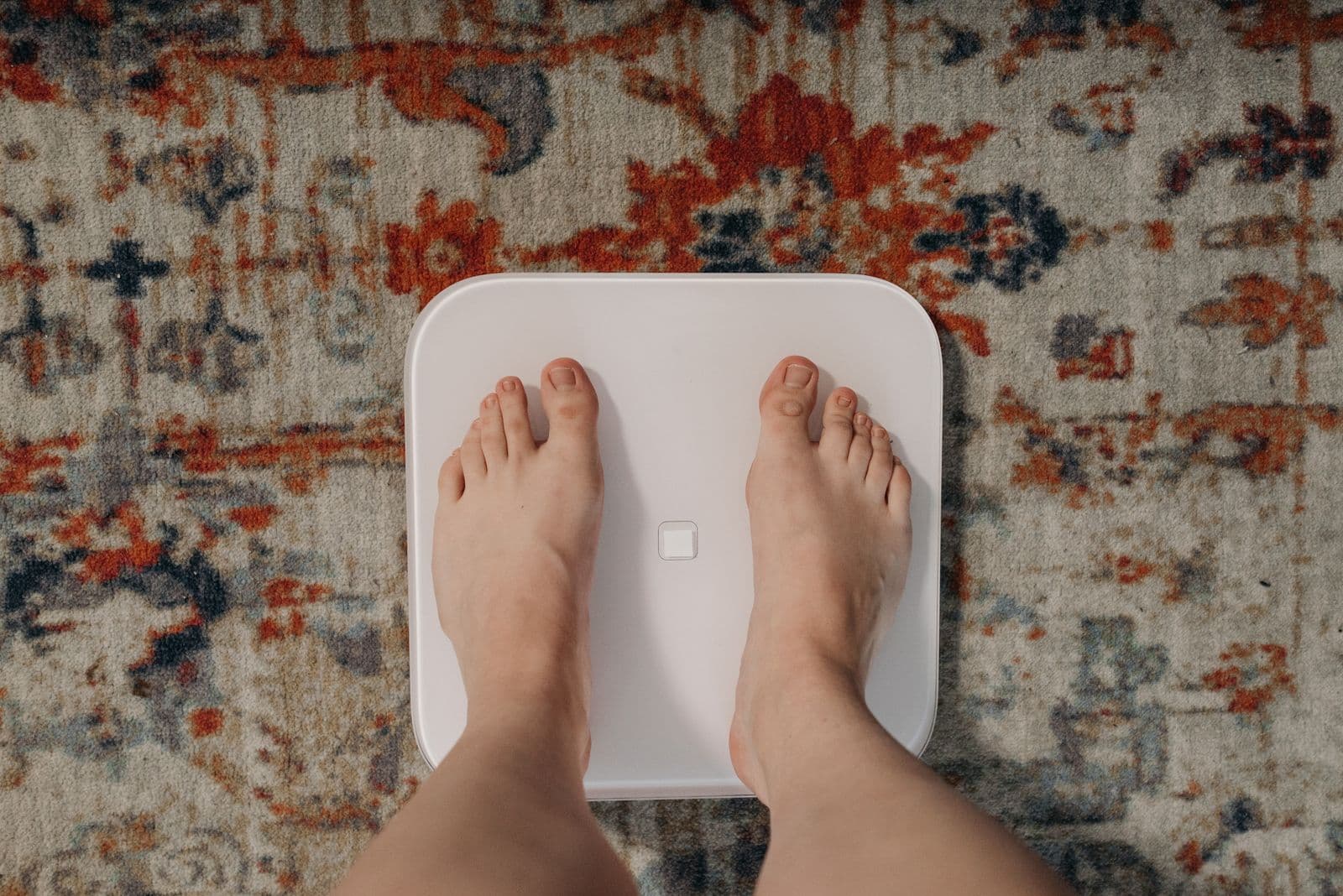
If you're running a deficit at the same time, this gets worse, because the water gain masks fat loss for several weeks and you can't tell which is which. I'd generally start creatine in a maintenance stretch rather than in the middle of a cut, or accept up front that the scale is off the table for a month and track your waist and your lifts instead. That's a good habit anyway. It's the same problem I walk through in more detail in why the scale stalls, where water weight is one of four reasons the number on the floor stops meaning what people think it means.
The water gain also stops. It's a one-time step up to a new baseline, not an ongoing climb. If your weight is still rising steadily in month three, that's coming from somewhere other than the creatine.
What it doesn't do
Creatine helps your muscles regenerate ATP faster during short, hard efforts. That's the whole mechanism. Everything downstream follows from being able to do a bit more work before you run out.
Which means the benefit shows up as an extra rep or two on a heavy set, or slightly less falloff across your sets, accumulated over months of training. It's small per session. It compounds because it's small in the same direction every session.
It doesn't do anything for endurance work at conversational pace, because that system isn't running on phosphocreatine. It doesn't build muscle in the absence of a stimulus. It doesn't replace protein intake, and I see people get this backwards fairly often: creatine on a shelf next to a diet running 70 grams of protein a day is a rounding error sitting on top of an actual constraint. If you're not sure where you land there, the protein numbers for adults over 40 are the more consequential thing to fix first.
And it won't fix a program that isn't progressing. A few years back a client told me his bench had been stuck for eight months and asked whether creatine would help. It had been the same five sets of five, same weight, most of that time. There was nothing for a multiplier to multiply.
The non-responder question
Syrotuik and Bell ran a study in 2004 that took muscle biopsies before and after a five-day creatine load and sorted people by what actually happened inside the tissue. Responders gained more than 20 mmol of creatine per kilogram of dry muscle. Non-responders gained less than 10. Roughly a fifth to a third of people fall into that lower group, depending on where you draw the line.
The main reason is unglamorous: the non-responders already had high muscle creatine before they started. Your muscles hold a finite amount, and if you're near the ceiling, supplementing adds very little. Dietary creatine comes almost entirely from meat and fish, so people who eat a lot of both tend to sit closer to full already. The flip side is that vegetarians and vegans usually start further from the ceiling and are among the most reliable responders.
Fiber type appeared to matter too. In that study, responders averaged about 63 percent fast-twitch fiber against 40 percent in the non-responders. Nobody is getting a biopsy to settle a supplement question, so that part is background rather than something you can act on.
What it does mean is that "creatine works" is a population statement. Whether it works in you is a separate question, and it happens to be an answerable one.
Run an eight-week trial on yourself
Take 3 to 5 grams of monohydrate daily for eight weeks. Time of day doesn't matter much, so take it when you'll remember. If you want saturation faster, run about 20 grams a day split into four doses for the first five to seven days and then drop to the maintenance dose. Skipping that load gets you to the same place in three to four weeks instead of one.
Then pick two lifts and freeze them. One upper body, one lower body, same rep range and same rest intervals for the full eight weeks. These are your measuring instrument and they only work if you leave them alone. Log the top set of each every session, weight and reps. That's the whole record.
The rule people break is the last one: don't change anything else. Not the program, not the protein target, not the sleep schedule. Start creatine the same week you add a fourth training day and you've learned nothing about creatine.
At week eight, look at whether your progression on those two lifts moved faster than it had been moving in the two months before. Not whether you got stronger. A reasonable program does that on its own. You're asking whether the slope changed.
A clear signal looks like an extra rep or two at a given weight showing up sooner than it used to, or a load increase landing a week or two ahead of your previous pace. If eight weeks of consistent dosing produce nothing distinguishable from your prior trend, you're probably in the non-responder group, and the honest move is to stop and spend the money elsewhere. Plenty of people land there and it says nothing about how well they train.

Two caveats. Eight weeks is short enough that ordinary week-to-week variation can muddy a small effect, so a borderline result is genuinely borderline and worth another eight weeks if you're curious. And this only works if your training is consistent enough to have a trend in the first place. If you lift twice one week and once the next, there's no slope to compare against.
Monohydrate, and everything else on the shelf
Walk down a supplement aisle and you'll find creatine HCl, buffered creatine, liquid creatine, micronized, magnesium chelate, and a handful of proprietary blends, most of them priced above plain monohydrate and most of them marketed on absorption or reduced bloating.
The ISSN position stand from 2017 is direct about this. Monohydrate is the most extensively studied form, and no other form has been shown to be superior in absorption, effectiveness, or safety. Nearly all of the research those other products cite in their own marketing was run on monohydrate.
Micronized monohydrate is the one variation I think is worth considering, and only because finer particles dissolve better in cold water. That's a texture preference rather than a physiological upgrade. If gritty powder at the bottom of the glass is what would make you quit, spend the extra few dollars.
The safety question deserves a straight answer too, because it comes up in almost every consultation where creatine does. The same position stand reviewed intakes up to 30 grams a day for as long as five years in healthy people and found no effect on kidney function markers. Creatine does nudge blood creatinine upward, which is a normal consequence of having more creatine in your system and can look like a red flag on a routine panel. Mention it to your doctor before the lab draw. If you have existing kidney disease or take medication that affects kidney function, that's a conversation to have first rather than a rule to apply yourself.
Bone and brain, where the claims outrun the evidence
Two newer sales angles are worth separating from what the research supports, especially in content aimed at women over 40.
Bone. Chilibeck's group ran a 12-month trial in postmenopausal women taking 0.1 g/kg of creatine daily alongside supervised resistance training three days a week. The result was preservation of femoral neck bone mineral density and an increase in femoral shaft width, which predicts resistance to bending. That's a genuine finding and it's more than most supplements can claim.
The details matter here. The strongest effects were on bone geometry and estimated bending strength rather than large gains in density, and preservation means holding ground against a placebo group that was declining. Every page I found rendered this as "creatine builds bone." It's a real but narrower effect, it required 12 months of supervised lifting to produce, and the lifting is doing the heavier share of the work. If bone is the actual reason you're interested, the loading that drives bone adaptation is where the leverage is, and creatine is a modest addition on top of it.
Brain. The cognitive research is more interesting than it is applicable right now. The 2024 sleep deprivation study people cite gave subjects a single dose of 0.35 g/kg, which is around 25 grams for a 70 kg adult. Processing speed and short-term memory held up better than placebo through a sleepless night. Real result, and a fun one.
But that's five times a normal daily dose, given once, in acute sleep deprivation. It is not evidence that 5 grams a day makes you sharper at work on a Tuesday. Some smaller work suggests modest cognitive effects at standard doses in older adults, and the perimenopause research is early. I'd call it a plausible bonus rather than a reason to start. If your interest in creatine is mostly about brain fog, sleep is the larger lever by a wide margin.
Where this sits on the actual list
Creatine is cheap, well studied, safe in healthy adults, and helps a majority of the people who take it by a small amount. That combination is rare enough in the supplement world that I'm comfortable saying most adults who lift regularly can reasonably take it.
It's also, by a distance, the least important thing on the list. Training that progresses, enough protein, and sleep you're not constantly borrowing against will each do more for you at 45 than creatine will. When someone asks me about it while their program hasn't changed in a year, the answer isn't about the powder.
My Sunnyvale client kept the creatine and the magnesium and dropped the rest. He ran a version of the eight-week trial on his trap bar deadlift and his overhead press, and the deadlift progression clearly picked up. The press was a wash. That's roughly what I'd expect, and it's more than he knew in January.
If you're trying to figure out where your training is actually limited, the free movement screen scores six areas including your hips, ankles, and core in about five minutes, no email required. It's the same assessment I run with new clients, and it surfaces bottlenecks that no supplement is positioned to touch.
And if you've got the training and the food handled and still feel like progress has flattened out, that's usually a programming conversation. That's what one-on-one training is for. I've logged more than 12,000 sessions with adults around San Jose and the Bay Area, and the ones who made the biggest changes did it by fixing what they did in the gym, with or without anything on the shelf at home.
Ready to train smarter?
Get a personalized program built around your goals, your body, and your schedule.
Book Your Free ConsultationRelated Articles
Why the scale stalls: losing fat without losing muscle after 40
A stalled scale has four common causes, and they need four different fixes. A San Jose trainer's guide to body recomposition after 40, and how to run a calorie deficit without giving back the muscle you trained for.

How much protein do you actually need after 40 to build and keep muscle?
Most protein advice online is either bodybuilding-forum extreme or vague and useless. A San Jose trainer's actual numbers for building and keeping muscle after 40.

Hydration and Electrolytes for Strength Training After 40: What Changes and What to Actually Drink
A San Jose trainer's practical guide to hydration and electrolytes for lifters over 40 — what shifts in your body, what to drink before, during, and after a session, and when cramps are a hydration issue versus a programming one.