
Why the scale stalls: losing fat without losing muscle after 40

Jeffrey Sun, ACE-CPT
August 31, 2026 · 11 min read
ACE-certified personal trainer specializing in functional movement, mobility, and strength training for busy professionals in San Jose and the Bay Area.
Book a free consultation →
A client showed me his notes app in the fifth week of a fat loss push. Lifting three days a week, hitting his protein, walking at lunch, tracking everything. The scale had moved a pound and a half. He was 43, a product manager in Santa Clara, and he wanted to know whether to cut another 300 calories or add a fourth day of cardio.
Neither, as it turned out. His waist had dropped an inch over those five weeks and his squat had gone up thirty pounds. The scale wasn't broken and neither was he. He was measuring the wrong thing.
That's one version of the stall. There are four I see regularly, and the reason generic advice doesn't fix them is that they need four different responses. Eat less, move more is not a diagnosis. It's a slogan that happens to be correct about a third of the time.
What actually happens to muscle when you're eating less
When you run an energy shortfall, your body covers the gap from both fat and lean tissue. It's never purely one or the other. What you control is the ratio.
Three things move that ratio. How much protein you eat, whether you're giving your muscles a reason to stay, and how steep the shortfall is. Miss all three and you'll lose weight that includes a meaningful chunk of muscle, which is the outcome where the scale cooperates and you end up softer at a lower body weight.
After 40 the margin gets thinner. Aging muscle is less responsive to the same dose of protein and the same training stimulus, which is why the protein numbers that work after 40 are higher than the ones you'd have gotten away with at 25. You need a stronger signal to hold the same ground.
The best demonstration of how much that ratio can shift comes from a 2016 trial in the American Journal of Clinical Nutrition. Longland and colleagues put 40 young men through four weeks on a 40 percent caloric deficit with resistance training and interval work six days a week. One group ate 2.4 grams of protein per kilogram of bodyweight, the other 1.2. The high-protein group lost 4.8 kg of fat and gained 1.2 kg of lean mass. The lower-protein group lost 3.5 kg of fat and held lean mass roughly flat.
Read that carefully before you take it to the bank. Those were 23-year-old men, closely supervised, training six days a week, on a deficit far steeper than anything I'd put a working adult on. The point isn't that you'll gain muscle on a 40 percent cut. The point is that the same weight loss can be composed very differently depending on protein and training, and that the composition is something you influence rather than something that happens to you.
Cause one: you're not in the deficit you think you are
This is the most common one and the least fun to hear.
The research on self-reported intake is old but has held up uncomfortably well. Lichtman's 1992 study in the New England Journal of Medicine took a group of people who described themselves as diet-resistant, measured actual energy intake against what they reported, and found they underreported food by roughly 47 percent and overreported exercise by about 51 percent. Small sample, a specific population, and not a study you should generalize casually. But the direction of the error shows up in every replication since, and it shows up in my gym.
It's rarely dishonesty. It's the olive oil that goes in the pan by feel and lands at three tablespoons. It's the handful of almonds that isn't a handful. It's five weekdays of genuine discipline and two weekend days that quietly refund the whole week. Four hundred surplus calories on a Saturday and Sunday erases a 300-calorie weekday deficit and you'd never notice from inside it.
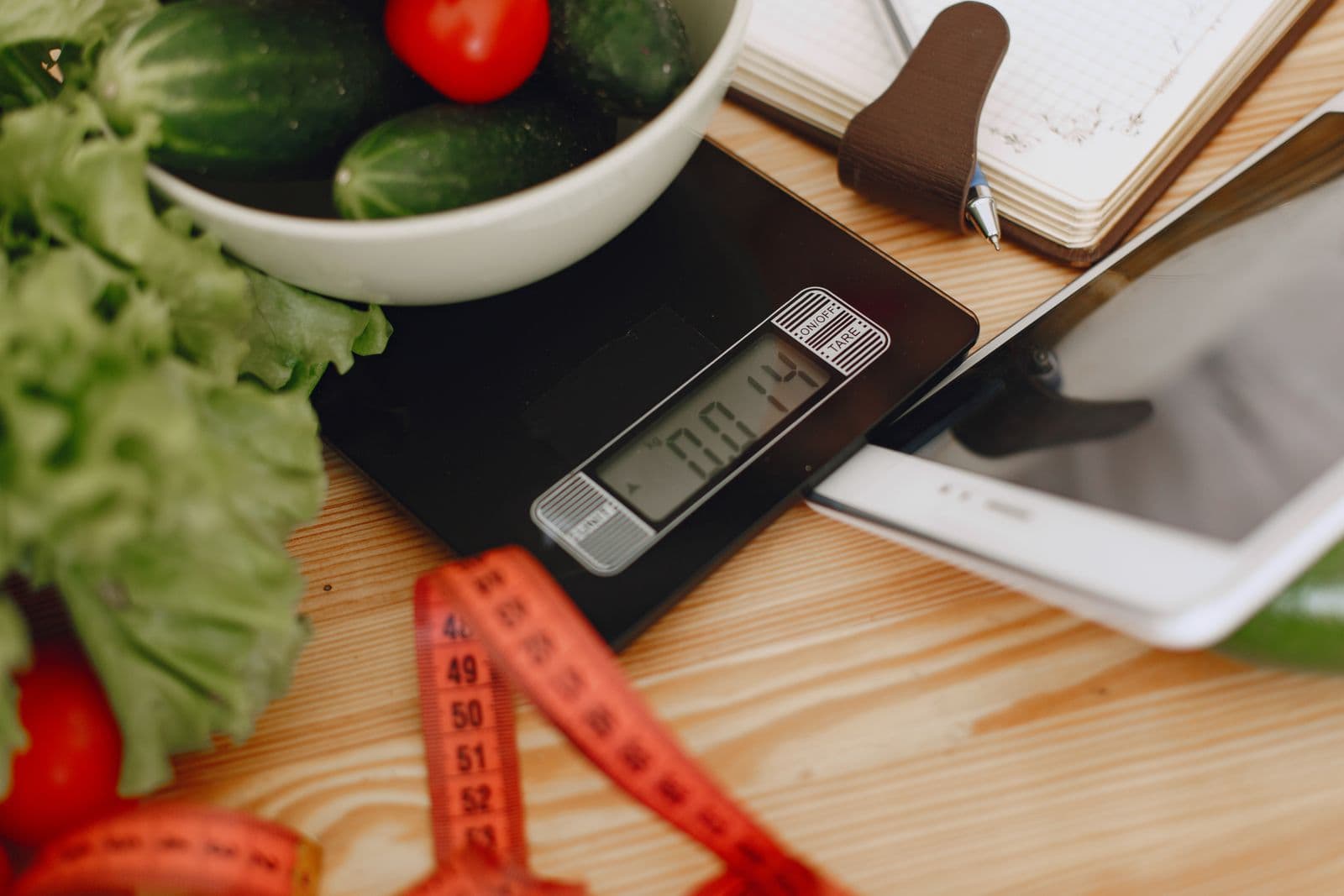
The check: log four days honestly, and make two of them a Saturday and a Sunday. Weigh the oil, the nut butter, the rice, and the protein. Everything else you can eyeball. You're not adopting a permanent food-weighing habit, you're calibrating your estimates for a few days so you know what your portions actually cost.
If the four days come back and you were in a real deficit the whole time, good. Cross this one off and move down the list. That's the value of the audit either way.
Cause two: the deficit is too steep and you're paying for it in muscle
The opposite failure, and the one that does lasting damage.
A big deficit gets weight off quickly, and a fair amount of what leaves is tissue you spent years building. Worse, it drags your training down with it, which removes the very signal that tells your body to keep the muscle. Then you're in a hole with two problems.
The clearest tell is strength. One bad session is just a bad session, but every main lift sliding for two weeks straight is a message. Watch how the weights feel, too. If a set you'd have called a 7 is now reading like a 9, take it seriously. The RPE self-check covers how to score that properly rather than by vibe.
Then there's the stuff outside the gym. Falling asleep fine and waking at 3 AM is a classic under-fueling pattern. So is being cold all the time, or a flat mood, or losing interest in training you were enjoying a month ago. Any one of those alone means nothing. Two or three of them, all new, mean something.
The fix is to shrink the deficit, not abandon it. Somewhere around 300 to 500 calories below maintenance is where most of my clients lose fat at a rate they can actually hold while still adding weight to the bar. Slower on paper, faster in practice, because the version you quit in week six doesn't count for anything.
Cause three: you're recomposing and the scale can't see it
This was my Santa Clara client. Fat down, muscle up, bodyweight roughly parked.
Recomposition is most likely in three situations: you're new to lifting, you're coming back after a long break, or you're carrying enough body fat to fuel some muscle growth while running a modest shortfall. It's slower for a lean, well-trained 45-year-old than for someone six weeks into their first program. But when it happens, the scale is close to useless as a progress instrument, because it reports a single number for two things moving in opposite directions.
There's also noise sitting on top of that. Glycogen carries water with it, roughly three grams of water per gram of stored carbohydrate, so a change in food or training volume can swing the scale two or three pounds inside a day with nothing real behind it. Sodium does the same. So does a hard leg session two days prior.
So measure something else.
Waist tape at the navel, same time of day, once a week. The most useful number in a fat loss phase and almost nobody takes it.
A weekly average instead of a daily reading. Weigh most mornings and compare one week's average to the last. Any single morning tells you about hydration and last night's dinner, not about fat.
Your working weights. If the bar is getting heavier while the tape is getting smaller, the composition is going where you want it, whatever the scale reports.
Monthly photos in the same light help too, since you don't notice a gradual change in a mirror you look at every day. And if the tape and the strength log both say progress while only the scale disagrees, the scale is outvoted.
Cause four: it's a recovery problem wearing a nutrition costume
Short sleep through a launch cycle. A quarter where the work stress doesn't let go. Those weeks squeeze recovery, and squeezed recovery makes your sessions worse and your appetite much harder to read. The usual response is to cut calories further, which digs the hole deeper, because now you're short on food and short on recovery at the same time.
This is the stall that catches Bay Area professionals hardest, and it's the one people are least willing to name.
I've had clients spend two months fighting a stalled scale that resolved when their project shipped and they started sleeping seven hours again. Nothing about their food changed. Sleep is doing more work for your body composition than any macro adjustment you're contemplating, and it's worth ruling out before you touch the food.
If you're in one of those stretches, holding at maintenance for a few weeks while you protect training and sleep is a legitimate choice, not a failure of discipline. A phase you pause deliberately is a phase you can restart.

A four-week reset that keeps the muscle
If you're stalled and you don't yet know which cause you're looking at, this is where I'd start. Four weeks is long enough to produce a real answer and short enough that nobody has to white-knuckle it.
Week 1. Measure, don't change. Log four days including a weekend. Take a waist measurement. Weigh most mornings and average the week. Write down your working weights on your main lifts. Change nothing about your eating yet. You're establishing what's actually happening.
Week 2. Set the two numbers. Protein first, using the range above, spread across three or four meals rather than loaded into dinner. Then set calories at roughly 300 to 500 below the maintenance figure week one gave you. If week one showed you weren't in a deficit at all, this is the whole fix and you may not need to cut further.
Week 3. Protect the training. Keep the loads heavy. If you need to reduce something because energy is lower, take out a set or two of accessory work rather than dropping the weight on your main lifts. The heavy work is what tells your body to keep the muscle, so that's the last thing to give up. Two full-body sessions a week is enough to hold ground if that's what your schedule allows.
Week 4. Read the instruments. Compare week 4's seven-day average and waist measurement to week 1's. Half a pound to a pound a week on the average, with the tape moving and your lifts steady or climbing, is exactly right. Waist moving and the scale flat is recomposition, and it's a win. Scale dropping fast while your lifts fall is the steep-deficit problem, and the answer is to eat more, not less.
Then repeat, adjusting one variable. One. Changing calories, training, and cardio in the same week guarantees you won't know which one did anything.
Where to start
The nutrition half of this gets all the attention, and it's the half that decides whether the weight you lose is fat. But the training half is what makes any of it worth doing, and it only works if you can load the main lifts hard enough to matter.
That's the part I'd check before you touch your food. If a hip or ankle restriction is capping how much you can actually squat or hinge, your food isn't the thing holding you back yet. The movement screen is the same five-minute assessment I run with new clients, no email required, and it flags which restrictions are quietly limiting the lifts that would otherwise be defending your muscle.
And if you've already run the audit, already know which of the four stalls you're in, and want someone to build the program and hold the line on it, that's what the 1:1 work is for. I've coached about 12,000 sessions in San Jose and the South Bay, and a good chunk of them have been with people in exactly this spot: doing most things right, stuck anyway, one diagnosis away from moving again.
Ready to train smarter?
Get a personalized program built around your goals, your body, and your schedule.
Book Your Free ConsultationRelated Articles
How much protein do you actually need after 40 to build and keep muscle?
Most protein advice online is either bodybuilding-forum extreme or vague and useless. A San Jose trainer's actual numbers for building and keeping muscle after 40.

Am I losing muscle? A four-part sarcopenia self-test you can score at home
Sarcopenia has clinical cutoffs you can test with a chair, a tape measure, and a hallway. A San Jose trainer walks through the four screens, what a low score actually means after 50, and what to do about each cause.

Push-Up Test at Home: What Your Number Actually Means After 40
A push-up number is measuring three different things at once: pressing strength, trunk stability, and shoulder position. How to run the test honestly, score it by age and sex, and work out which of the three is costing you reps. A San Jose trainer's guide.