
Wrist pain during push-ups and planks? Four at-home tests to find out why

Jeffrey Sun, ACE-CPT
October 24, 2026 · 14 min read
ACE-certified personal trainer specializing in functional movement, mobility, and strength training for busy professionals in San Jose and the Bay Area.
Book a free consultation →
A data scientist in Santa Clara signed up for a lunchtime bootcamp in the spring. By the third week, his right wrist ached through every plank, and push-ups were the part of the class he dreaded. He started doing them on his knees, which helped his shoulders and did nothing for his wrist.
When I watched him, the issue was obvious within a minute. In the plank, his shoulders were well ahead of his hands and the heel of his palm was lifting slightly. His wrist was at the end of its range, and he was holding most of his body weight there for 45 seconds at a time.
Wrist pain during push-ups is common and usually fixable without giving the movement up. The tricky part is that it comes from a few different places, and the fix for one doesn't help the others. The four tests below sort that out, and the plan after them gets most people back to flat-hand push-ups. If your wrist pain started with a fall, skip to the last section first.
Why push-ups ask so much of the wrist
Most of what you do with your hands in a day barely bends the wrist back. In a 2016 motion-capture study in the American Journal of Occupational Therapy, Gates and colleagues measured 15 people doing everyday tasks like eating, combing hair, and washing. All of them together needed about 38 degrees of wrist extension.
A flat-hand push-up or plank, with the shoulders stacked over the hands, asks for something close to 90 degrees. And it asks for it while the wrist carries a large share of your body weight. That's a range most adults never use, loaded heavily, often for the first time in years.
The wrist also changes how it carries load at that angle. A 2008 modeling study in the Journal of Hand Surgery built computer models of seven healthy wrists from CT scans. In full extension, more of the force moved through the thumb side of the joint, and the ligaments on the palm side tightened considerably. A 2018 study in the Journal of Hand Therapy put 14 people through push-ups on force plates, once on flat hands and once with the wrist straight. With the wrist bent back, force traveled further toward the back and the pinky side of the wrist. Both studies were small, but they explain why the same push-up can hurt in different spots for different people.
Desk work adds a quieter layer. Typing with the wrists bent back on a wrist rest or the edge of a laptop holds them in light extension for hours. It isn't damaging on its own, but it can leave the back of the wrist a little irritated before you ever get to the gym.
Test 1: how far does your wrist bend back?
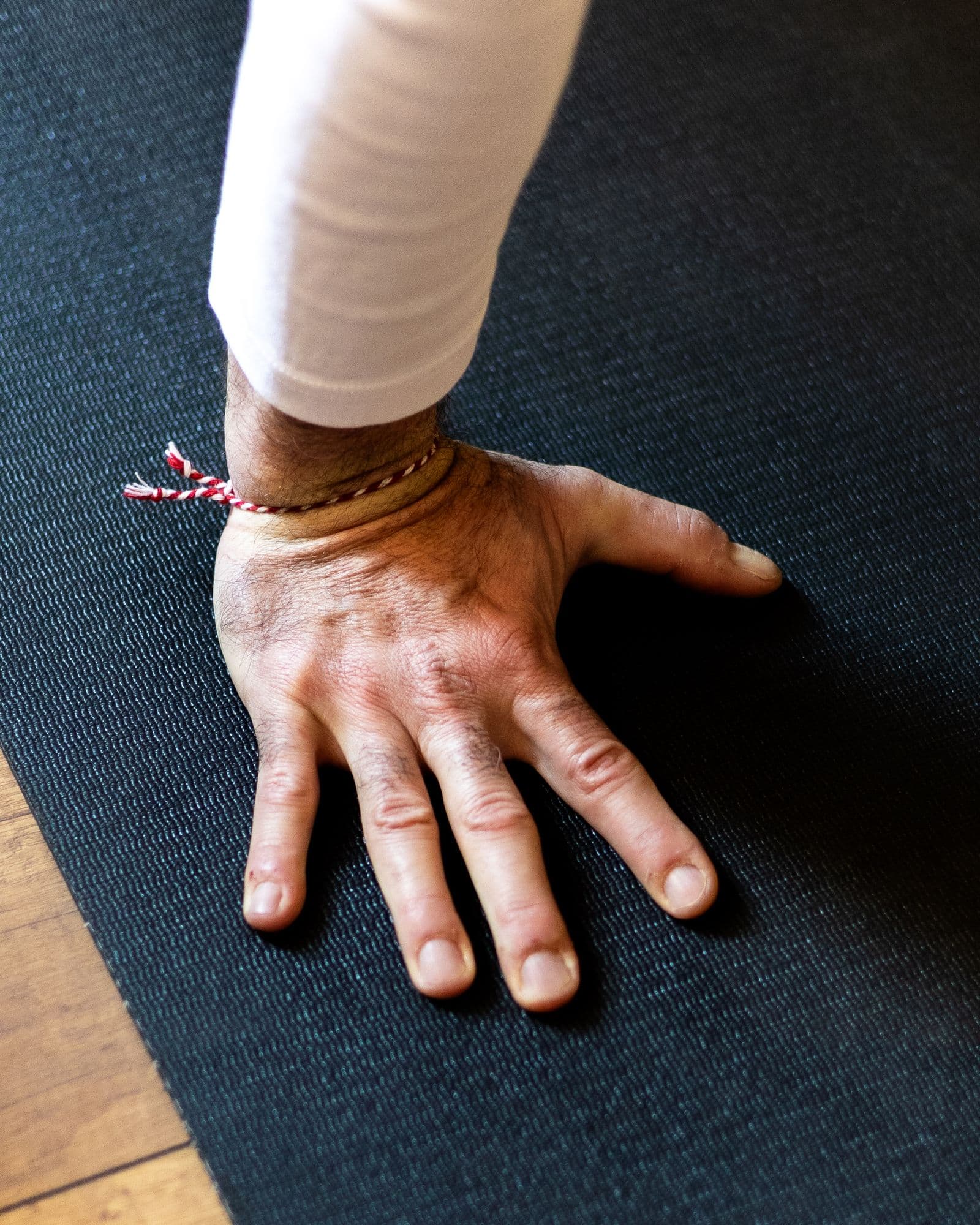
This measures the range you have without load. Stand and press your palms together in front of your chest in a prayer position, fingers pointing up. Keep the heels of your hands pressed together and slowly lower your hands toward your waist, letting your elbows spread. Stop when the heels of your hands start to separate, or when you feel a strong stretch or pinch.
Look at your forearms at that point, or have someone take a photo from the side.
Pass: Your forearms reach roughly level with the floor before the palms separate. That's close to the 90 degrees a flat push-up needs.
Borderline: Your forearms stop 15 to 30 degrees short of level.
Fail: They stop more than 30 degrees short, or one side is clearly stiffer than the other, or you feel a pinch at the back of the wrist rather than a stretch on the palm side.
The prayer position tests both wrists together, so it hides a difference between sides. If you suspect one wrist is stiffer, press one palm flat against a wall at chest height with the fingers pointing down and slowly lean in, then compare.
Test 2: the loaded rock
Now add load. Get on your hands and knees with your hands directly under your shoulders, palms flat, fingers forward. Slowly shift your weight forward so your shoulders move ahead of your hands, as far as you can while the heels of your hands stay down. Rock back. Do five slow rocks, then rate the pain and note exactly where it is.
Pass: No pain through a full rock, with your shoulders a few inches past your hands.
Borderline: Discomfort of 3 or less out of 10, only at the far end of the rock.
Fail: Pain above 3, pain early in the rock, or pain that lingers after you stop.
Where it hurts matters more than how much:
- Back of the wrist, a pinching feeling at the end of the rock. This is the bones at the back of the wrist running out of room at end range. It's the most common pattern I see with push-ups.
- Pinky side. Points toward the ulnar side of the wrist, which Test 3 looks at.
- Thumb side, especially in the hollow at the base of the thumb. If this started with a fall, get it X-rayed before you train it.
- A general ache across the wrist and forearm. More often a load and capacity issue than a specific structure.
Test 3: the chair press
This one checks the pinky side of the wrist, where a small cartilage and ligament structure called the triangular fibrocartilage complex (TFCC) sits. It takes more load when the wrist is bent back and turned, and push-ups, planks, and burpees all do that.
Sit on a sturdy chair without wheels. Put the sore-side hand flat on the seat beside your hip, then push down through that hand as if to lift yourself off the chair. You don't need to lift all the way, just take a good portion of your weight through it. Hold for two seconds.
Pass: No pain, or the same mild pressure you feel on the other side.
Flag: It reproduces a sharp, focused pain on the pinky side of the wrist.
This is a self-version of the press test from Lester and colleagues' 1995 study in the Annals of Plastic Surgery. In 27 patients already suspected of a TFCC tear, the test reproduced their pain in every one of the 14 who went on to have arthroscopy, all of whom had a tear. That's a striking number from a small, preselected group. It means the test is good at picking up a problem when there is one, but plenty of irritated wrists without tears will also hurt. Pressing on the soft spot just past the end of the forearm bone on the pinky side isn't much more specific: a 2025 review in the Journal of Hand Surgery (European Volume) looked at 73 people with a positive tenderness sign there and found only 21 had the tear it's supposed to indicate.
So a flag here means "this needs respecting," not "you have a tear." The plan below adjusts for it.
Test 4: flat hands, fists, or handles
The last test is the most practical. Do five easy push-ups three ways, resting a minute between each. Use whatever level you'd normally train at, whether that's the floor, your knees, or hands on a bench.
- Flat hands.
- On your fists, knuckles down, wrist straight.
- Holding dumbbells, kettlebell handles, or push-up handles, wrist straight.
Rate the wrist pain for each, 0 to 10.
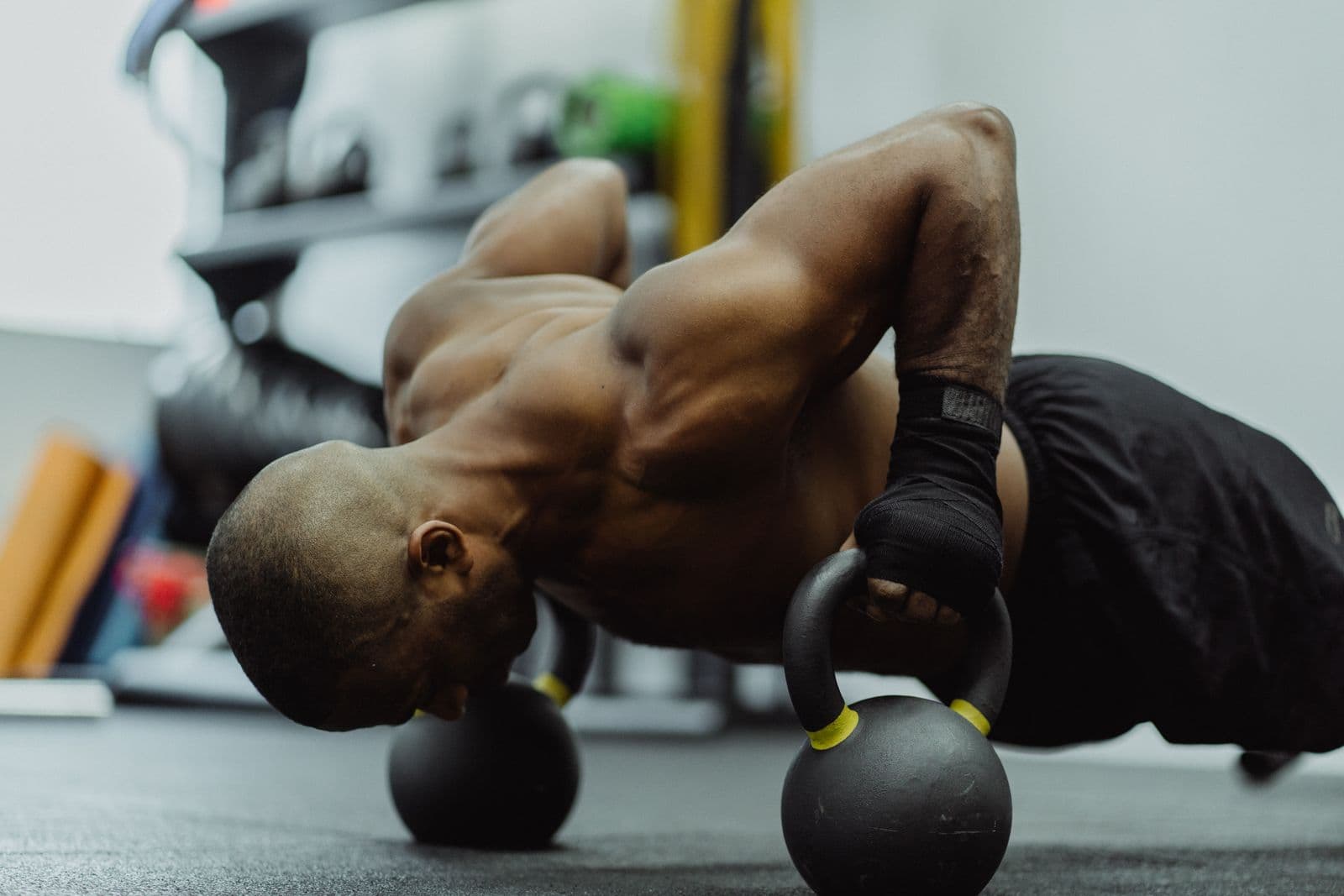
Pain only on flat hands: The problem is position. A straight wrist takes it away, which also tells you nothing in the wrist is badly irritated.
Pain in all three: The problem is load or irritability rather than angle. Straightening the wrist didn't help because the tissue is sensitive to any meaningful load right now.
No pain in any: Your push-up isn't the trigger. Look at planks held for long periods, burpees, yoga flows, or the desk.
This isn't a push-up count. If you want to know how your push-up number stacks up for your age, the push-up test covers that, and it's worth running once your wrists are comfortable.
What's driving yours
Put the four results together. Most people land clearly in one group, and a few land in two.
Range-limited. Test 1 borderline or fail, Test 2 pinches at the back of the wrist, and Test 4 shows pain only on flat hands. The wrist simply doesn't bend back as far as the push-up asks. This is the most common group among desk workers who are new to floor work, and the most fixable.
Load-sensitive. Test 1 passes, but Test 2 aches generally and Test 4 hurts in all three positions. Usually there's a recent jump behind it: a new class, a burpee challenge, a lot more yoga. The wrist is capable of the range but not yet of the volume.
Ulnar-sided. Test 3 flags, and Test 2 hurts on the pinky side. Straight-wrist variations usually help, and rotation under load (turning the forearm while weight is on the hand) is the thing to go easy on.
Not the push-up. Everything passes, but your wrists ache after a workday. Look at the desk first: a keyboard tilted up on its back legs, a laptop edge digging in, or a mouse that keeps the wrist bent back. Flattening the keyboard and letting the forearms float or rest on the desk rather than the wrists is the cheapest change you'll make.
Weight-bearing wrist pain is common even among people who train on their hands deliberately. In a 2025 survey of 321 adults who practice handstands, 57 percent reported recurring or persistent wrist pain. It wasn't linked to weekly training hours, warm-up habits, or brace use. That's a self-selected online survey, so the exact number is soft. But it fits what I see: warming up and bracing don't seem to protect much on their own. What changes things is the wrist's capacity for the specific position.
A six-week plan
Nobody has run a good trial of a wrist program for push-up pain, so this is built from how wrists respond to gradual loading in general and from what's worked with my clients. The rule throughout: wrist pain up to 3 out of 10 during exercise is fine, and it should be back to normal by the next morning.
Every day, two minutes: range.
- Wrist rocks on hands and knees, as in Test 2, staying in the pain-free part of the range. Two sets of 10 slow rocks, with fingers forward, then turned out to the sides.
- Prayer stretch from Test 1, three holds of 20 seconds.
- If Test 2 pinched at the back of the wrist, slip a folded towel under the heel of your hand during the rocks. It reduces the angle slightly and usually takes the pinch away.
Two or three times a week: strength.
- Wrist curls and reverse wrist curls with a light dumbbell, forearm resting on your thigh, 2 sets of 15.
- Forearm rotation: hold a hammer or a dumbbell at one end and slowly turn the palm up and down, 2 sets of 12. Go light if Test 3 flagged.
- Farmer carries, 3 walks of 30 to 40 seconds. Holding a heavy weight at your side loads the wrist in a straight position and builds the forearm.
If you want more grip and forearm work beyond this, the grip strength post has a full set of options that fit into a normal program.
Push-ups: work back toward flat hands.
- Weeks 1 and 2: do all your push-ups and planks on handles, dumbbells, or fists. Planks on the forearms are fine too.
- Weeks 3 and 4: add one or two sets of flat-hand push-ups with your hands on a bench or kitchen counter. Raising the hands reduces both the load and the wrist angle. Keep the rest on handles.
- Weeks 5 and 6: lower the incline step by step toward the floor, keeping a towel under the heel of the hand if you need it.
- Ulnar-sided group: stay on handles for the first four weeks, and keep a slightly wider hand position with the fingers turned out a little. Many people find that more comfortable.
Some people never go back to flat hands for regular push-ups, and that's fine. Handles train the chest, shoulders, and arms just as well, and the 2018 force-plate study authors thought the straight-wrist version was probably the safer of the two. If your training includes yoga, handstands, burpees, or a sport where you land on your hands, rebuilding flat-hand tolerance is worth the time. If it doesn't, the trade-off changes and handles are a perfectly good long-term answer.
When to get it looked at
Get your wrist assessed rather than training around it if:
- It started with a fall onto an outstretched hand. Pain in the hollow at the base of the thumb after a fall can be a scaphoid fracture, which can look normal on a first X-ray and heals poorly if missed.
- The wrist clicks or clunks with pain, or feels weak or unstable when you turn a doorknob or lift a pan.
- Test 3 flags strongly and doesn't change after four weeks of the plan.
- You have numbness or tingling in the fingers. That's a nerve, and a different conversation.
- There's visible swelling, warmth, or a lump on the back of the wrist.
- Both wrists hurt along with other joints, or you're stiff for a long time each morning.
Retest, and where to go from here
Rerun all four tests at week six. You're looking for the forearms getting closer to level in Test 1, a pain-free rock in Test 2, and Test 4 showing flat hands catching up with the handles. Range tends to move first, and comfort under load follows it.
Wrists rarely work alone. How your shoulders sit over your hands, and how well your trunk holds a plank, both change how much load the wrist takes. If you want a wider look, the free movement screen checks six areas in about five minutes and doesn't ask for an email. It's the same assessment I start new clients with.
If you'd like someone to watch your push-up and plank and build the plan around what they see, that's what one-on-one training is for. I've logged more than 13,000 sessions with adults around San Jose and the South Bay, and fixing a plank position is one of the quicker wins I get to hand people.
The Santa Clara data scientist tested as range-limited, with a back-of-wrist pinch in the rock. He did his wrist rocks while his coffee brewed, used dumbbells for push-ups at bootcamp for three weeks, and moved his hands an inch further forward in the plank. By the end of the six weeks he was back on flat hands. He still brings a folded towel to class, mostly out of habit.
Ready to train smarter?
Get a personalized program built around your goals, your body, and your schedule.
Book Your Free ConsultationRelated Articles
Push-Up Test at Home: What Your Number Actually Means After 40
A push-up number is measuring three different things at once: pressing strength, trunk stability, and shoulder position. How to run the test honestly, score it by age and sex, and work out which of the three is costing you reps. A San Jose trainer's guide.
Achilles pain in the morning? At-home tests to find out why, and a 12-week loading plan
Achilles pain in the morning that eases as you warm up is the classic sign of Achilles tendinopathy. Four at-home tests to tell midportion from insertional, score how irritated it is, and pick the right loading plan, from a San Jose trainer.
Hamstring Flexibility Test at Home: Score Your Tight Hamstrings
Three at-home hamstring flexibility tests with pass/fail thresholds and five drills to loosen tight hamstrings from sitting. A San Jose trainer's guide for desk workers.