
Shoulder impingement for desk workers: 3 self-checks and what each one means

Jeffrey Sun, ACE-CPT
June 20, 2026 · 12 min read
ACE-certified personal trainer specializing in functional movement, mobility, and strength training for busy professionals in San Jose and the Bay Area.
Book a free consultation →
A client came in last week, mid-forties, software architect, decent gym habit. He'd just started doing overhead press again after a few months off and the bar was catching at the same spot every rep. About halfway up, sharp pinch in the front of the shoulder, ease at the top. Not unbearable, just consistent enough that he stopped pushing weight. He'd been doing this for two weeks before he asked about it.
I had him stand up, raise his straight arm out to the side, and stop at the height where it bothered him. Right around shoulder height, give or take. Below that, fine. Above it, fine. Right in that mid-range, sharp.
That's the picture I see most weeks at my studio, and it shows up almost exclusively in people over 35 who sit for a living. The shoulder isn't suddenly broken. It got pulled into a pattern that took ten or fifteen years of typing to build, and now the structure of the joint is fighting itself every time the arm goes overhead.
This is shoulder impingement. The medical name sounds dramatic, but the pattern is usually predictable and the at-home tests are pretty clear. Here's how I work through it with desk workers in the South Bay.
If what you're dealing with is general stiffness rather than a specific pinch on the way overhead, no sharp catch, just a shoulder that doesn't move like it used to, the shoulder mobility test is the better starting point than this post.
Why your desk job is wrecking your shoulders (and why it shows up at 35, not 25)
The desk-worker shoulder pattern is downstream of the desk-worker upper-back pattern. Years of typing pull the chest short and the front delts forward. The thoracic spine, which should rotate and extend, locks into a flexed position. The mid-back goes long and quiet. The shoulder blade, which sits on top of the rib cage and needs to glide as the arm goes overhead, gets pulled forward and down.
The space the rotator cuff tendon glides through, called the subacromial space, depends on the shoulder blade tilting up and back when you reach overhead. When the blade is stuck in the forward, slumped position, that space doesn't open up like it should. The tendon catches in the narrowed window. Repeated catching irritates the tendon and the small fluid-filled sac (bursa) above it. The body responds by laying down more scar tissue, narrowing the space further. The cycle compounds.
Why 35 instead of 25 is the simpler part. It just takes about that long for the desk pattern to fully set in. People in their twenties have more tissue elasticity, more frequent unstructured movement, and shorter desk-job duration. By the mid-thirties, the cumulative slump has compounded enough that the rotator cuff can't tolerate normal demand.
This isn't an injury you suddenly got. It's a slow-build pattern that finally crossed a threshold.
The two questions to ask before training a sore shoulder
I don't add load to a client's shoulder routine until two questions get clean answers.
First, can the painful range be moved through without sharp pain, just dull awareness? Dull is fine. Sharp is not. If a bench press at 50 pounds creates sharp pain in the mid-range of the press, taking it up to 70 doesn't make the pain go away; it just adds noise.
Second, has the previous session been recovered from without next-day flare? If yesterday's shoulder work has left the joint achy or stiff this morning in a way it wasn't on Sunday, the load went too far. Doesn't matter how the session felt in the moment. The 12 to 24 hour response is the honest read.
Both questions answered cleanly, week after week, is how the bridge from pain to full training actually gets crossed.
Test 1: the painful arc test
This is the single most reliable in-home indicator that you're dealing with an impingement pattern. It takes about ten seconds.
Stand naturally. Arms at your sides. Raise one straight arm out to the side like the start of a jumping jack. Move slowly, all the way to overhead, then back down. Pay attention to the entire arc.
Pass: The motion is smooth from bottom to top. Maybe some tightness at the very top of the range if you're stiff, but no sharp pain anywhere.
Fail (positive painful arc): Sharp or pinching pain specifically in the middle of the range, somewhere between 60 and 120 degrees. It usually eases as the arm goes higher and is gone at the very top of the range. If you let the arm down slowly, the pain shows up again on the way back through the same window.
That mid-range pinch is the classic impingement signature. The very specific position is what gives it away. Random shoulder pain at all positions usually means something else. Pain only at the top of the range often points at a different structure. A Cochrane-affiliated review of shoulder impingement tests found the painful arc is most reliable when combined with other signs rather than read alone, which is exactly why this post pairs it with two more tests below instead of stopping at one.
If you got a clean pass on this one, you might still have something going on, but it's probably not impingement.
Test 2: empty can test for rotator cuff load tolerance
The first test tells you the range is irritated. This one tells you whether the rotator cuff can actually do its job under light load.
Stand up. Lift both arms out in front of you to about 45 degrees off the body, then drift them out to the side another 30 degrees so they're forward and angled out. Now rotate both thumbs down toward the floor, like you're emptying a can of soda. Have someone gently press down on the back of your wrists, or self-test by holding a one-pound dumbbell or full water bottle.
Pass: You can hold the position against gentle resistance without pain, without your shoulder shrugging up toward your ear, and without the arm dropping.
Fail (weakness): The arm wants to drop, or you have to recruit your upper trap (the muscle next to your neck) to hold it up. That's the cuff giving out and the bigger muscles compensating.
Fail (pain): Sharp pain at the front or side of the shoulder during the hold. That's the irritated tendon being asked to load in a position it can't handle.
A clean painful arc test plus a positive empty can test is the desk-worker impingement profile. If you also have the upper-cross pattern from the posture self-check (forward head, rounded shoulders), the picture is even clearer.
Test 3: scapular control with wall slides
Both prior tests are looking at the symptom. This one looks at the underlying movement quality.
Stand with your back against a wall, heels about six inches from the wall. Press your butt, low back area, upper back, and the back of your head against the wall as much as you can. Now bring your arms up against the wall in a goal post position — elbows at 90 degrees, hands up, the back of your forearms and hands touching the wall.
From there, slowly slide your arms up the wall toward straight overhead. Keep contact with the wall the entire time. Then slide back down.
Pass: Forearms and hands stay in contact with the wall all the way up to nearly straight overhead, and back down again. Smooth, no shrugging.
Fail (contact loss): The hands or forearms peel off the wall before they get past halfway up. Often the lower back arches off the wall too as the body cheats to find more range.
Fail (compensation): The shoulders shrug up toward the ears as the arms travel. Or the head juts forward off the wall as a way to find more overhead range. Either is the body using the wrong muscles to do what the scapula and rotator cuff should be doing.
The wall slide is the best at-home read on whether your shoulder blade can actually do its job during overhead movement. Failing this one means you don't have the structural quality to load overhead heavy yet, even if the first two tests came back clean.

Three drills if you failed any of the tests
If one or more of those came back positive, the next move isn't to ice the shoulder and wait it out. The pattern needs to change. Three drills cover most of the chain for most desk workers.
Thoracic extension over a foam roller or rolled-up towel. Lie on the floor with the roller across your upper back, just below the shoulder blades. Hands behind your head, elbows pointed up. Drape backward over the roller for two or three seconds, then come back up. Move the roller up an inch and repeat. Cover the area from below the shoulder blades to the base of the neck. Two minutes total. This is the upstream fix. A stiff thoracic spine is why the shoulder blade can't tilt back, and why the shoulder is impinging in the first place. If you only do one of these three, do this one. The thoracic mobility test covers the deeper work if t-spine is your biggest restriction.
Banded face pulls. Loop a resistance band around something at chest height. Hold each end with palms facing each other. Pull the band toward your face, leading with your elbows, finishing with hands by your ears. Slow on the way back. Three sets of fifteen, daily for two weeks if the pattern is fresh, three times a week long-term. This wakes up the mid-back, rear delts, and external rotators — the exact muscles that hold the shoulder blade in position and rotate the cuff away from the impingement zone. The reason most desk-worker shoulders stay impinged is these muscles are sleepy. Face pulls are the cheapest way to wake them up.
Banded external rotation at the side. Stand with your right elbow tucked at your side, bent to 90 degrees. Hold one end of a light band with the right hand. The other end is anchored to your left. Rotate the right forearm out, away from your body, against the band's pull. Two sets of fifteen each side, slow. This loads the small rotator cuff muscles directly in a position that doesn't aggravate the impingement zone. Light band. Light. The point isn't to get strong fast; it's to retrain the cuff to fire reliably under low load before you ask it to do anything bigger.
Two weeks of consistent work on these three usually moves the painful arc test from a fail to either a borderline or a clean pass. If it doesn't, the issue is deeper than a self-care routine can handle and you need eyes on it.
When shoulder pain needs a clinician, not a trainer
A few things should make you skip the self-management approach and book a real appointment.
Sharp pain at any load, in any range, that doesn't trace to a clear trigger. Impingement pain has a pattern. Pain that's everywhere and unpredictable doesn't fit the pattern.
Loss of strength on basic tasks. Lifting a coffee cup, washing your hair, reaching to a shelf. If those have gone from easy to difficult in the last few weeks, that's potentially a rotator cuff tear, not impingement. Tears need imaging and a clinical opinion.
Pain that wakes you up at night and doesn't shift when you change positions. Position-dependent night pain is often impingement. Pain that's there regardless of how you sleep is often something else, like frozen shoulder, which has a different pattern and different fix.
Visible swelling, deformity, or sudden weakness after a specific event. Any of those is an urgent care visit.
Numbness or tingling down the arm. That's usually not the shoulder; it's usually the neck. Different problem, different fix.
A real impingement that's been ignored for a year can also progress into a partial cuff tear. If your shoulder has been hurting for months and isn't getting better, you've earned a real evaluation. There's no prize for self-managing the wrong thing for too long.
If you've already been through PT for a shoulder issue and the question is how to get back to training without flaring it, the post-PT bridge guide covers what comes after discharge.
Where to go from here
If you ran the three tests and one or more came back positive, start with the three drills above. Two weeks of consistent work, then retest. Most desk workers I see catch real change in that window.
If you want to know which part of the chain is your biggest restriction before you start, the movement screen covers shoulder mobility along with the upstream pieces (t-spine, posture) that usually drive the impingement pattern in the first place. It's the same screen I run on a first session, five minutes online, no email required.
And if your shoulder has been hurting for more than a few weeks and you'd rather have someone work through it with you, come work with me. I've coached more than 12,000 sessions with desk workers across San Jose and the Bay Area, and the impingement pattern is on the short list of what I work on the most. The fix is usually less about the shoulder itself and more about giving the surrounding chain the work it's been missing for ten or fifteen years.
The pain doesn't have to be there forever. It does usually take more than rest to actually move.
Ready to train smarter?
Get a personalized program built around your goals, your body, and your schedule.
Book Your Free ConsultationRelated Articles

Frozen shoulder or shoulder impingement? How to tell them apart at home
Both make overhead reach painful, but they're different problems with different fixes. A San Jose trainer's three at-home tests for telling impingement and adhesive capsulitis apart.
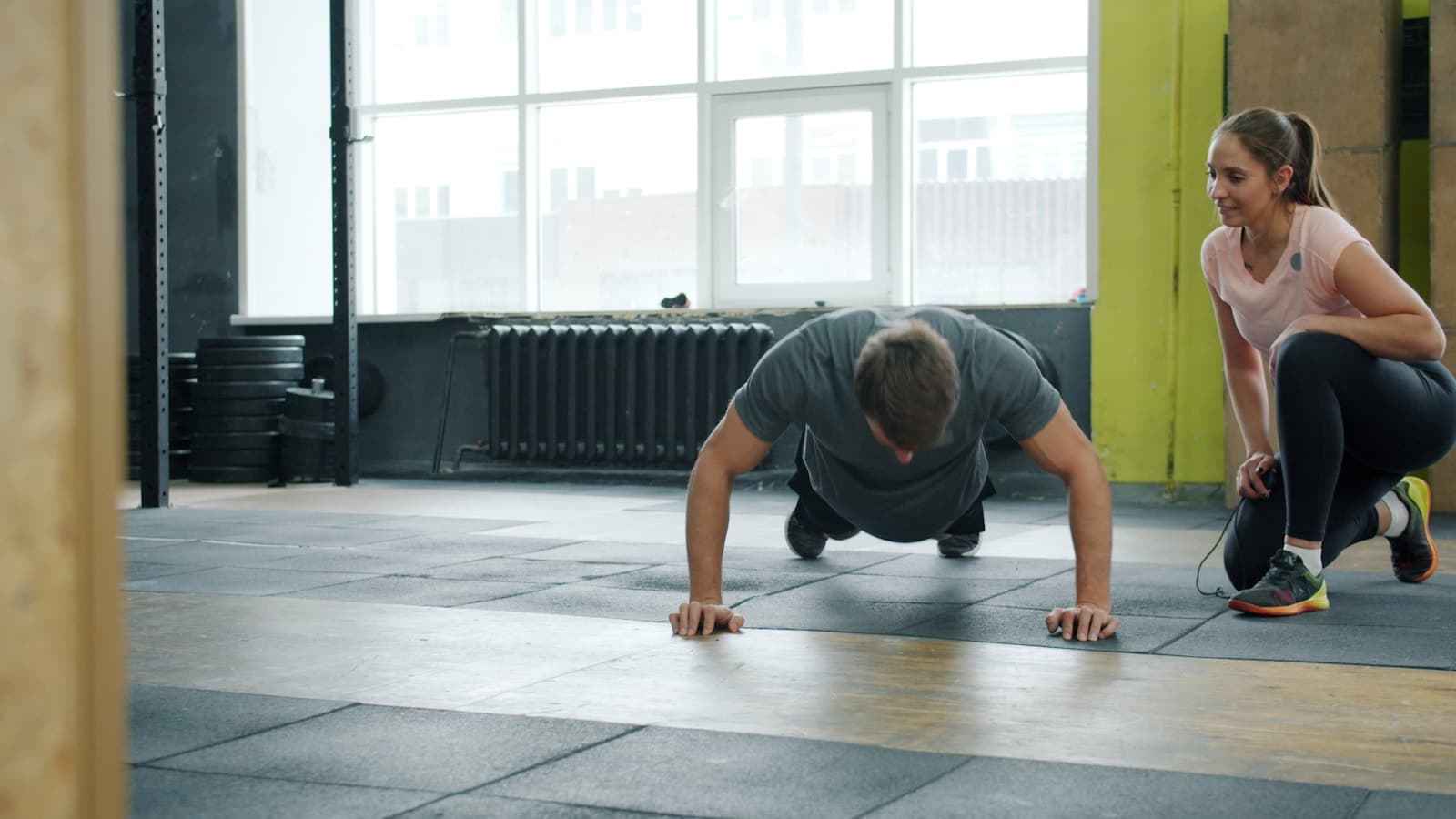
Push-Up Test at Home: What Your Number Actually Means After 40
A push-up number is measuring three different things at once: pressing strength, trunk stability, and shoulder position. How to run the test honestly, score it by age and sex, and work out which of the three is costing you reps. A San Jose trainer's guide.
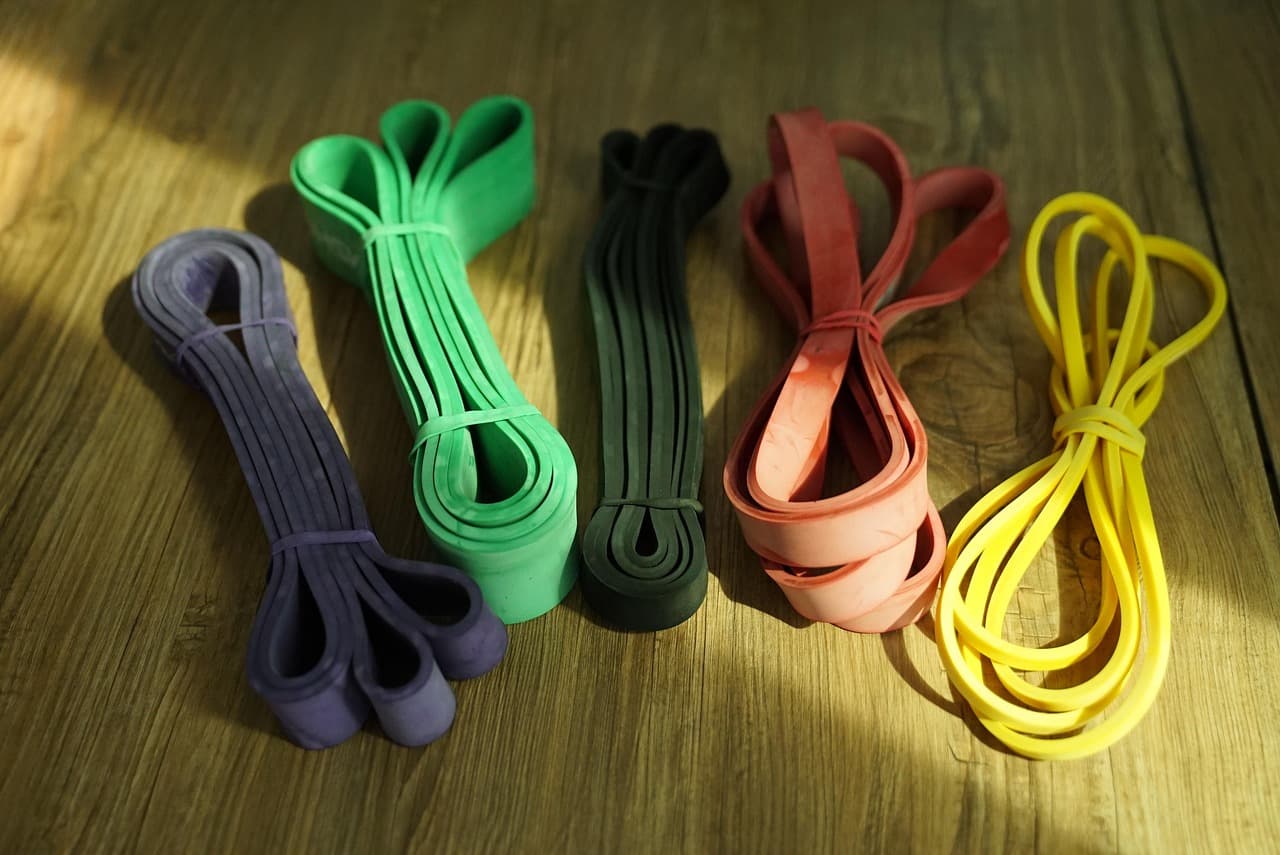
Resistance band routine for desk workers: no gym, no equipment, 15 minutes
A $15 band does more for a desk-worn body than a home gym you'll never build. A San Jose trainer's 15-minute band routine for the person who has no equipment and no floor space.